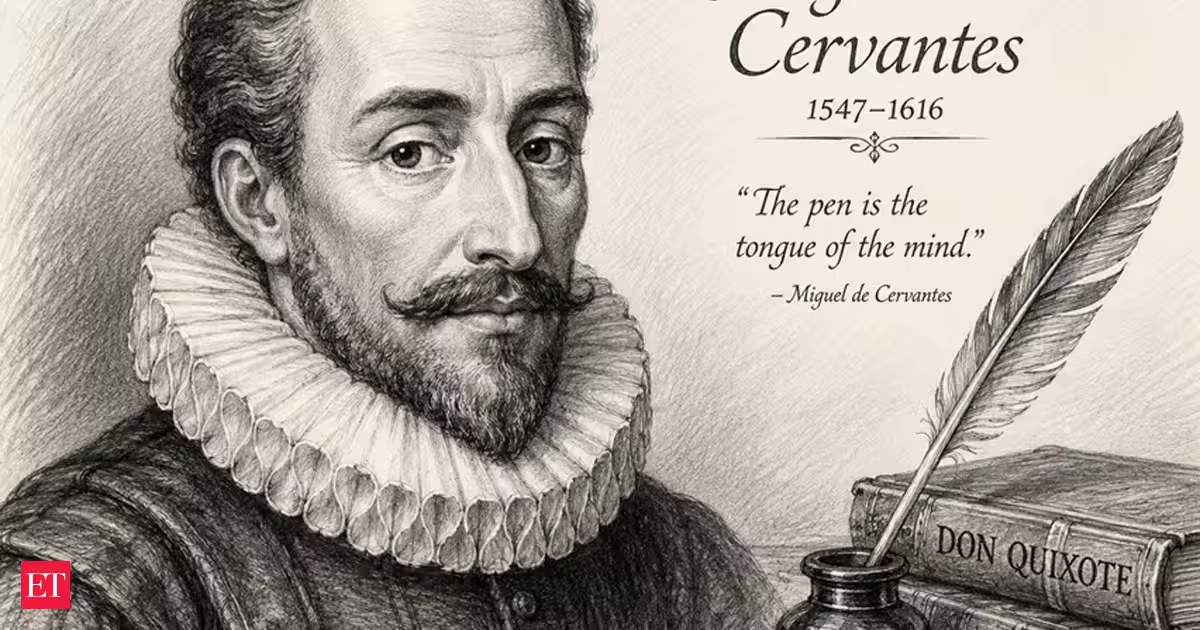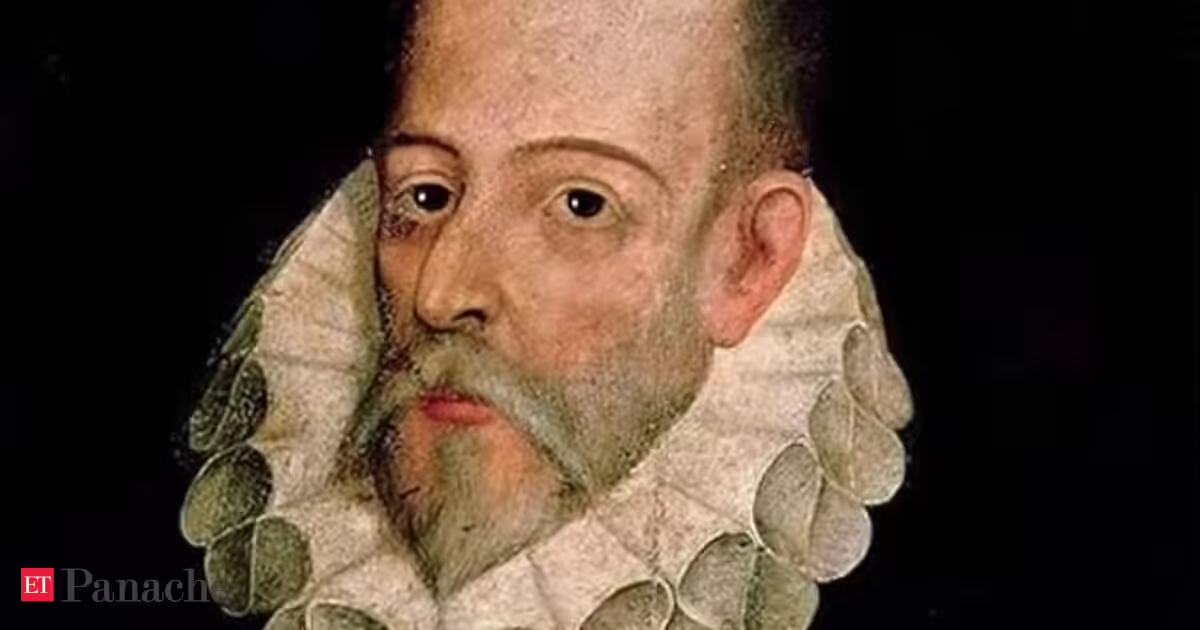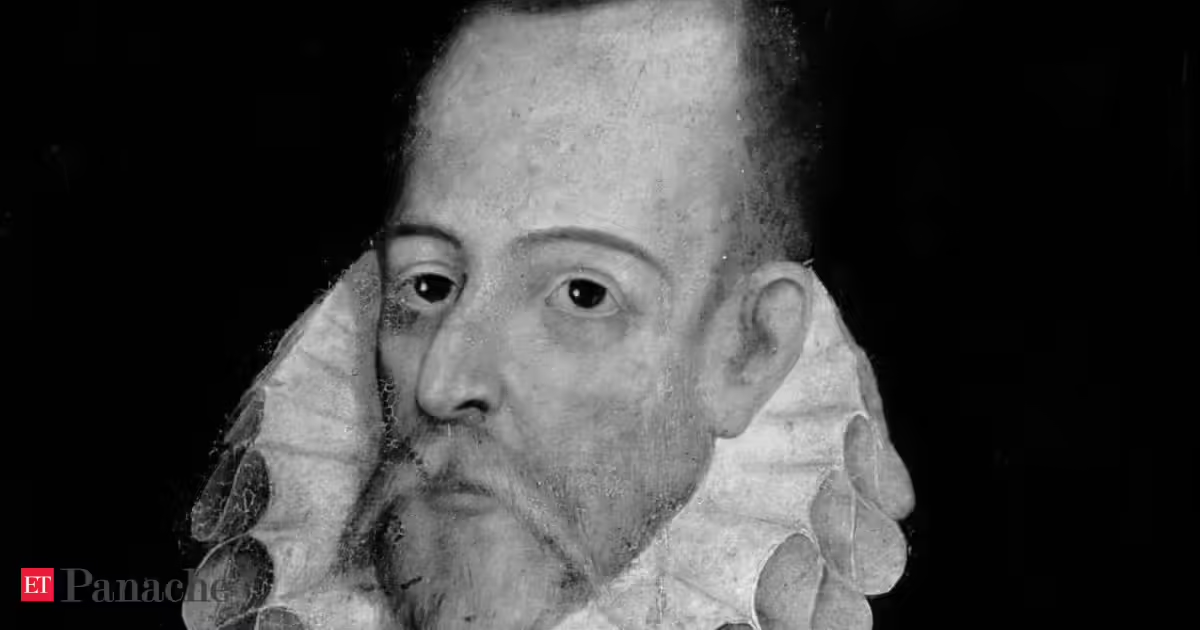
In a world obsessed with productivity, success and staying connected around the clock, a centuries-old thought on sleep is finding fresh relevance. Long before scientists began studying the effects of rest on the human body and mind, Spanish literary giant Miguel de Cervantes Saavedra described sleep as one of life's greatest gifts. In a passage that remains surprisingly relatable today, the author celebrated sleep not merely as a nightly routine, but as a powerful escape from fear, stress and the endless demands of everyday life.The quote, "All I know is that while I'm asleep, I'm never afraid, and I have no hopes, no struggles, no glories — and bless the man who invented sleep, a cloak over all human thought, food that drives away hunger, water that banishes thirst, fire that heats up cold, chill that moderates passion, and, finally, universal currency with which all things can be bought, weight and balance that brings the shepherd and the king, the fool and the wise, to the same level. There's only one bad thing about sleep, as far as I've ever heard, and that is that it resembles death, since there's very little difference between a sleeping man and a corpse."This memorable passage comes from Miguel de Cervantes Saavedra's celebrated novel Don Quixote, specifically Part II, Chapter 68. The words are spoken by Sancho Panza, the loyal and practical squire who often provides some of the novel's most insightful observations about life.Although written more than 400 years ago, the quote continues to resonate because it captures a simple truth that most people understand instinctively: sleep has a remarkable ability to make life's problems feel lighter, even if only for a few hours.Why Cervantes called sleep a 'cloak over all human thought'One of the most striking phrases in the passage is Cervantes' description of sleep as a "cloak over all human thought."The image is powerful because a cloak covers and protects. In the same way, sleep temporarily shields the mind from the worries that occupy it throughout the day. During waking hours, people are constantly dealing with responsibilities, ambitions, fears, regrets and expectations. These thoughts can become exhausting.Cervantes suggests that sleep offers a brief but necessary escape from that mental burden. Once asleep, the mind is no longer actively wrestling with daily pressures. Fear fades into the background. Stress loses its grip. Ambitions and disappointments are put on hold.In many ways, the Spanish writer was describing what modern readers would recognise as a mental reset. His words acknowledge that human beings need periods of rest not only for the body but also for the mind.A temporary escape from fear and anxietyIn a nutshell, the quote is the idea that sleep removes fear.When Cervantes writes, "while I'm asleep, I'm never afraid," he points to a feeling many people can relate to. During the day, worries about work, relationships, finances, health or the future can dominate thoughts. Sleep provides a temporary pause from those anxieties.The passage also mentions having "no hopes, no struggles, no glories." This is significant because Cervantes is not only talking about negative emotions. He is also talking about ambitions and achievements.Even success can create pressure. The pursuit of recognition, status and accomplishment often comes with stress. In sleep, however, all of those concerns disappear for a while. The rich and the poor, the successful and the unsuccessful, all enter the same state of rest.Through Sancho Panza's words, Cervantes presents sleep as one of the few experiences that allows people to step completely outside the demands of everyday life.Food, water and fire: Why sleep is essentialAnother fascinating aspect of the quote is the way Cervantes compares sleep to life's most basic necessities.He describes sleep as "food that drives away hunger" and "water that banishes thirst." He even compares it to fire that warms the cold and a cooling force that calms excessive passion.These comparisons underline how fundamental sleep is to human existence. Just as food nourishes the body and water sustains life, sleep restores energy and helps people function.Cervantes was writing centuries before the scientific understanding of sleep that exists today. Yet he instinctively recognised that rest plays a critical role in human well-being.Rather than treating sleep as a luxury, he presents it as a necessity, something as important as the basic elements people need to survive.The great equaliser: Kings and shepherds are the same in bedPerhaps the most profound idea in the passage is Cervantes' belief that sleep creates equality. He describes sleep as a "universal currency" and a balancing force that places "the shepherd and the king, the fool and the wise" on the same level.This observation reflects one of the novel's broader themes: the limits of social status and worldly power. In daily life, people are separated by wealth, education, influence and privilege. Some enjoy authority while others struggle to survive. Yet when night arrives, everyone faces the same biological need.No king can buy freedom from sleep. No scholar can outthink it. No wealthy person can escape it through money.For Cervantes, sleep becomes a reminder that nature ultimately treats everyone equally. Regardless of position or achievement, all human beings share the same vulnerabilities.The darker side of sleepDespite praising sleep throughout the passage, Cervantes does acknowledge one troubling aspect. He notes that sleep resembles death.At first glance, this may seem like a grim observation. However, it reveals another layer of the writer's thinking. During sleep, the body becomes still and consciousness temporarily disappears. From the outside, a sleeping person can appear almost lifeless.By mentioning this similarity, Cervantes introduces a reflection on mortality. Sleep may offer peace and relief, but it also reminds people of the fragility of life. The comparison adds depth to the passage, transforming it from a simple appreciation of rest into a meditation on the human condition itself.What the quote teaches us todayThe enduring appeal of this quote lies in its understanding of what people truly need. Cervantes suggests that rest is not laziness or weakness. Instead, it is a vital part of being human. Sleep gives people a chance to recover from emotional strain, step away from constant pressures and return to life with renewed energy.The passage also reminds readers that many of the things society values most—status, wealth, achievement and recognition—lose their importance when viewed through the lens of basic human needs.Most importantly, the quote talks about a truth that remains relevant centuries later: everyone needs rest, everyone experiences vulnerability and everyone benefits from moments when the mind is allowed to let go.According to Poets org, Miguel de Cervantes Saavedra (1547–1616) was a Spanish writer best known for authoring Don Quixote, a work widely regarded as one of the greatest achievements in world literature and often described as the first modern novel.Born in Alcalá de Henares, Spain, Cervantes lived an extraordinary life marked by military service, financial hardship, imprisonment and literary success. He was captured by pirates and held captive in Algiers before eventually returning to Spain. Despite becoming one of the most influential writers in literary history, he spent much of his life struggling financially.As noted by them, Cervantes' writing combined humour, philosophy, social commentary and sharp observations about human nature.
Quote of the day by Miguel de Cervantes Saavedra: 'All I know is that while I'm asleep, I'm never afraid. I have no hopes, no struggles, no glories, and bless the man who invented sleep, a cloak over all human thought...' - How sleep fixes everything, explained by the Spanish writer
Centuries-old wisdom from Cervantes' Don Quixote reveals sleep as a profound gift, offering refuge from fear, stress, and life's demands. This timeless thought highlights sleep's role as a mental reset, an essential equaliser for all, and a reminder of life's fundamental needs, even hinting at mortality. Discover why this ancient perspective resonates deeply today.
TL;DRAI
Cervantes describes sleep as a mental shield that erases fear and stress—a universal equalizer where kings and shepherds share the same rest. For tech managers in always-on culture, the 400-year-old insight reframes sleep as cognitive necessity, not productivity loss.
1,188 words~5 min read