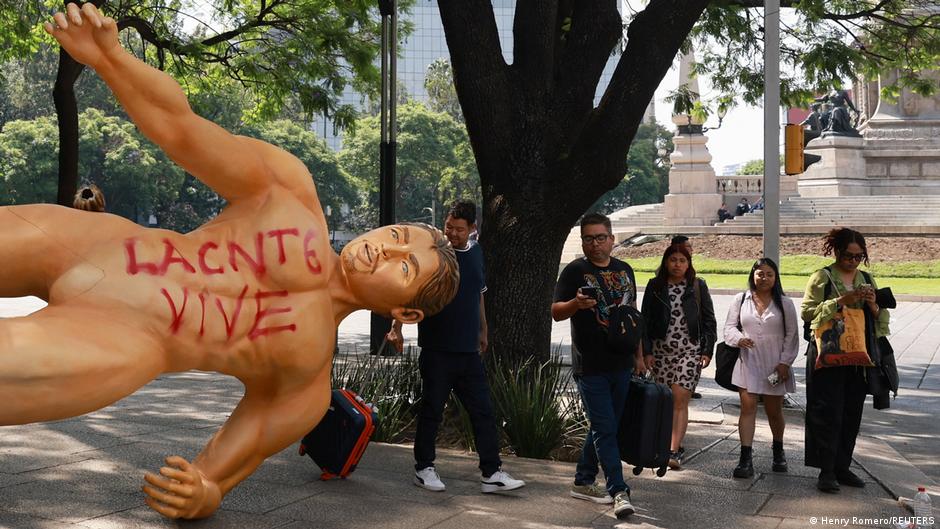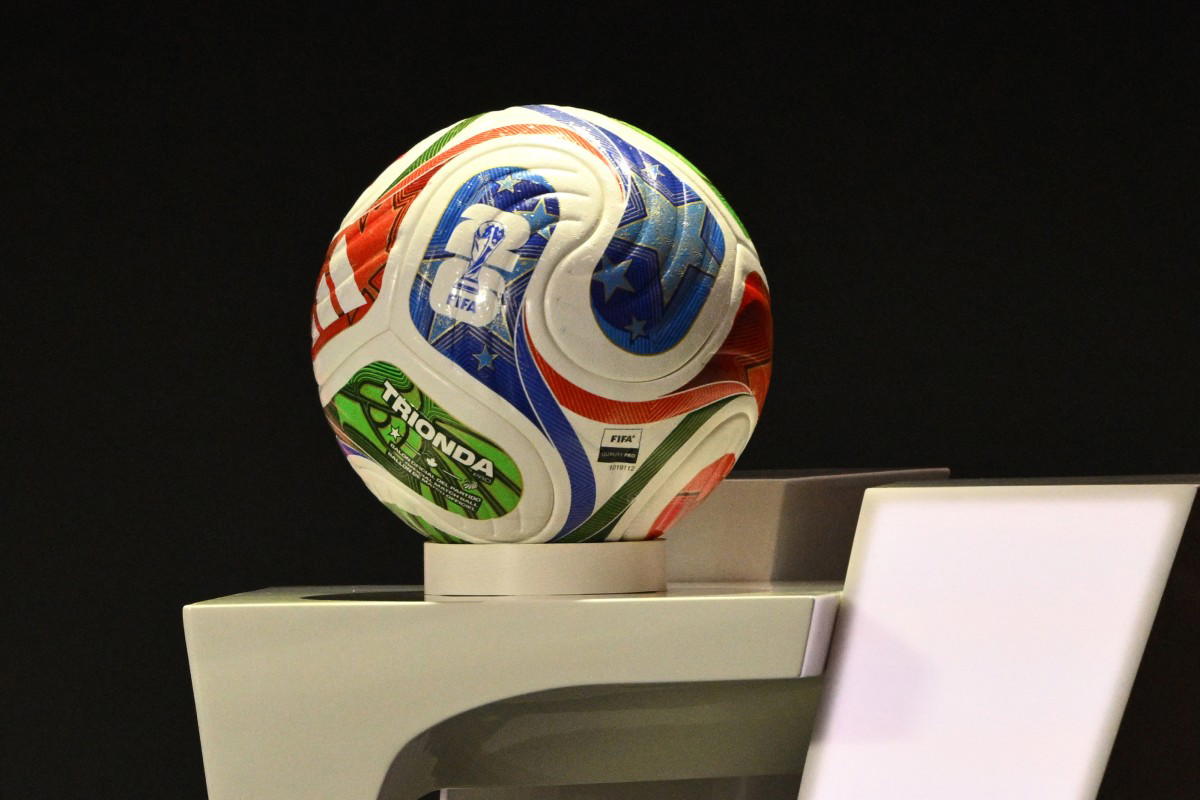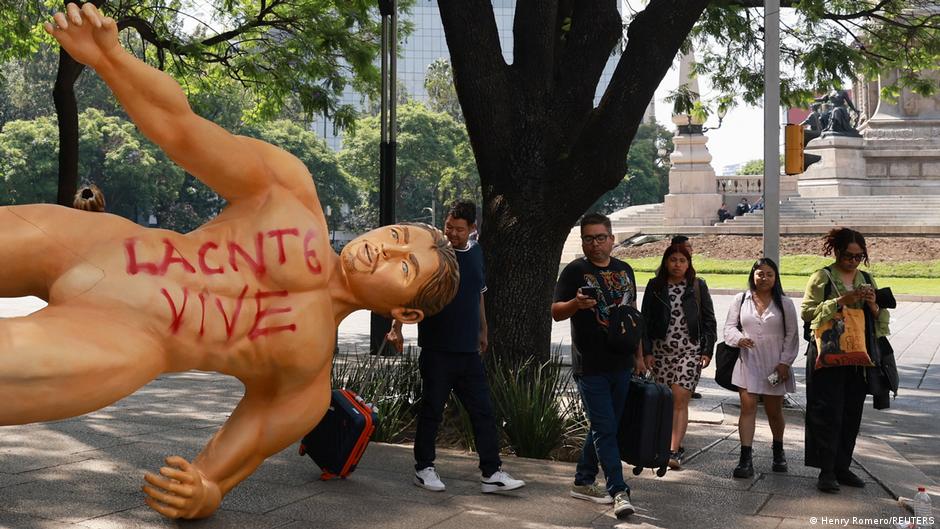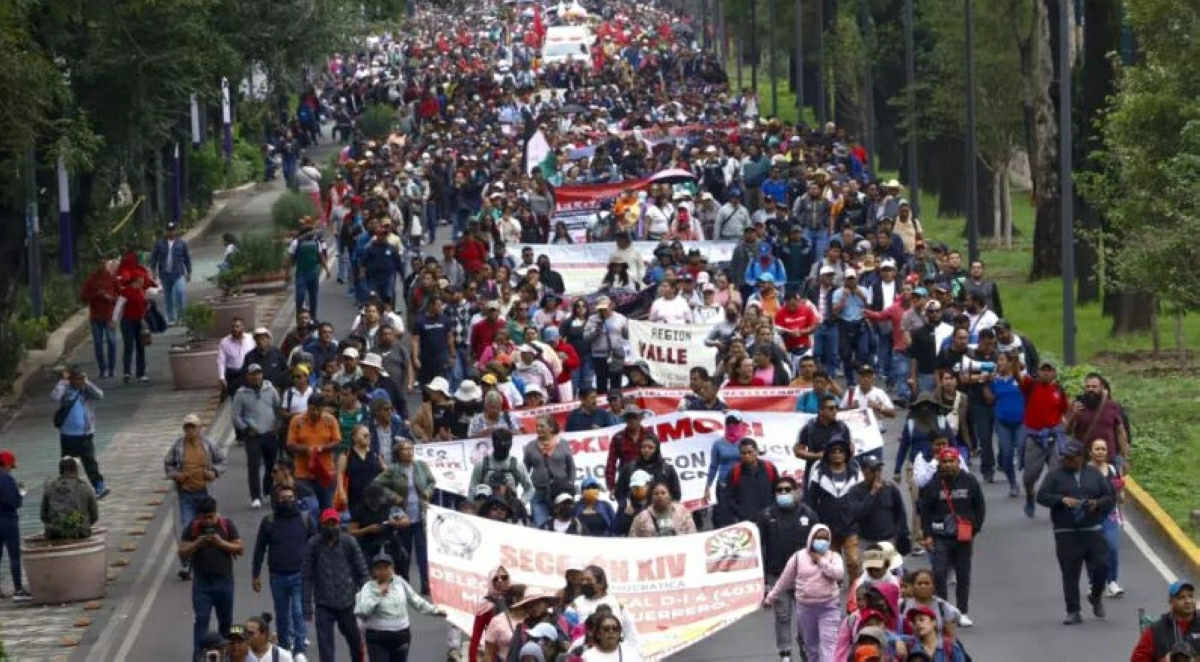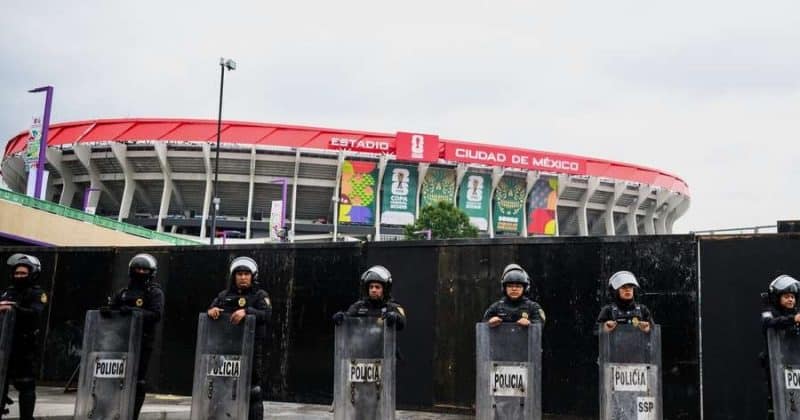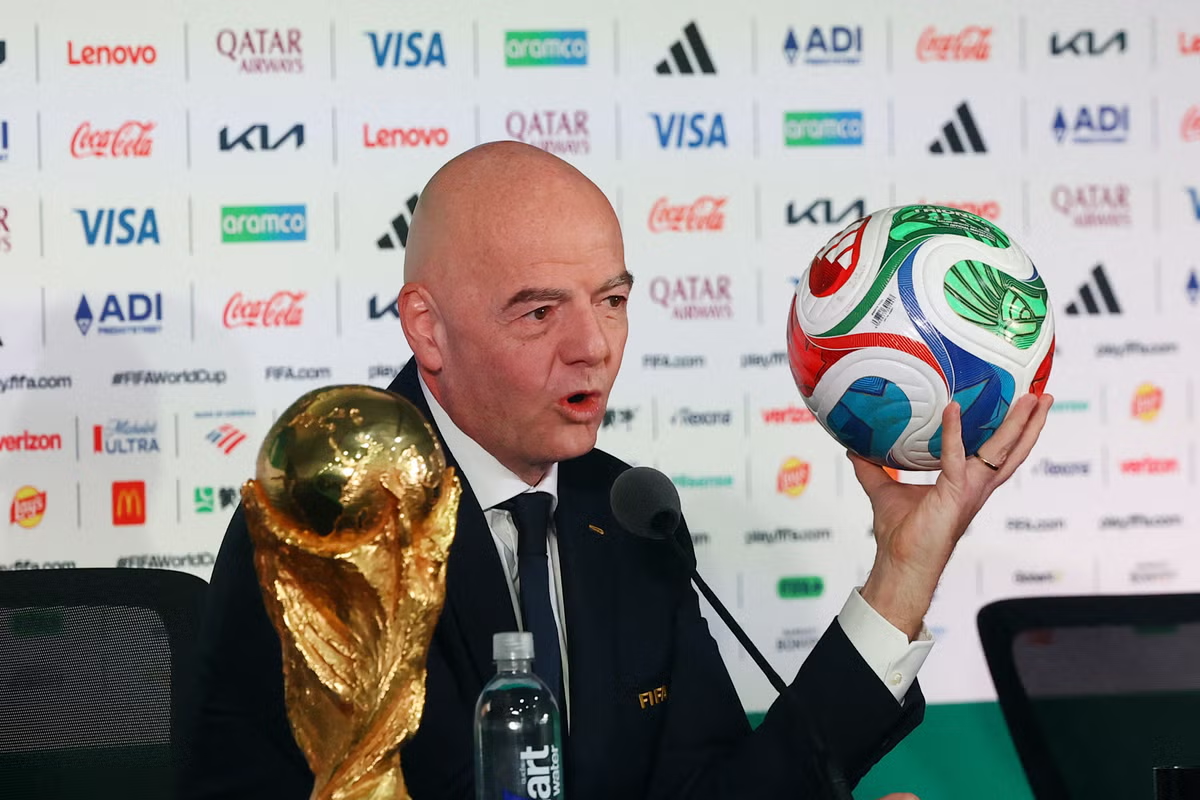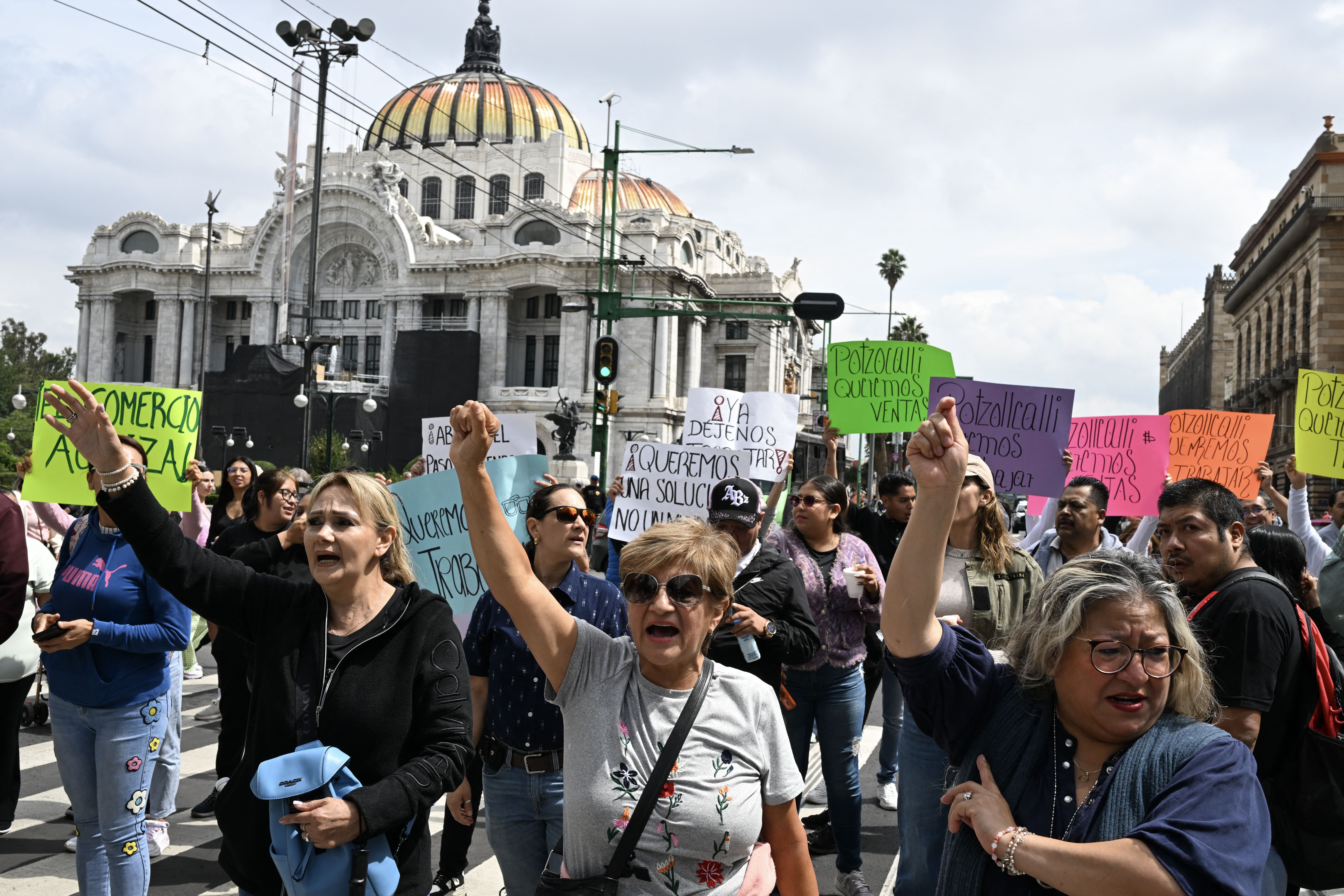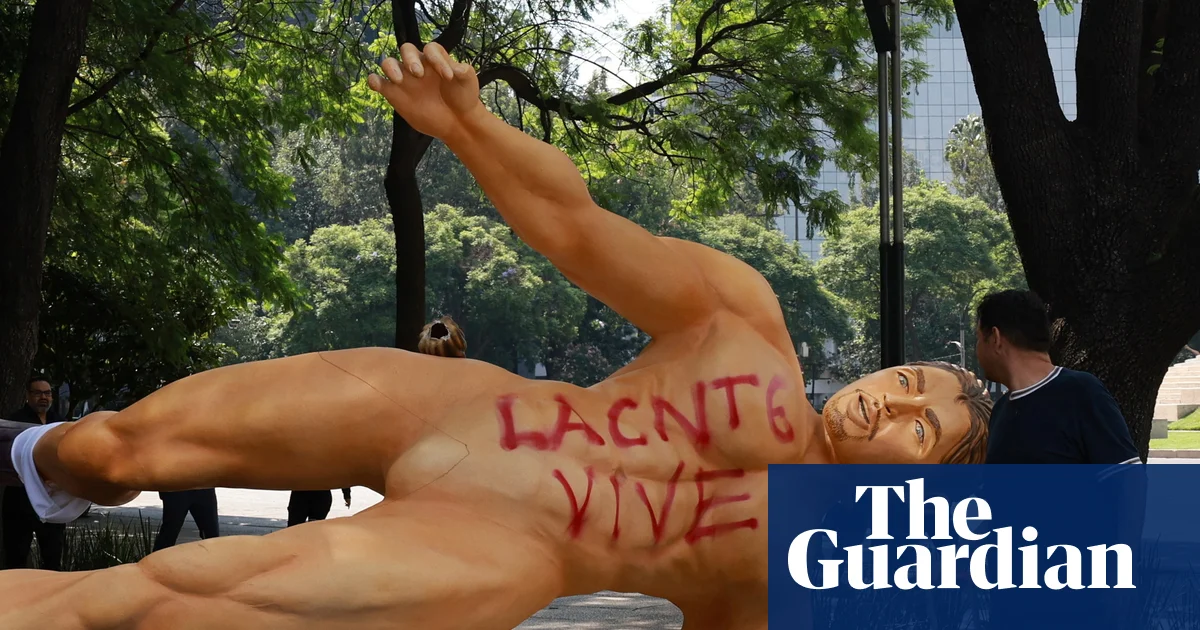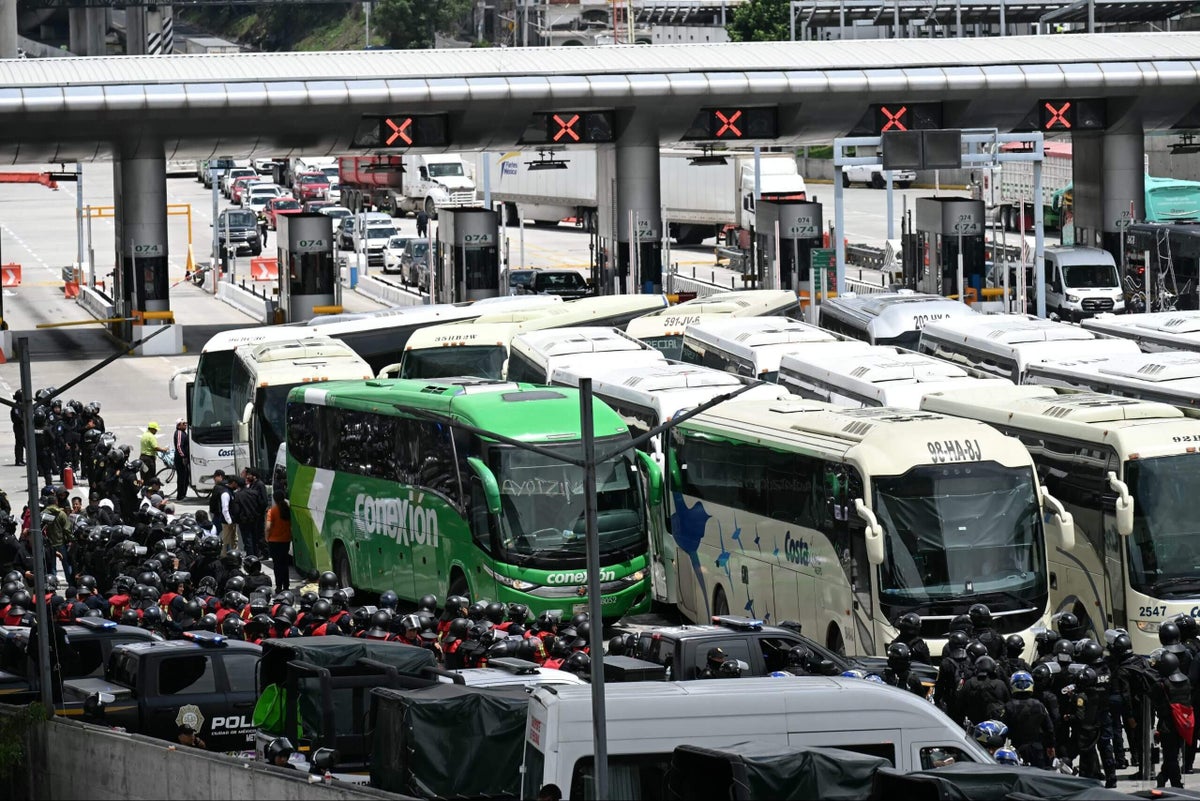
Gianni Infantino took a deep breath and caressed the ball that sat on the plinth in front of him.“(I’m) happy to see this ball rolling in a few hours’ time,” he said, beginning his press conference.Directly, Infantino was speaking about his excitement for the opening game, due to take place between Mexico and South Africa just over 24 hours after his speech.But inadvertently, Infantino’s phrasing echoed a slogan which has reverberated around Mexico City over recent weeks: “The ball won’t roll”.This phrase has been chanted by thousands of anti-government protestors, the majority aligned with a branch of Mexico’s teachers’ union, who have stated their intent to disrupt the tournament’s opening game to draw attention to their cause.Gianni Infantino, President of FIFA, during the World Cup’s opening press conference in Mexico City (Carl Recine/Getty Images)“We intend to reach the stadium,” a union member told AFP earlier this week.“If we don’t get a positive response to what we’re asking for, the plan is to shut down the airport,” another union leader, Chiapas-based teacher Jimenez Cruz, told The Athletic on Wednesday.Mexican president Claudia Sheinbaum has played down their impact, calling them a “provocation”, but as statues are torn down and a corner of the Zocalo fan plaza remains occupied by protestors — it is set to host over 100,000 people during Thursday’s opener — the questions remain.The Athletic explains the dispute, which has the potential to cause chaos at this World Cup.What has happened over recent weeks?Broadly, this is a dispute between the Mexican state and the CNTE (Coordinadora Nacional de Trabajadores de la Educacion), a militant wing of the national teachers’ union. In the days before the World Cup, these protests erupted at the worst time for Sheinbaum’s government.On Monday, June 1, teachers marching towards Mexico City’s Zocalo square were teargassed by the police to disperse them. Protestors also reported that they had been targeted by rubber bullets, a claim which Mexico’s government denies.One day later, the activists marched on the Paseo de la Reforma, one of Mexico City’s most iconic public spaces. There, they ripped down several giant plastic statues of footballers created for the World Cup, before setting them alight.Others stormed the country’s Education Ministry, using two lamp posts as battering rams to force their way into the building.The traffic disruption brought the city to a halt. Sheinbaum was prevented from reaching the National Palace by the protests, and, according to Mexican newspaper La Jornada, had to hold a meeting with Spanish government officials over Zoom.“These demonstrations can’t be explained,” Sheinbaum said in a pre-World Cup press conference on Tuesday, June 9. “Even less so those that have a violent nature. This is for the Mexican people and for the world. We see it as a provocation. As if to say, ‘Look at how bad the situation in Mexico is’.“A maximum of eight per cent of the schools in all the country don’t have classes. And there’s around 3,000 teachers who are here in the centre. They’ve had all the dialogue, all of it.”Protests in March (Getty Images)What are the protests about?The union, the CNTE, sees things differently.They have made it clear in several public statements that they feel betrayed by Sheinbaum’s government — citing an election commitment she made to repeal the 2007 ISSSTE Law, an unpopular change to the pension system away from a state-guaranteed model.
Could the World Cup’s opening game be disrupted by teacher protests in Mexico?
Protesters in Mexico plan to reach the Azteca Stadium and disrupt the opening game of the World Cup
1,620 words~7 min read