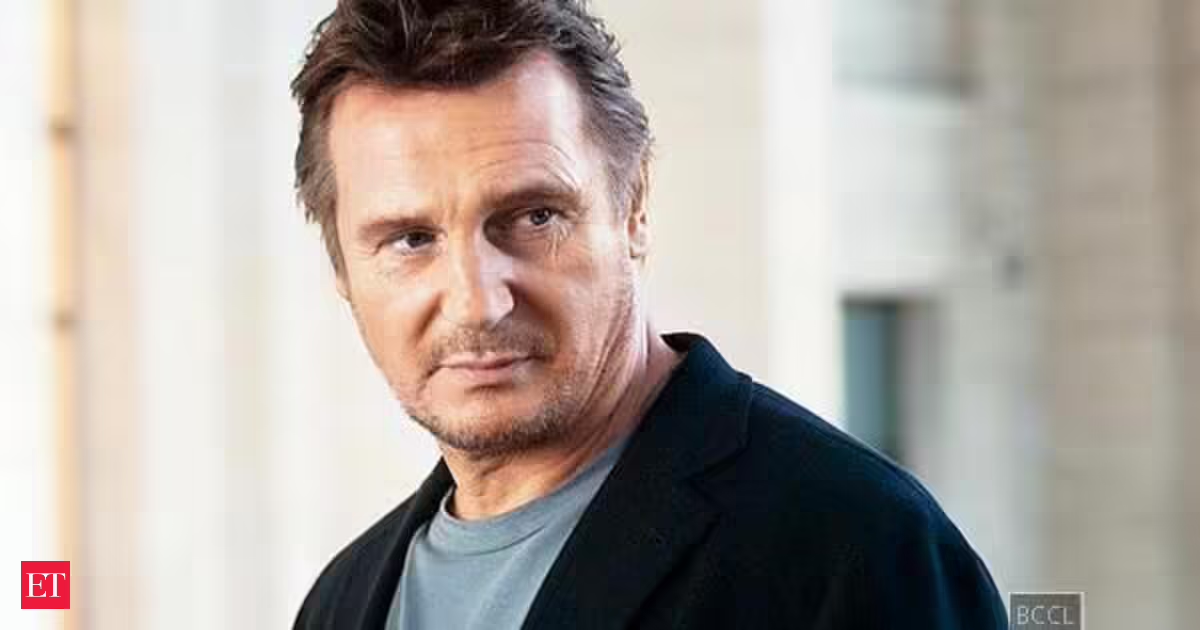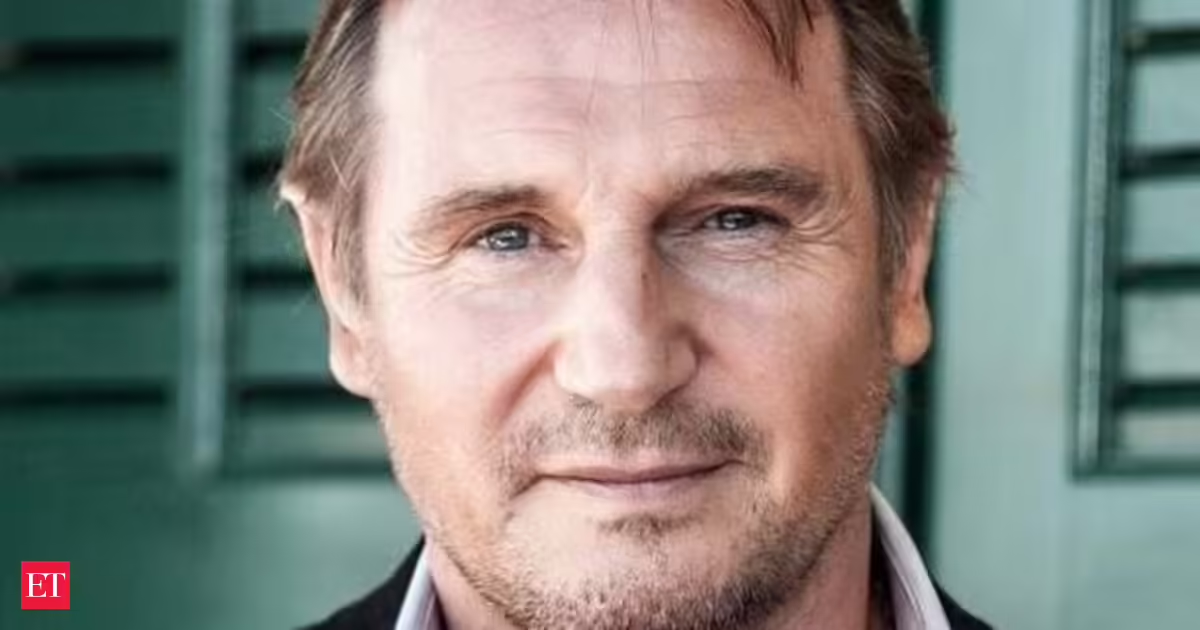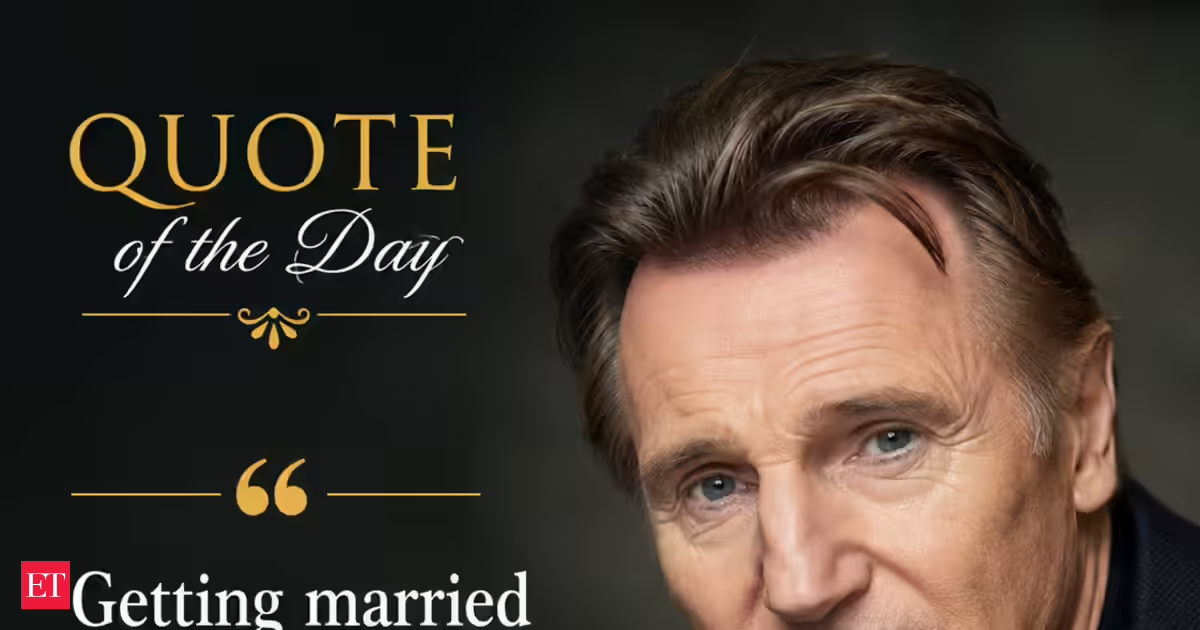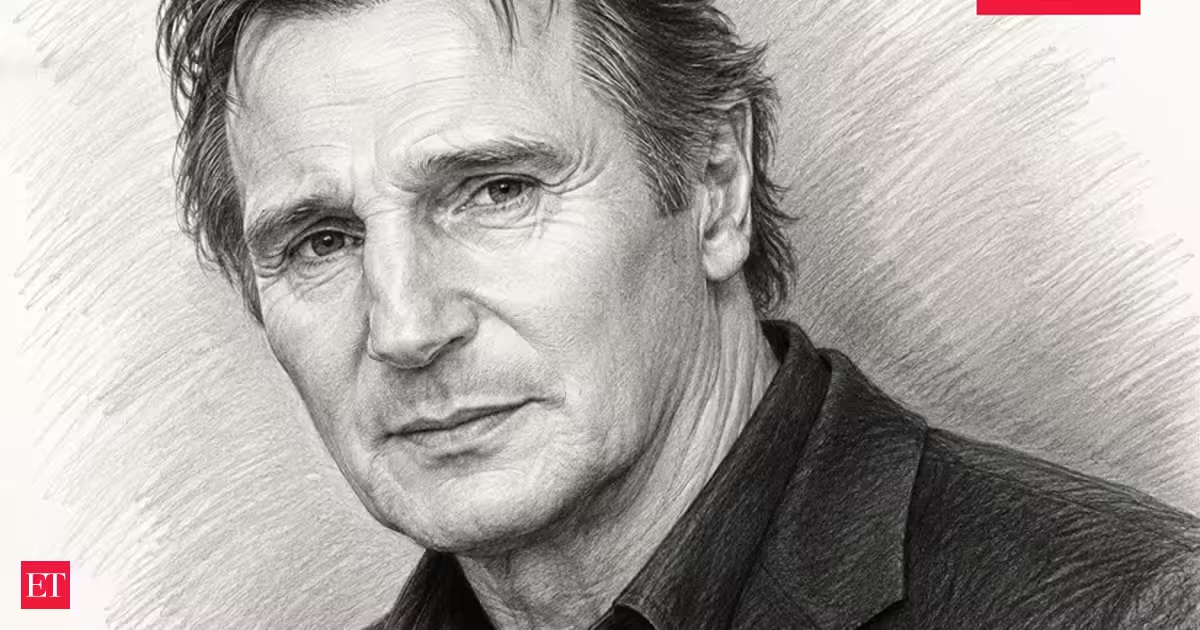
In Paulo Coelho’s The Alchemist, the young shepherd Santiago leaves behind an ordinary life because he believes people become their truest selves when they follow a greater purpose. It is an idea that has fueled literature, philosophy, and everyday life’s one of the most intriguing questions: what transforms an ordinary person into someone extraordinary? Is it talent, success, or the decision to dedicate yourself to something bigger than yourself?That timeless question sits at the heart of one of Liam Neeson’s most thought-provoking reflections.Quote of the Day by Liam Neeson: “If you make yourself more than just a man, if you devote yourself to an ideal, you become something else entirely.”The quote is widely associated with Liam Neeson, who uttered the line as Ra’s al Ghul in Batman Begins (2005). Over the years, it has become one of the actor’s most frequently shared and discussed quotes because it speaks to ambition, conviction, and the power of commitment. Whether viewed through the lens of cinema or real life, the message continues to resonate with people searching for meaning and direction.What the quote is actually suggestingAt its core, the quote is about the transformative power of purpose. It suggests that people rise above ordinary limitations when they dedicate themselves to an ideal or a cause they deeply believe in. The “ideal” does not have to be something grand or world-changing. It can be a commitment to family, personal growth, creativity, honesty, or helping others.The quote also points to the difference between simply existing and living with intention. Many people go through life reacting to circumstances, but those who define clear values and work toward them often discover a stronger sense of identity. They become more resilient because their actions are guided by something larger than temporary setbacks or distractions.In everyday life, this can mean staying committed to education despite challenges, working toward a career goal, standing by your principles or supporting the people you care about. Neeson’s words remind us that purpose can shape character, and character can shape destiny.Liam Neeson: The thinker behind the ideaLiam Neeson was born on June 7, 1952, in Ballymena, Northern Ireland, to a cook and a school caretaker. Raised Catholic, he worked as a forklift operator, truck driver, assistant architect, and amateur boxer before acting and even trained to become a teacher at St. Mary’s Teaching College in Newcastle.His career changed in 1976 when he joined the Belfast Lyric Players’ Theatre and two years later moved to Dublin’s Abbey Theatre. There he was noticed by director John Boorman, who cast him in Excalibur (1981). Throughout the 1980s he built a steady career in film and television, but his breakthrough came with Steven Spielberg’s Schindler’s List (1993), earning him Oscar, BAFTA, and Golden Globe nominations and establishing him as a leading actor.That same year, he made his Broadway debut in Anna Christi, opposite Natasha Richardson, who later became his wife. After acclaimed roles in Rob Roy, Michael Collins, Star Wars: Episode I, Batman Begins, and The Chronicles of Narnia, Neeson found an unexpected second act as an action star with Taken (2008).His life also included deep personal loss: in 2009, less than two months after Taken’s release, Richardson died in a skiing accident. Despite the tragedy, Neeson continued working in films like Clash of the Titans, Unknown, The Grey, and Taken 2. His resilience and long, hard-built career give real weight to the ideals behind his famous line about becoming “something else entirely” when you devote yourself to a cause.Liam Neeson’s thinking style and philosophy behind the quoteAlthough the line comes from one of Neeson’s film roles, it reflects a theme that has run through many of the characters he has portrayed. From Oskar Schindler to Qui-Gon Jinn and Bryan Mills in Taken, Neeson has often played individuals driven by duty, principle, and a willingness to sacrifice for something greater than themselves.His own life story also mirrors that idea. Before becoming an internationally recognized actor, Neeson worked ordinary jobs and gradually built his career through determination and persistence. He experienced both extraordinary professional success and profound personal hardship, yet he continued to move forward with quiet resilience.The quote captures a philosophy that identity is not fixed. Instead, people shape who they become through the values they choose and the causes they serve. It suggests that greatness is less about status or fame and more about commitment to an ideal.Why this idea still matters todayAs our world filled with distractions and constant pressure to chase quick results, many people struggle to find a sense of purpose. Careers change, relationships evolve, and unexpected setbacks can leave people questioning their direction. Neeson’s quote offers a simple but powerful reminder that a meaningful life is often built around values rather than achievements alone.The idea is especially relevant in modern workplaces, education, and personal growth. Students dedicate themselves to learning, parents devote themselves to raising children, and professionals often commit years to mastering a skill or building something lasting. In each case, the decision to pursue an ideal can transform not only what people do but also who they become.For anyone facing uncertainty or searching for motivation, the quote encourages looking beyond short-term rewards. It suggests that when people commit themselves to a purpose that truly matters, they often discover strength, resilience, and identity they never knew they had.
Quote of the Day by Liam Neeson: ‘If you make yourself more than just a man, if you devote...’ - The Schindler's List legend’s inspiring message about living with purpose
Liam Neeson's iconic line, 'If you make yourself more than just a man, if you devote yourself to an ideal, you become something else entirely,' from Batman Begins, highlights the transformative power of purpose. This idea, echoed in literature and life, suggests that dedicating oneself to a cause, big or small, elevates individuals beyond ordinary existence, shaping character and destiny.
886 words~4 min read