What separates a breakthrough AI product from just another AI tool? In a market flooded with new launches and rapid technological advances, the answer is becoming increasingly nuanced. As artificial intelligence moves from experimentation to enterprise adoption, innovation is no longer being judged solely by the sophistication of the underlying technology, but by the value it creates and the problems it solves. The AI industry is entering a more mature phase, where success is being measured less by hype and more by impact. This changing definition of excellence is also shaping the way innovation is being recognised across the ecosystem. Initiatives such as The ET Most Innovative AI Product Awards 2026 underscore the growing emphasis on products that combine technical ingenuity with measurable outcomes, responsible deployment, and long term potential. Technical innovation remains a key differentiator. From multi-modal capabilities and agentic AI systems to domain-specific applications, advances in AI are opening up new possibilities across industries. Yet organisations are becoming increasingly discerning, seeking solutions that address real-world challenges rather than simply showcasing cutting-edge capabilities. Measurable business outcomes are emerging as the true benchmark of success. Enterprises are prioritizing AI products that can improve productivity, optimize costs and accelerate decision making. The focus is steadily shifting from experimental proof-of-concept initiatives to scalable solutions capable of delivering sustained value. As concerns around governance, privacy and transparency intensify, responsible AI practices are evolving from a compliance requirement into a competitive advantage. In many ways, trust may prove to be as important as intelligence in determining the winners of the AI era.Equally important is user adoption. The most successful AI products are often those that integrate seamlessly into existing workflows and create intuitive experiences that encourage widespread use. After all, even the most advanced technology delivers little value if people do not embrace it.As AI continues to evolve, one thing is becoming increasingly evident: the winners of the next decade will not necessarily be those with the biggest models or the loudest announcements, but those capable of delivering meaningful impact at scale. In an era where artificial intelligence is rapidly moving from possibility to necessity, the true measure of innovation will lie not in what AI can do, but in the lasting value it creates. The next generation of AI leaders will be defined less by hype and more by excellence and that distinction is likely to separate industry pioneers from the rest
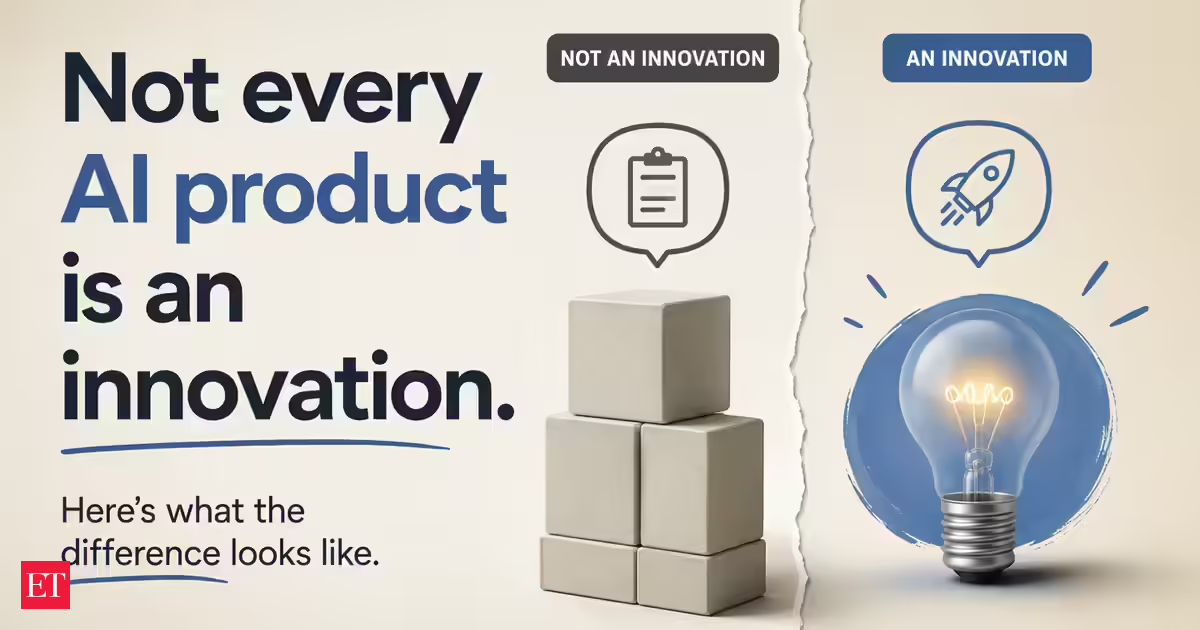
Not every AI product is an innovation. Here's what the difference looks like.
The AI market is no longer short on products, it is short on impact. As enterprise adoption accelerates, the benchmark for innovation is shifting from technical sophistication to measurable, real-world value. It is this evolving standard that lies at the heart of ‘The ET Most Innovative AI Product Awards 2026 a recognition built not around hype, but around excellence.
418 words~2 min read