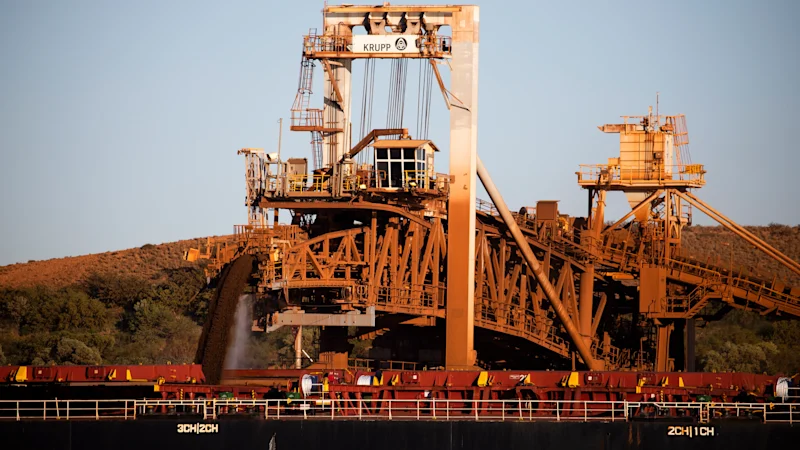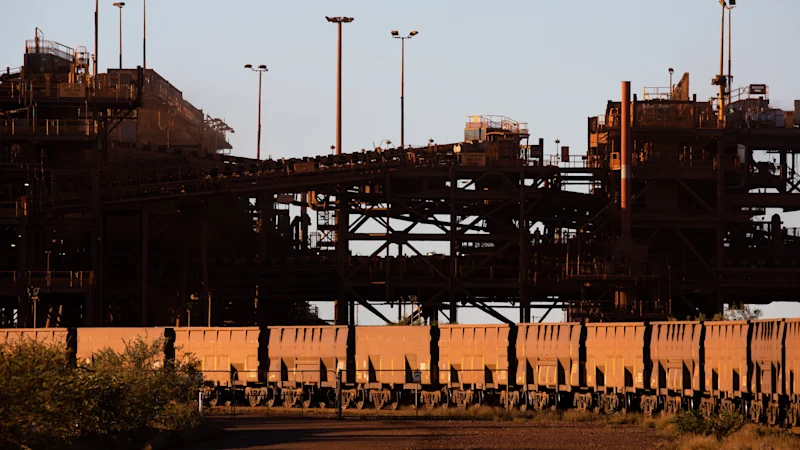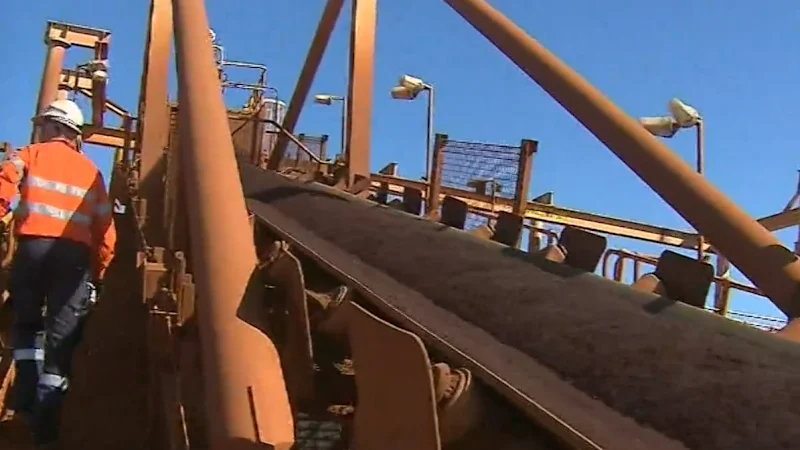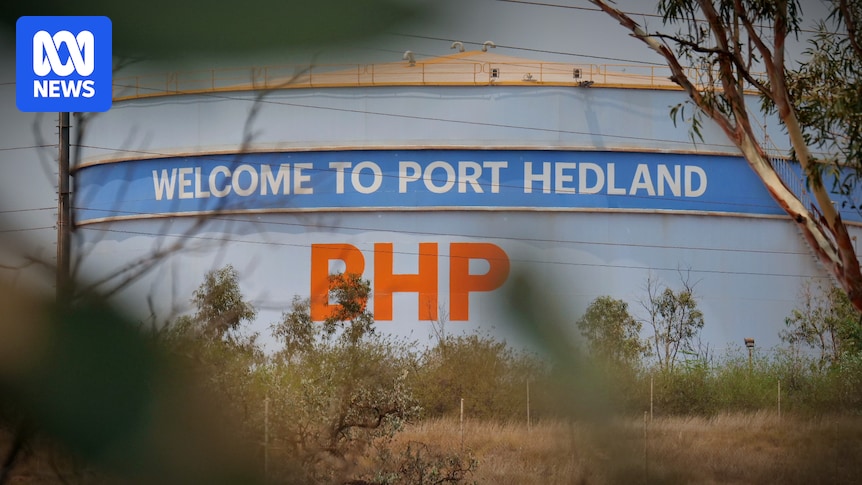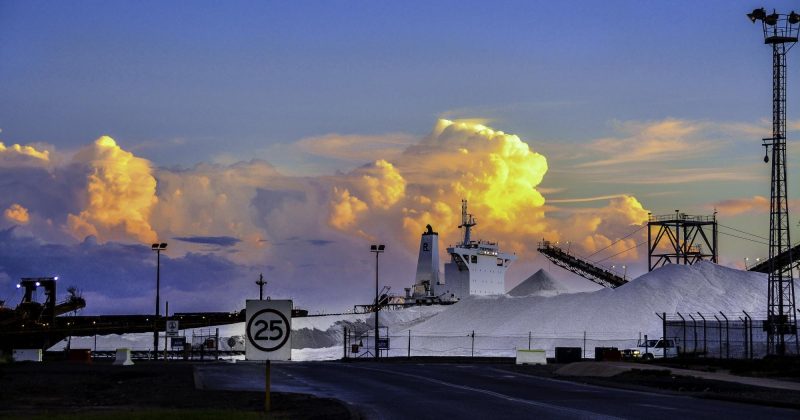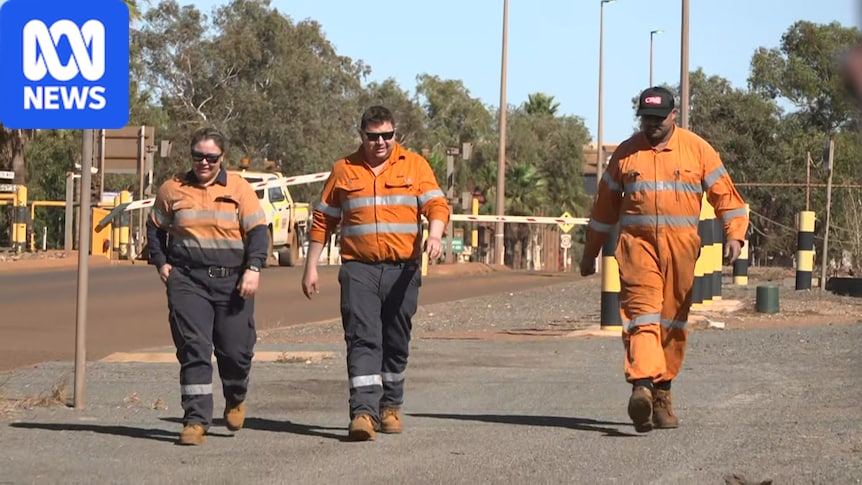
Unionised maintenance workers at BHP's port operations in WA's Pilbara have voted to go on strike, marking the start of what could be the mining industry's most significant industrial action this century.The Australian Manufacturing Workers Union (AMWU) confirmed 90 per cent of its members at the mining giant's operations in Port Hedland, 1,600km north of Perth, backed the proposed work stoppages.Results from a similar Electrical Trades Union (ETU) ballot are expected later today.If ETU members vote for protected action, stoppages involving around 450 workers could begin as early as next week, with staff required to give five days' notice of any industrial action at the country's largest bulk export port.The ballots asked workers to endorse an unlimited number of stoppages, ranging between 30 minutes and 24 hours.The votes covered 450 members of the ETU and AMWU in the port town. (ABC News: Jesmine Cheong)The vote followed months of failed negotiations between the unions and BHP over a new employment agreement for its local workforce.In a statement released after the vote, AMWU State Secretary Steve McCartney said the result was a sign of frustration within the mining giant's workforce."Workers shouldn't have to wait seven months for genuine progress at the bargaining table," he said."Members have had enough. They are demanding to be heard and they are demanding a fair agreement."Mr McCartney urged BHP to respect the workers' decision and return to the negotiating table in good faith.A BHP spokesperson told the ABC the company's focus was on reaching an outcome that maintained "industry leading pay and conditions"."In the event of union disruptions at out sites, we have strong contingency plans in place to protect our people and ensure safe, reliable operations can continue."Any industrial action will have a significant operational impact on BHP. (ABC News: Kimberley Putland)It did not specify what those contingency plans involved.Western Australia's Chamber of Minerals and Energy said union demands threatened to damage the national economy."Direct and cooperative bargaining has delivered decades of jobs and productivity growth, the highest average wages in the country and more than $100 billion in royalties for WA," Chamber chief executive Aaron Morey said in a statement."Shutting Port Hedland Port would cost our State millions in royalties per day, which erodes Government's ability to support nurses, teachers and other public servants. "Militant unions must be pulled into line."Unions aim to shut down port The financial costs of any disruption at the port are likely to be significant, with a number of estimates put forward.BHP exported 290 million tonnes of iron ore through Port Hedland in the last financial year.Port Hedland is the largest bulk export port in Australia by tonnage and a key cog in WA's iron ore industry. (ABC Pilbara: Alistair Bates)Based on the latest available reporting and budget data, the mining giant could face losses of between $110 million and $126 million per day.Any disruption to exports could cost the WA government $6.85 million a day in royalty payments.BHP, mining industry groups and the opposition have blamed the Albanese Government's changes to industrial relations laws for the return of unionised labour to the Pilbara after a lengthy absence.But Resources Minister Madeline King said BHP had successfully negotiated enterprise bargaining agreements with significant sections of its Australian workforce.Resources Minister Madeline King says workers have a right to take protected industrial action. (Supplied: Rio Tinto)The minister said workers had a legal right to take protected action."It seems to be a particular aversion to modern unionism in the Pilbara and it's difficult to understand sometimes," Ms King said."It is hard sometimes to understand why they object to EBAs in the Pilbara, but nonetheless, that is a matter for BHP and the union representatives to work out."The ideal outcome is for all parties to remain at the negotiating table and find a way through."Premier Roger Cook said the WA government had no role to play in resolving the dispute, but offered support to workers."Stand up for your rights; get the best wages and conditions that you can," Mr Cook said."Sit down and negotiate with the employers, come to an agreement, and continue to create great economic opportunities for you and your family."BHP says it has "strong contingency plans in place" in the event of protected industrial action. Strike 'historic'Unions maintained a significant presence in the Pilbara workforce throughout the 1970s and '80s, until an industrial dispute at Robe River weakened membership and political strength.Edith Cowan University industrial relations expert and labour historian Alexis Vassiley said there had been a steady return in recent years."They've been building up their presence, getting more organisers and campaigning," he said.Dr Vassiley said protected industrial action in Port Hedland could be the first of its kind since Rio Tinto train workers walked off the job in 2008."It would be huge," he said."Before that [2008], you'd have to go back to the 1990s."If what we do see is significant work stoppages, that would be historic."
Breaking: BHP bracing for strike after WA workers back industrial action
Unionised workers at BHPs operations in Port Hedland could walk off the job as soon as next week after endorsing protected industrial action.
815 words~4 min read