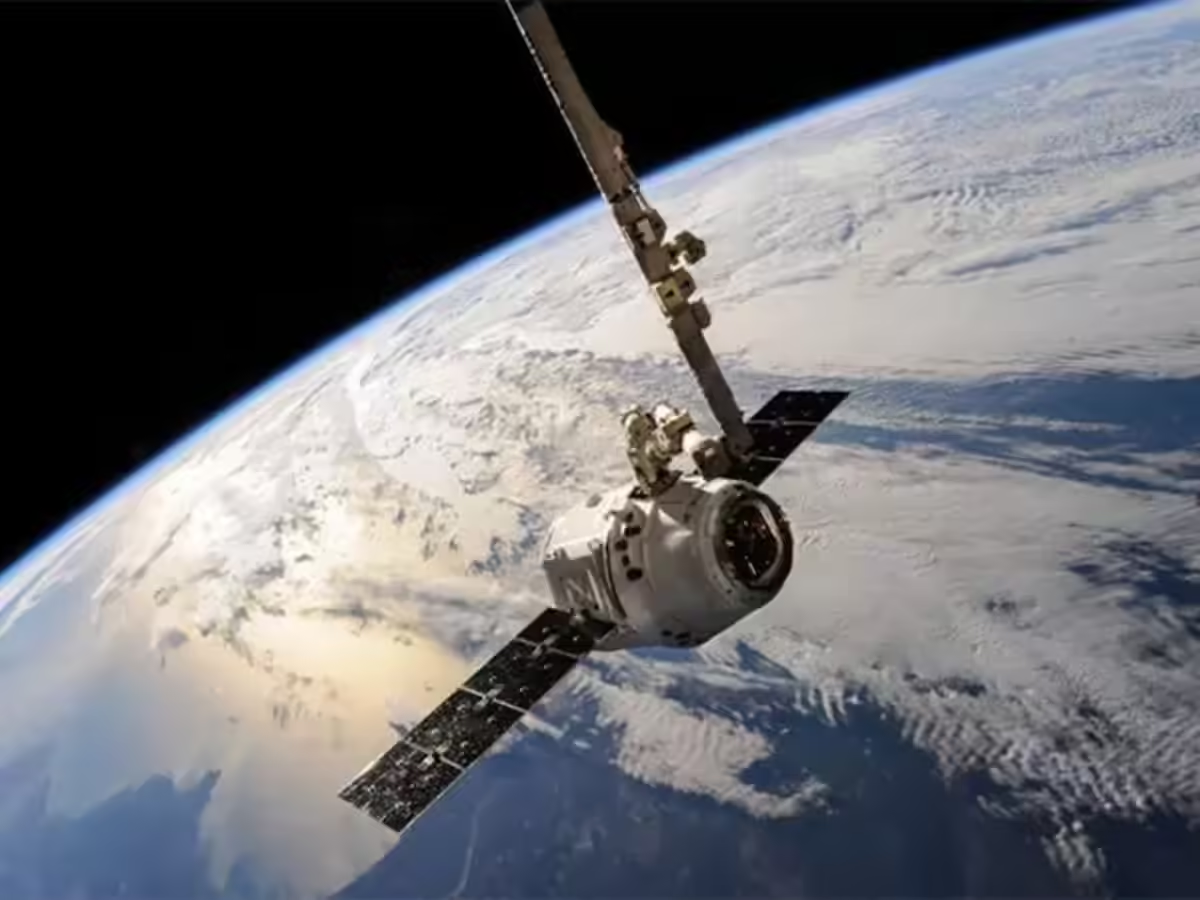
TakeMe2Space (TM2Space), a deeptech start-up building an orbital data centre infrastructure, has announced it is developing StarSense, the country’s first star tracker. It has received approval and backing from the Technology Adoption Fund (TAF) of the Indian National Space Promotion and Authorisation Centre (IN-SPACe)“Star trackers are the high-precision sensors that let a satellite know exactly where it is pointing, with the single-digit arcsecond accuracy that advanced imaging and communications missions depend on,” Ronak Kumar Samantray, Founder and CEO of TakeMe2Space, said.Satellite manufacturers in the country are currently importing them almost entirely from the United States and Europe. The project follows a structured 24-month development timeline that will take the system from its current laboratory testing phase to a fully qualified, space-ready flight model.With India projected to launch about 150 satellites over the next three years, and commercial missions requiring dual-tracker setups for redundancy, the domestic market alone needs at least 300 star trackers in the immediate future.“By replacing imported subsystems with a locally developed alternative, Indian satellite builders, including startups, academia and defence entities, can bypass restrictive foreign export controls, remove supply chain vulnerabilities and significantly accelerate mission timelines,” he said.It will also open substantial export opportunities, positioning India as a trusted global hub for space technology.TM2Space is developing two variants of star trackers for the modern NewSpace landscape. StarSense Lite is optimised for size, weight, power, and affordability, and is aimed at the fast-growing CubeSat market and academic programmes.StarSense Pro is a high-performance, ultra-precise variant for satellites larger than 50 kg that demand stringent pointing knowledge.“Beyond meeting immediate domestic demand, StarSense is a critical step in TakeMe2Space’s larger mission of building a 1 gigawatt Orbital Data Center (ODC), a planned constellation of 20,000 high-performance compute satellites,” he said.Published on June 11, 2026
TakeMe2Space to build AI-powered star tracker
Gets IN-SPACE funding to build the AI-powered star tracker that helps satellites in navigating
293 words~1 min read