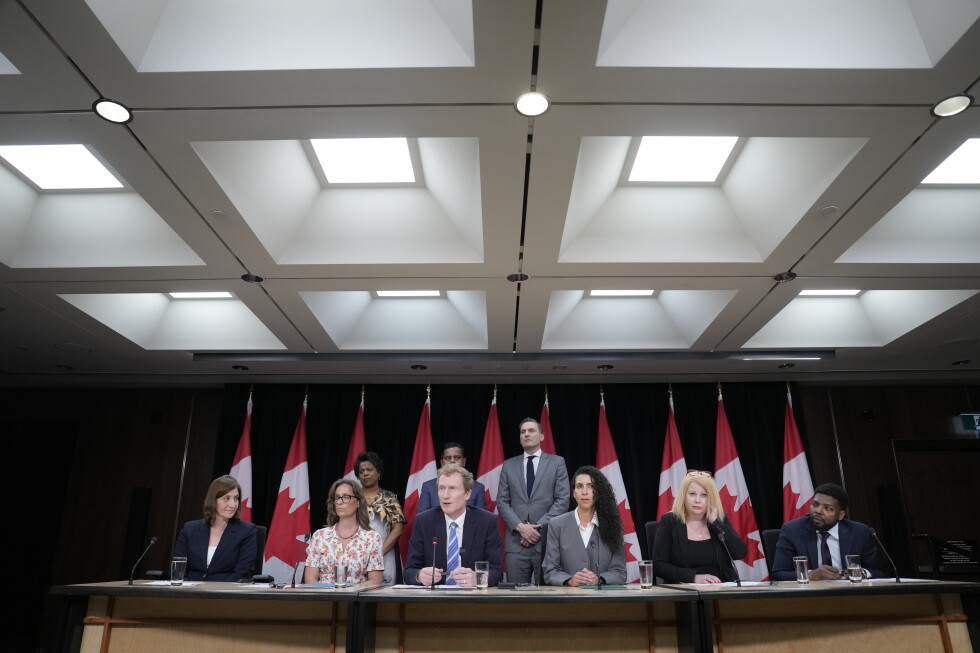
Canada’s government on Wednesday became the latest to introduce a ban on social media use for children under 16, following Australia’s example. But as Ireland promises to use its six-month presidency of the European Union to push for similar legislation, lawmakers should also look at the experience beyond the English-speaking world.How to protect children onlineCanada’s Safe Social Media Act comes weeks after the families of victims of a mass shooting in British Columbia last February sued Open AI, alleging the company knew the killer was planning the attack on Chat GPT. Canada’s culture minister, Marc Miller, said yesterday that the legislation, which will establish safety standards for AI chatbots as well as banning most social media for under 16s, could have helped to prevent the shooting that killed six people, five of them children aged 12 and 13.“I’m not going to sit here and pretend today that there is one rapid solution that would have prevented what happened at Tumbler Ridge from happening but I do think this law could have made a difference,” he said.The legislation will not ban AI chatbots for under-16s, because they can be also used as educational tools, but a digital regulator will set standards for them. Social media platforms will also be able to avoid an age restriction if they meet certain safety standards, an approach aimed at encouraging tech companies to design their platforms to include appropriate child protection.Australia’s blanket ban on social media for under-16s has received most global attention but a handful of other countries have already introduced restrictions too. The most comprehensive are in China, which requires large platforms to introduce a “minor mode” that limits screen time, blocks use between 10pm and 6am and includes age-appropriate content filters, break reminders and anti-addiction tools for users under 16.The authorities directed device manufacturers, app developers and app stores to work together to develop minor mode, which sits on top of China’s already extensive system of censorship for social media, which requires proof of real ID for anyone to access. Parents can customise minor mode to determine how restrictive it should be and all settings require parental verification to change or remove.Brazil’s ECA Digital, which president Luiz Inácio Lula da Silva signed into law last September, is perhaps the most interesting model insofar as it is rooted in the concept of protecting children’s rights rather than restricting them. It is an extension of the country’s Statute of the Child and Adolescent, which was introduced when Brazil ratified the UN Convention on the Rights of the Child in 1990.ECA Digital requires child safety to be embedded into the design of digital systems, imposing obligations on content providers, app developers, social media platforms, gaming companies, and other suppliers of digital products and services. Instead of asking if a platform knew about the harm caused by its use, the legislation asks if the platform was designed to prevent it.Children under 12 are banned from all social media not specifically designed for children, and those between 12 and 16 can only access platforms through an account confirmed and verified by a parent or a legal guardian. The law bans addictive features such as infinite scroll and automatic video play from accounts for under-16s, introduces mandatory breaks, suspends notifications from 10pm to 6am and classifies loot boxes in video games as gambling, so they are unavailable to minors.Platforms are responsible for ensuring compliance, including by implementing effective age-verification tools and removing dangerous content and reporting it to the relevant authorities. Big platforms will have to publish twice-yearly reports in Portuguese detailing how they are dealing with complaints and reducing risk, and they must have a legal representative in Brazil who is authorised to represent them in administrative and legal proceedings.Please let me know what you think and send your comments, thoughts or suggestions for topics you would like to see covered to denis.globalbriefing@irishtimes.com
What steps have other countries taken to protect children online?
As Ireland promises to push for similar legislation, lawmakers should look at experiences beyond the English-speaking world
646 words~3 min read