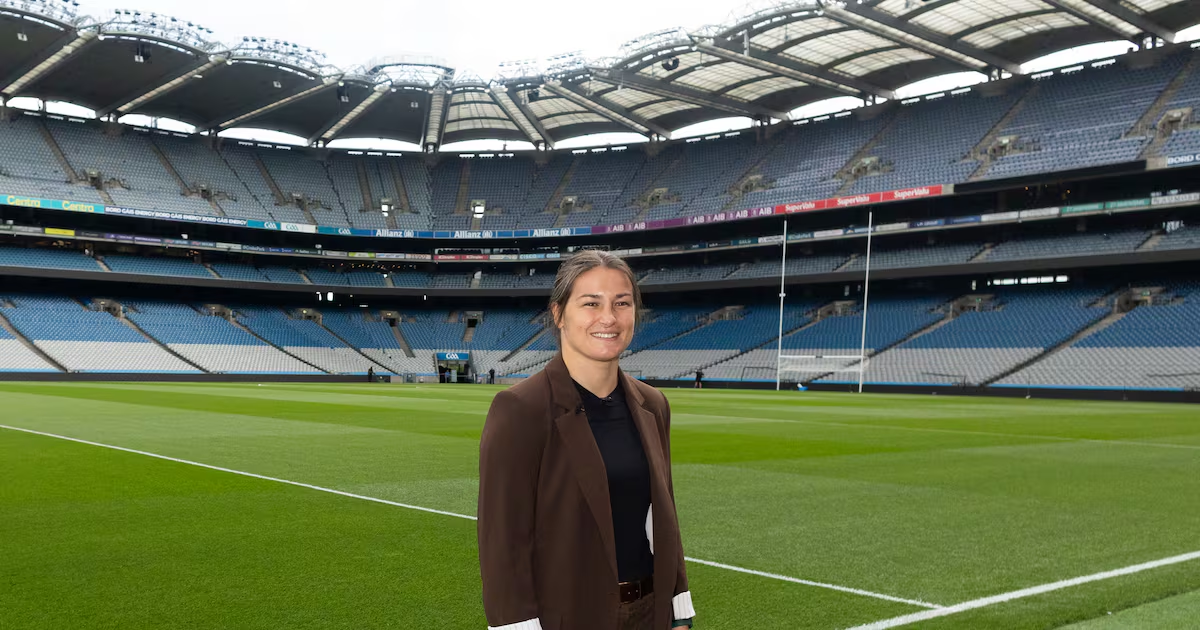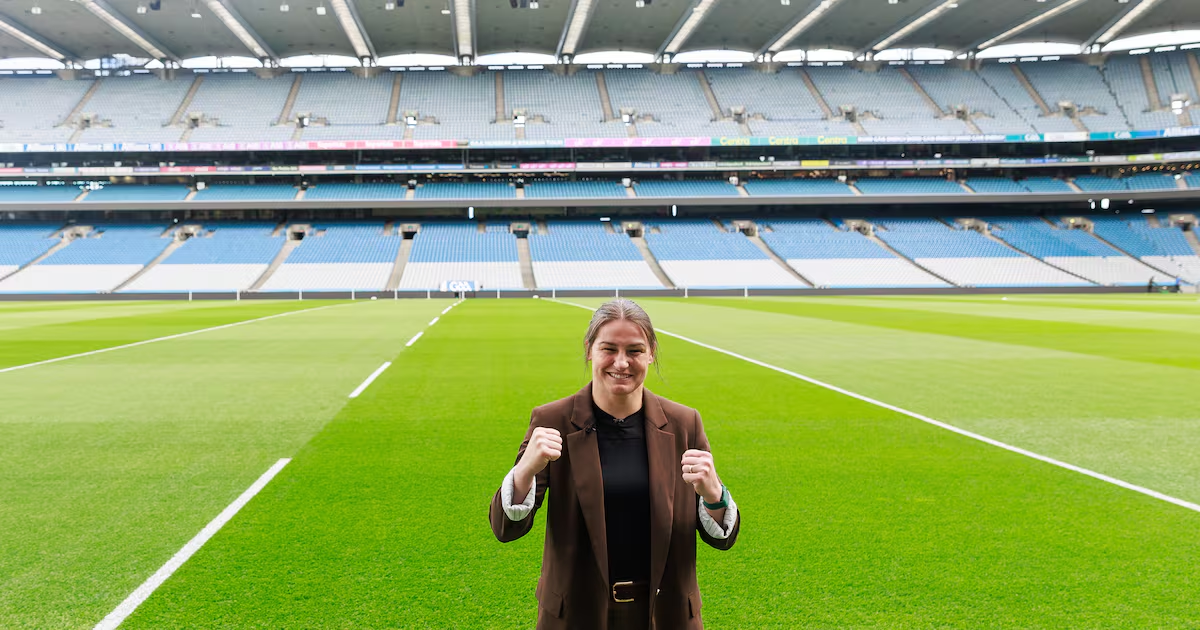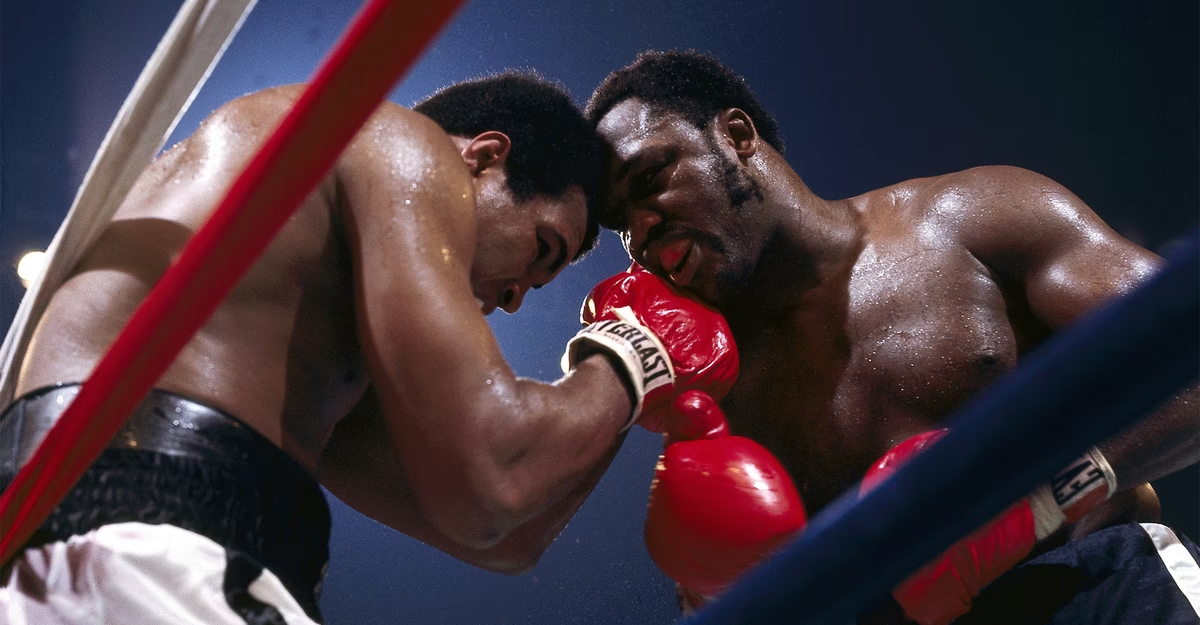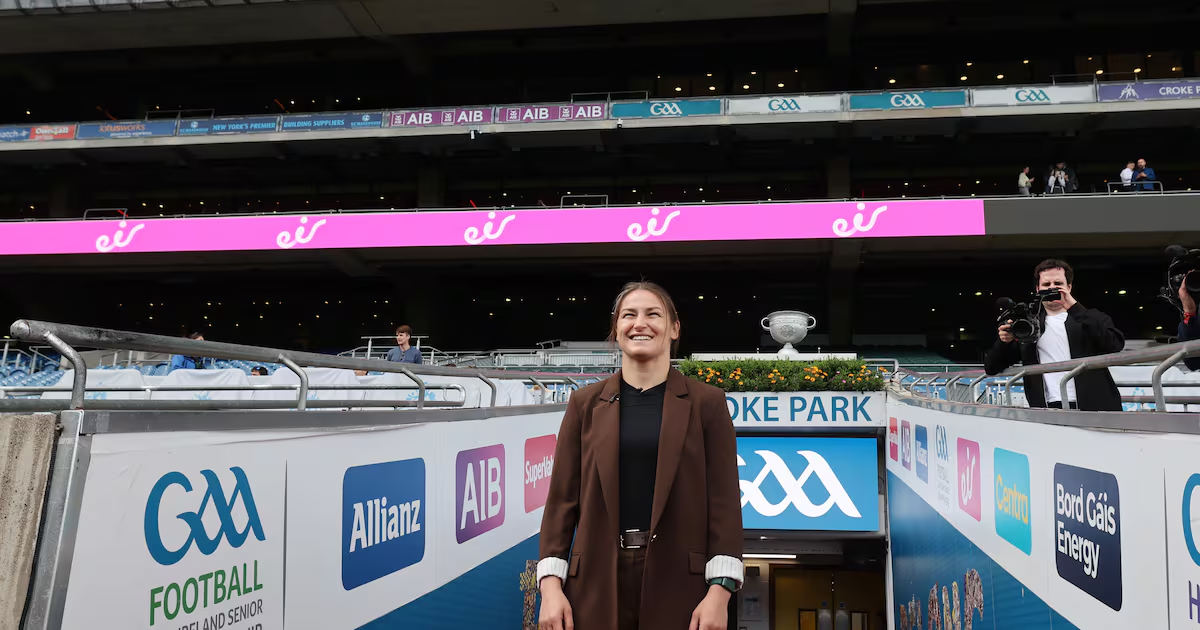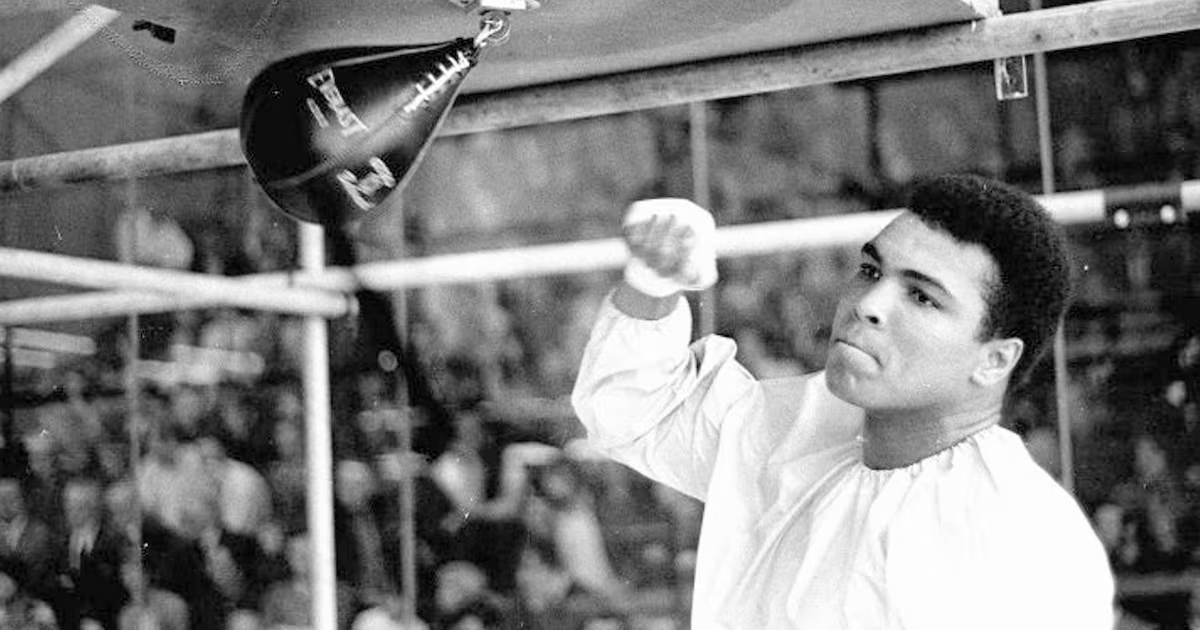
The last time there was professional boxing in Croke Park the manager of the Williams & Glyn Bank in London supposedly heard about the size of the takings, suffered a stroke and died. The poor man had underwritten Butty Sugrue bringing Muhammad Ali to Dublin to fight Al “Blue” Lewis to the tune of $300,000 (€259,860). Seemed like a decent investment at the time. This was Ali at 30, before the Rumble in the Jungle and the Thrilla in Manila, his star still in the ascendant. As long as 30,000 paid in, the bank’s stake was going to be covered and everything else would be profit. Except on that hot July night in 1972, just 18,725 tickets were sold. Some blamed the sunshine, others reckoned Ali had been so available around town the novelty of his presence wore off. Either way, Sugrue, a former circus strongman from Kerry, discovered that dragging a double-decker bus across O’Connell Bridge with his teeth was a lot easier than filling cavernous Croker. Given the protracted negotiations involving Eddie Hearn, Peter Aiken and Brian Peters finally securing the same venue for Katie Taylor’s farewell to arms, one presumes those canny operators know their history. Just in case they don’t, here are some crucial tips to avoid the financial and logistical disasters that befell their fistic predecessors on Jones Road.1. Source a proper-sized ring of professional quality early onAli ended up dancing on a canvas and bouncing off ropes that had to be lifted out of Edenderry Boxing Club, then housed in a disused shoe factory by the banks of the Royal Canal. The original plan had been to borrow the squared circle from the King’s Hall in Belfast and when that fell through, a ring from the British Army barracks in Holywood crossed the border only for it to be deemed too small at 16 feet. Alarmist US concerns about a bomb being packed inside it en route by one of the warring parties in the north proved unfounded.Muhammad Ali poses with a young fan at at Stewarts Hospital Fete, Palmerstown, Dublin in the summer of 1972. Photo: The Irish Times 2. Don’t wait until the afternoon of the fight to figure out whose job it is to bring the glovesA matter of hours before the first bout on the Ali undercard, Barney Eastwood asked that question at lunch and precipitated a madcap cross-channel race against the clock. Eastwood phoned Gary Hart, a jockey friend in London and dispatched him to the British Boxing Board of Control. With several sets of gloves strung around his neck, Hart scampered to Heathrow, flew to Dublin and then, with fans already seated, had to argue with security at Croke Park before being allowed in.3. Guard the perimeter. Of the stadium The moment The Dubliners had finished playing a rousing Amhran Na Bhfiann, gaggles of likely lads started to appear on the previously empty Hill 16. Believing the song had been the prearranged signal for thousands of locals to come in over the walls, Don Elbaum in Lewis’s corner compared it to the scene in a Western when the horizon suddenly fills with Native American warriors on horseback. Except these enterprising jackeens were just bent on getting in for free. A couple of young gardaí walked towards the hordes, shaping to repel the invaders, saw they were outnumbered and quickly turned back. Must have learned the lesson about discretion and valour at Templemore.Muhammad Ali in action against Al 'Blue' Lewis during a Heavyweight fight at Croke Park July 19, 1972. Photograph: Don Morley/Allsport/Getty 4. Price the tickets smartly With family passes for Taylor-Pili retailing for €125.50, Hearn appears keen to avoid empty seats. Clever move. Sugrue charged £15 for ringside while the most distant standing spot on the terraces went for £2. Decent locations around the stadium were also available for £10 and £5. Too much. “I would hope that the promoters might have a better understanding of the kind of money Irish people are prepared to pay for a sporting fixture,” said Seán Ó Síocháin, general secretary of the GAA, afterwards. “If the Cusack Stand had been priced at £2, I think they would have filled it and made more money.” A man speaking from experience.5. Guard the perimeter. Of the ringAfter Ali had been spurred on to finish matters against the game Lewis early in the 11th because he was, in his own words, “bursting” to go to the toilet, the crowd swarmed the stage. Suddenly, haymakers were being thrown at local yokels by angry cornermen and gardaí were grabbing young fellas by the lapels. Amid the chaos, a bemused Ali was stranded, unable to move. Following a lengthy stand-off, a random Dubliner clambered up on to the apron and implored: “The champion has given us a great night’s entertainment. Now be fair, Muhammad wants to go to his dressingroom.” A pregnant pause yielded another voice that roared: “Let the dressingroom come to Muhammad, we’re not moving!”Muhammad Ali with then taoiseach Jack Lynch at Leinster House, Dublin. Photo: Kevin McMahon 6. Keep costs downTo save money, Butty didn’t take a penthouse suite at The Gresham like his co-promoter Harold Conrad or even a basic room at Opperman’s Country Club out in Kilternan where Ali and his entourage were billeted. Instead, he stayed at his friend’s flat on Sean McDermott Street and, in the days after the event, many who had worked the fight traipsed there looking for money owed. Like a true champ, he fished crumpled, beery bills, which may or may not have come from his London pub The Wellington, out of a bin bag and paid every one of his small creditors. Eddie Hearn will probably use Revolut.
Six ways Katie Taylor’s camp can avoid the problems that befell Muhammad Ali’s Croke Park fight
The meeting of Ali and Al “Blue” Lewis on a hot July night in 1972 proved a financial and logistical disaster
953 words~4 min read