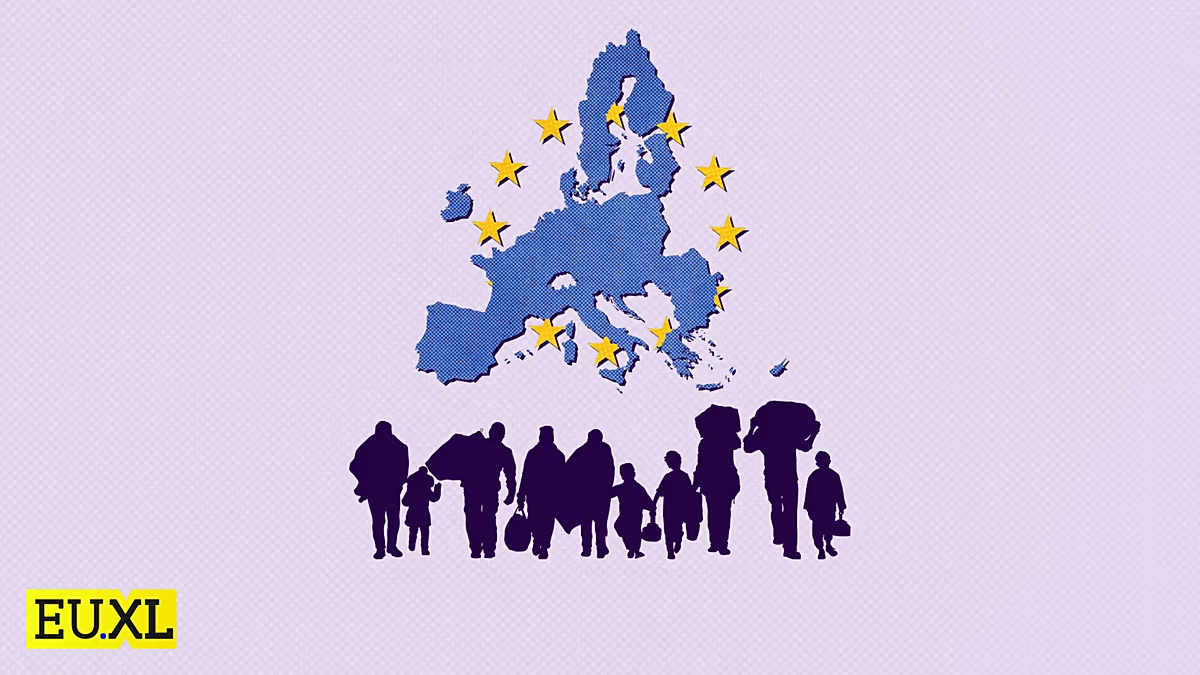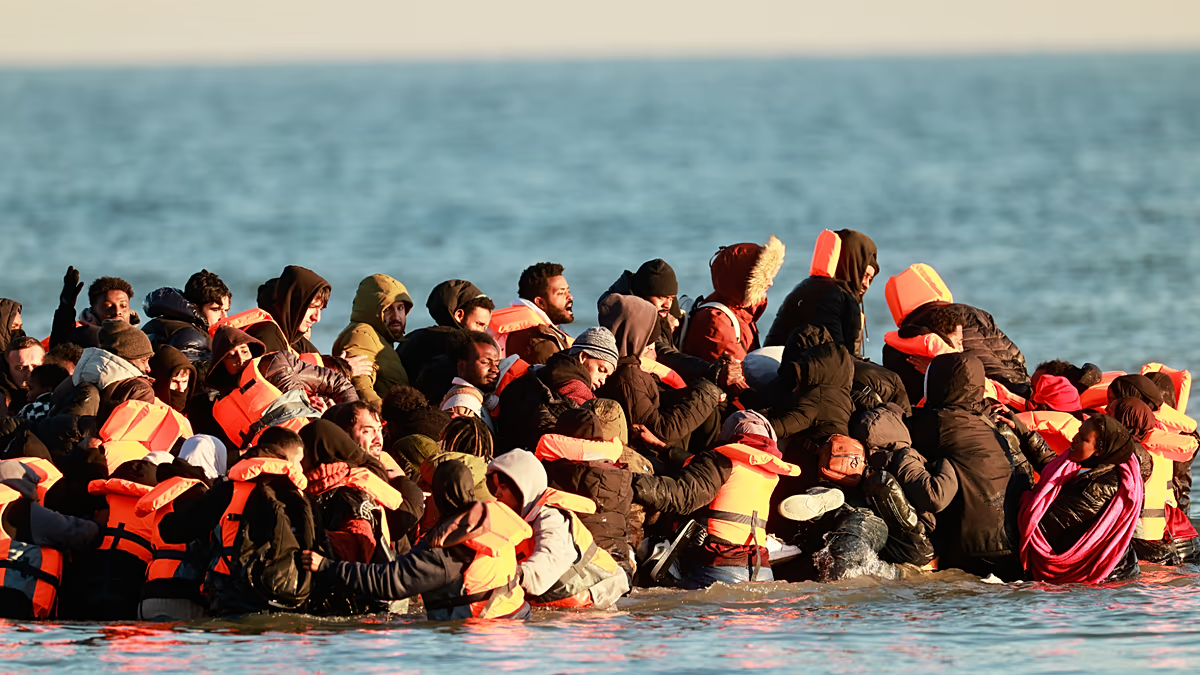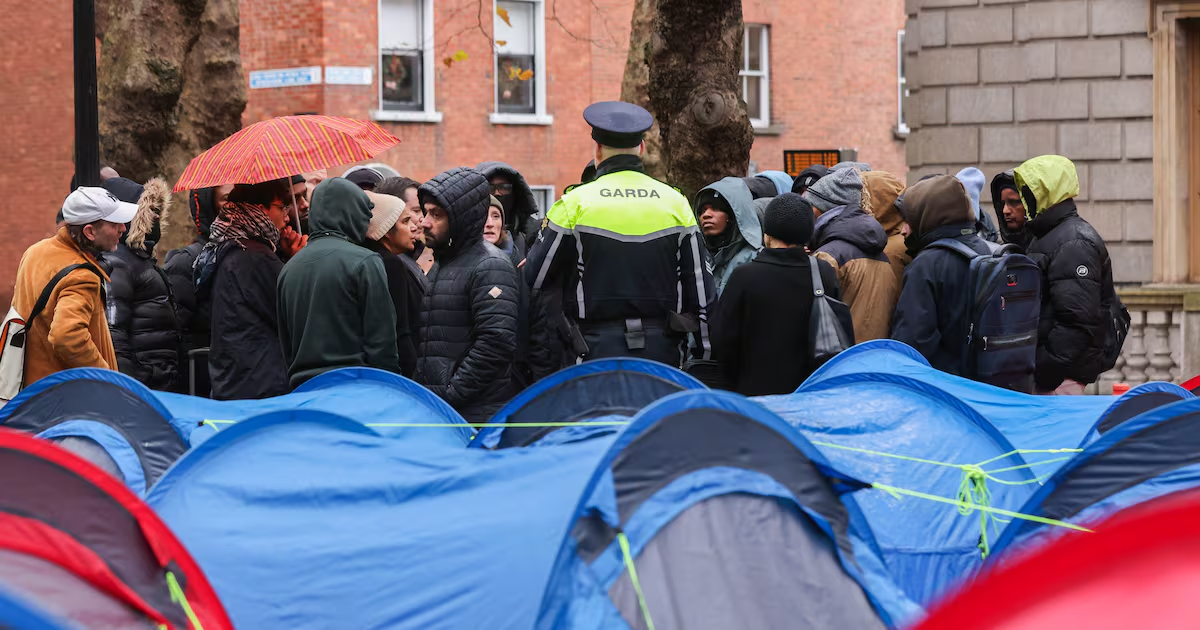
Tomorrow the European Union’s (EU) Pact on Migration and Asylum shifts from being a much-vaunted idea into law across the EU member states. In Ireland, the International Protection Act 2026 transposes several thousand pages of EU law into domestic law. This law will create fast track decision-making factories with few safeguards. With decisions being made in a matter of weeks, combined with an over-stretched and under-resourced Legal Aid Board, meaningful intervention from a lawyer or support organisation will be made much more difficult. For those international protection applicants who do squeeze through the process and are recognised as refugees, reunification with their families is now a much more remote prospect. In reality, they may not see their children or partner for several years. From Friday, if you have refugee status you will be barred from making an application for family reunification for two years, and after that you must show near complete independence from the State. And do not forget all the people still in the system who will have applied before tomorrow. Nearly 36,000 cases are backed up before the International Protection Office and the International Protection Appeals Tribunal (IPAT), the existing first application and appeal bodies. The Government is sitting on around 580 family reunification applications that have been outstanding for more than two years.There are several safeguards within the new Act but these look unclear, at best. The independence of the Tribunal for Asylum and Returns Appeal (TARA), the new appeals body, was questioned during the legislative process since the Minister for Justice retains significant control over the appointment of tribunal officers. Then there is the volume and speed demanded of the tribunal. Decision-makers will be required to make 250 decisions a year; there are only 250 working days in the year. This is compared to around 150 cases under the IPAT. The default format will be appeals that are presented on paper only and an individual will have to apply to have their case heard in person. This is a system that looks like it has been designed for expediency rather than humanity.The child representative role should provide close support and guidance to an unaccompanied child through the international protection process. A six-month pilot for this vital role was recently advertised (the Irish Refugee Council applied for this based on the experience of our child refugee service that guides children in the care of Tusla). The human rights monitor function in the Act has considerable potential, but its scope will be crucial. Unlike many member states which have entrusted an Ombudsman or human rights bodies with this function, Ireland is creating a new body entirely. A focused mandate could be a good thing, but it will need to start quickly. [ Practice of leaving asylum seekers to sleep rough must end, groups demandOpens in new window ] The pact is opening the way to an attack on the right to asylum. I spent two days in Brussels last week at an annual meeting of refugee organisations. I have been going to these meetings for 20 plus years, and while I have never seen such determination to continue our collective work, the external picture has never been so bleak. In December, several members of the Council of Europe, including Ireland, wrote a joint letter calling for changes to the European Convention on Human Rights. The Chisinau declaration in May takes this a step further. This is the domino chain that could result in a different level of rights protection depending on your status. Last week, the Council of Europe and the European Parliament agreed the next step for those refused refugee status: return hubs. Member states now propose to establish return hubs in third countries for those who have no right to stay in the member states. In Ireland, there is an ongoing a live attempt to limit recourse to the courts in the form of the Civil Reform Bill, which sought to move judicial review of immigration decisions from the High Court to the Circuit Court. Thankfully, this was withdrawn at committee stage, but serious questions remain about this law and Government attempt to limit access to judicial review. This all happened just when oversight of law is most needed. The Government plans for Ukraine accommodation to be wound down along with the Accommodation Recognition Payment. To do one is a problem; but to do both simultaneously is reckless and meanwhile the war continues in Ukraine. Meanwhile, this Government (and the previous one’s) policy of not providing accommodation to people seeking protection on arrival continues. Since October 2025, around 2,980 people have been refused accommodation. People must sleep rough, and have this verified by a charity, to demonstrate vulnerability and need for accommodation. This policy is unlawful according to the High Court and the Court of Justice of the EU. It is also dangerous, as it puts people seeking protection, volunteers and supporting organisations and their services at risk. And it is fuel to the fire of the far right. We also believe capacity exists in the system to accommodate people. [ Cutting Ukrainian accommodation supports could cause spike in asylum requests, groups warnOpens in new window ]All of this is against a backdrop of an ongoing housing crisis that cannot be solved with the current political will and approach. When you add the context of social media platforms built on addictive click algorithms, and fuelling public discontent, coupled with an economic model that has left a wealthy country struggling with basic service delivery and reasonable infrastructure, and when the cost of living steadily increases, the atmosphere quickly becomes toxic. There is real sense of a growing gap between the haves and have nots. These are not the ideal conditions to try to build an understanding of the issue of migration and the global conflict that drives it. Monday’s horrific attack in Belfast has lit a fire with families being burnt out of their homes amid scenes reminiscent of the Troubles. What happened in Belfast this week is a reminder of why we need real political leadership founded on human rights, inclusion and respect for all.Nick Henderson is chief executive of Irish Refugee Council
Opinion: Ireland’s asylum system is flawed, but a fast-track decision factory is not the answer
As the Migration Pact passes into law, the right to asylum must be safeguarded
1,028 words~5 min read