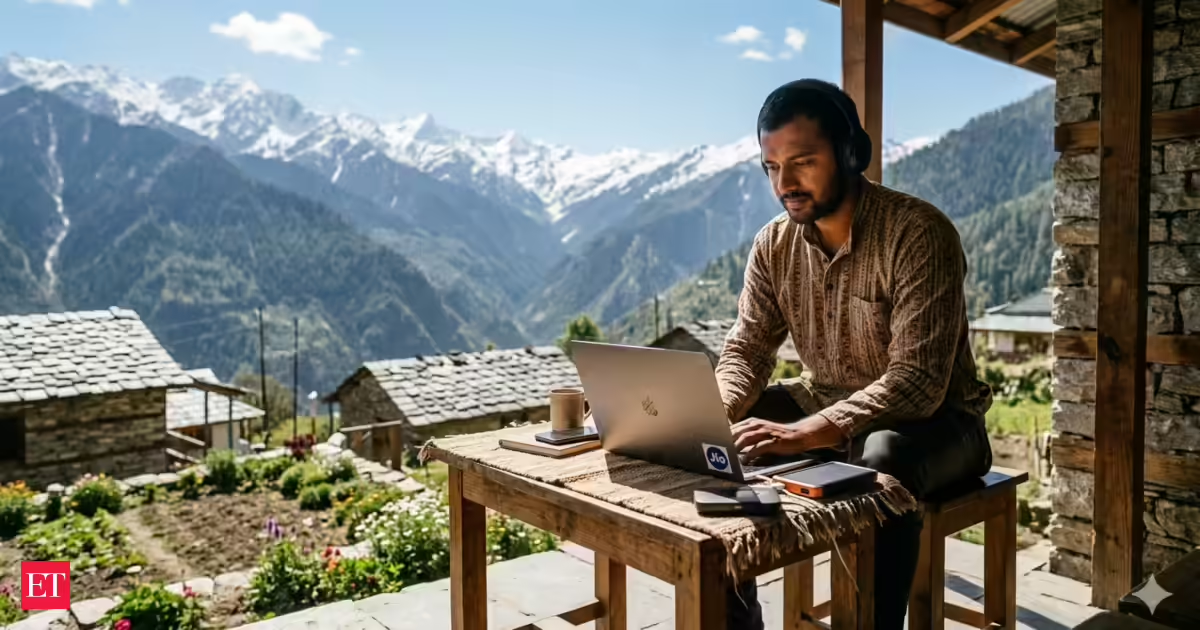
Working late into the night to align with US work hours has long been a reality for many professionals in India's tech and corporate sectors. While some view it as a necessary part of working with global teams, others argue that the hidden costs are often overlooked. A recent LinkedIn post has reignited the conversation, with one professional describing the practice as a "slow health breakdown" rather than a sign of dedication.The viral post reignited discussions about night shifts. (Unsplash)The post, shared by Shubham Shrivastava, resonated with many users who recounted their own experiences of disrupted sleep, burnout and declining health while working night shifts. The discussion soon sparked a broader debate about work culture, productivity and the price employees pay to stay connected across time zones.Sharing his views on LinkedIn, Shrivastava wrote, "Working US hours from India isn't hustle. It's a slow health breakdown. Meetings start at 7 PM. You're 'done' by 10. Then your brain needs two hours to wind down. You sleep at midnight. Wake up at 8. Repeat."He went on to describe how such schedules gradually affect daily life. "No workout. No walk. No real time with family. And somehow this has become a badge of honour in Indian tech."Shrivastava also challenged the common advice that employees can simply make use of their mornings. "People say 'just use your mornings'. Sure, except you're running on seven hours of broken sleep, and your body doesn't care about your productivity hacks."(Also Read: Radhika Ambani explains why she chose India over the US: ‘Trump was just becoming president…’)Highlighting what he believes is the bigger issue, he added, “The real cost isn't the hours. It's what you're slowly giving up, your health, your relationships, the parts of life that actually matter. I'm not saying don't work hard. I'm saying the overlap culture has gone too far, and we've normalised something we shouldn't have. Someone needs to say it out loud.”Internet reactsThe post struck a chord with several LinkedIn users. One user wrote, "I myself worked in the US time zone, and the biggest impact was on my sleep. I ended up with permanent dark circles, constantly felt dizzy and often felt as if all my energy had been drained. At the same time, you're expected to use your mind to its full potential and still deliver results."Another user reflected on the glorification of overwork, saying, "As someone who has spent years building a business, I've learned that burnout is not a badge of honour. The irony is that the things we sacrifice in the name of productivity, sleep, movement, relationships and play, are often the very things that fuel our best work."Not everyone agreed with the criticism of US time zone work. One commenter argued, "Better than toxic Indian work culture, where you start work at 9 am and continue even after coming home until 8 pm."Health concerns and work culture debateSeveral users pointed to the long term health consequences of working through the night. Drawing from clinical experience, one person commented, "In my eight years of clinical practice, the most severe cases I've come across are those who worked night shifts. Your hormones go for a toss. The biological rhythm of the body gets so disturbed and takes a lot of discipline later to restore what could have been normal if it had simply been a day shift."Others questioned why night shifts remain so common in a world increasingly shaped by technology. "I totally agree. Why do only Indians need to opt for night shift patterns? If we are evolving towards AI, the first thing we should create is automation for night tasks so that this shift problem moves completely from night to day," one user wrote.(Also Read: ‘They are living life. We are just living’: Indian employee recalls Norway culture shock)Another commenter highlighted the economic angle, saying, "Completely agree. The other side of this arrangement is that cheaper labour in India makes US and European companies come here to utilise this workforce. Money, money, money."Disclaimer: This report is based on user-generated content from social media. HT.com has not independently verified the claims and does not endorse them.
'No workout, no family time': Indian man says working US hours comes at a health cost
A LinkedIn post about working US hours from India has sparked a debate on burnout, sleep deprivation and work life balance. | Trending
689 words~3 min read