Thursday 11 June 2026 5:55 am
| Updated:
Wednesday 10 June 2026 6:10 pm
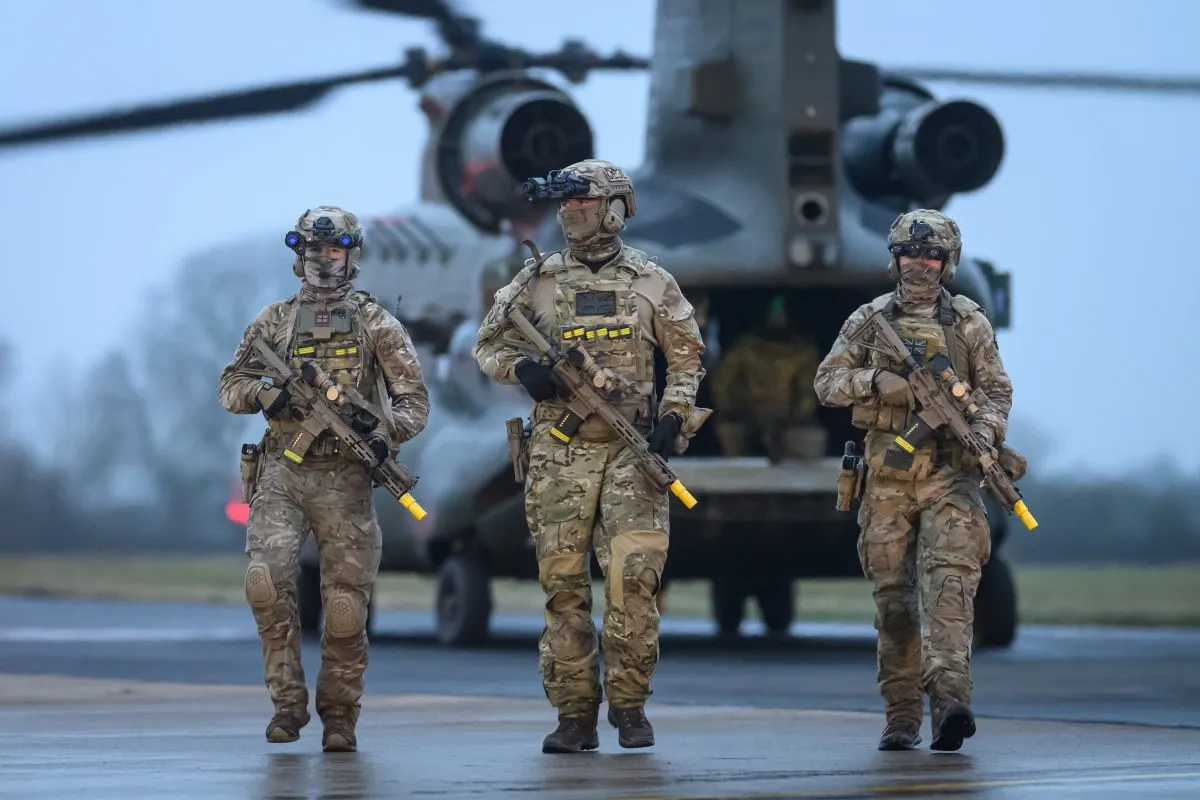
Britain has been racing to modernise its armed forces
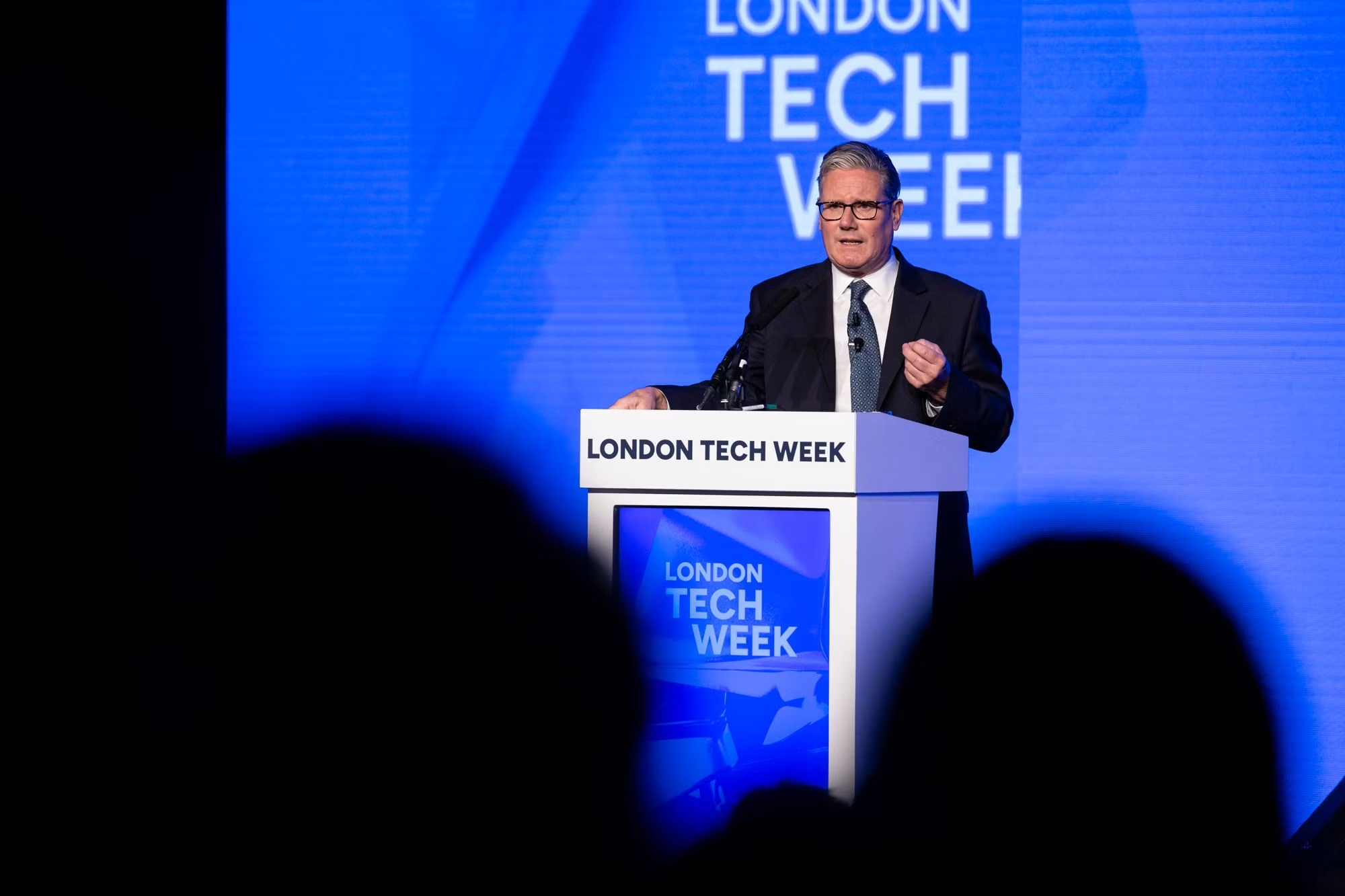
Britain’s most senior military officer has warned that the UK risks losing future conflicts unless it dramatically accelerates the adoption of AI across its armed forces.Speaking at London Tech Week, chief of the defence staff Air Chief Marshall Sir Richard Knighton said AI would be as transformative for warfare as the internet was for society, arguing that military leaders must update their assumptions about the technology every six months or risk falling behind adversaries.“If we can keep pace with the frontier, exploit new models and changes as they are updated every six months or quicker, then we will have a clear advantage in future,” Knighton announced. “If we don’t, we’ll lose.”Britain has been racing to modernise its armed forces amid growing geopolitical tension and intensifying global competition to develop military AI capabilities.Knighton announced the creation of a new Rapid AI Delivery Task Force, dubbed “task force RAID”, which will report directly to him and be given powers to bypass traditional procurement and recruitment processes.The unit has been tasked with accelerating the deployment of AI across military operations, intelligence gathering, battlefield planning and autonomous systems.The military chief said warfare was increasingly becoming a contest of who could adapt tech fastest.“Warfare is at its core competitive. It is quite literally a fight to the death,” he said. “The side that is able to diffuse and adopt technology faster than an opponent will win.”AI for drones and battlefield planningKnighton outlined four priority areas for the task force: intelligence fusion, electronic warfare, automated military planning and AI-enabled drone swarms.He said military headquarters had become bloated and overly reliant on manpower, arguing AI could fundamentally reshape existingn decision-making structures.“Today they are people enabled by technology. We want them to be technology enabled by people.”The armed forces are already trialling AI systems across all three services.The Army’s Project Asgard is using AI agents and LLMs to support soldiers in Estonia, while the Royal Air Force is deploying machine-learning tools to identify maintenance issues and operational risks on combat aircraft.The Royal Navy is also testing autonomous vessels which can navigate and make decisions without human input.Knighton said some intelligence processes that previously took weeks can now be completed in hours.A survey published last week by techUK found 73 per cent of defence tech firms believe market conditions have worsened since last year’s Strategic Defence Review, while the same proportion reported contract suspensions or cancellations in the past six months.Nearly nine in ten firms said they had experienced funding delays or reductions.Julian David, chief executive of techUK, warned the uncertainty was causing “measurable, immediate harm” to defence firms and forcing businesses to reconsider investment plans.The government has indicated the investment plan will be published before the upcoming NATO summit.Race for military AIThere has been a broader shift across Western militaries as governments increasingly turn to AI as a means to gain battlefield advantage.Last month the Ministry of Defence (MoD) awarded contracts worth up to £4m each to 13 defence technology startups under its Commercial X programme, part of an effort to speed up procurement, as well as a way to create a new generation of British defence tech giants.The UK defence tech sector has become one of Europe’s fastest-growing startup ecosystems, attracting investment into companies developing military AI, autonomous drones, cyber security tools and intelligence platforms.“NATO and our allies have an advantage,” Knighton said. “I believe that free societies with world-class universities, deep capital markets and allied mission-driven militaries can innovate and combine better than any top-down authoritarian system.”But he warned that adversaries were already deploying AI tools, particularly for disinformation campaigns.“Unlike us, they’re not constrained by the same ethical and moral boundaries,” he explained.The UK, he added, would maintain human accountability over the use of lethal force and would not allow AI systems to make kill decisions independently.“Humans, not machines, are accountable for decisions, especially when they relate to the application of lethal force.”