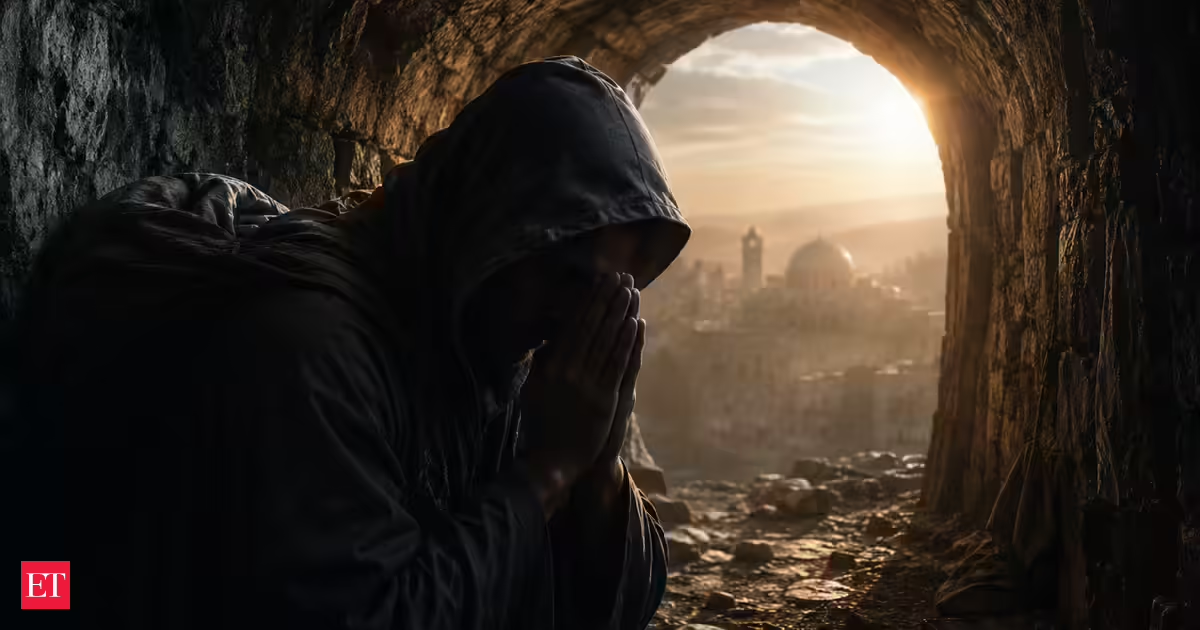
Have you ever noticed how people often turn to faith only when they are in trouble? A person may ignore moral principles for years, yet suddenly pray for help when facing a crisis. Does believing in something higher automatically make someone a good person? And can faith and wrongdoing exist side by side?An old Jewish saying offers a thought-provoking answer. It reminds us that belief alone is not the same as virtue, and that actions matter just as much as words.Jewish proverb of the day: “A thief standing at the entrance of the tunnel calls out to God”What this proverb meansLiterally, the proverb describes a thief about to enter a tunnel or passage to commit a crime. Despite preparing to do something dishonest, he still calls out to God, asking for protection or success.The image is deliberately ironic. The thief recognizes a higher power and seeks divine help, yet he is simultaneously engaged in wrongdoing. The proverb highlights the contradiction between professing faith and acting unethically.On a deeper level, the saying teaches that belief alone does not make a person virtuous. Many people claim strong values or religious convictions, but those beliefs must be reflected in their behavior. The proverb is also interpreted as proof that people often turn to faith during moments of danger or uncertainty, much like the saying, “There are no atheists in foxholes.”The lesson is clear: true character is measured not by what people say they believe, but by how they act when faced with choices.Significance of the proverb in real lifeThis proverb remains relevant in everyday life. In workplaces, communities, and personal relationships, people are often judged by their actions rather than their stated principles. Someone may speak about honesty, fairness, or kindness, but their credibility depends on whether they live by those values.The saying also serves as a reminder to examine our own behavior. It is easy to ask for guidance, luck, or support when facing challenges, but it is equally important to act with integrity and take responsibility for our decisions. Faith, values, and good intentions have the greatest meaning when they influence daily conduct.The broader takeaway is that belief and morality are not automatically the same thing. Genuine integrity comes from aligning actions with values, especially when doing the right thing is difficult.
Jewish proverb of the day: ‘A thief standing at the entrance of the tunnel calls out to God’ – a lesson on integrity and duality
Many turn to faith only in times of crisis, but a Jewish proverb highlights that belief alone doesn't equate to virtue. A thief praying for success while committing a crime illustrates this disconnect. True character is revealed by actions, not just words or professed values, especially when integrity is tested.
381 words~2 min read