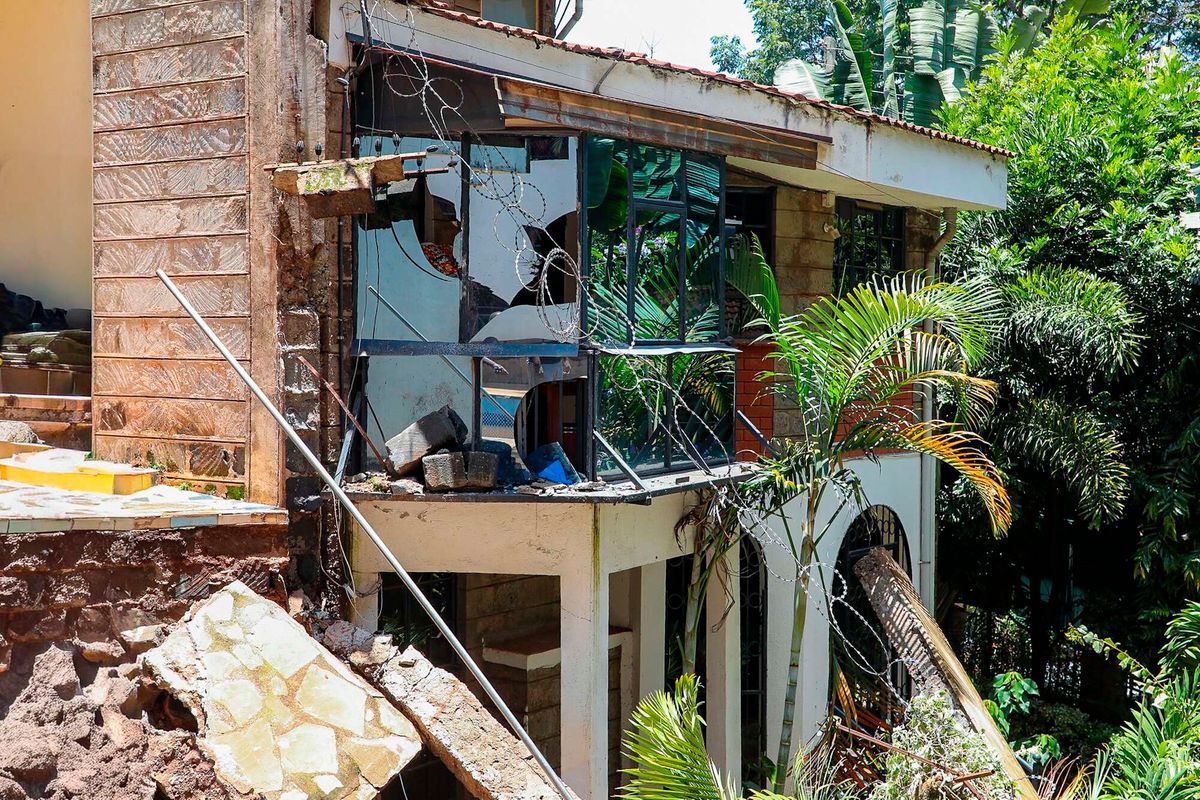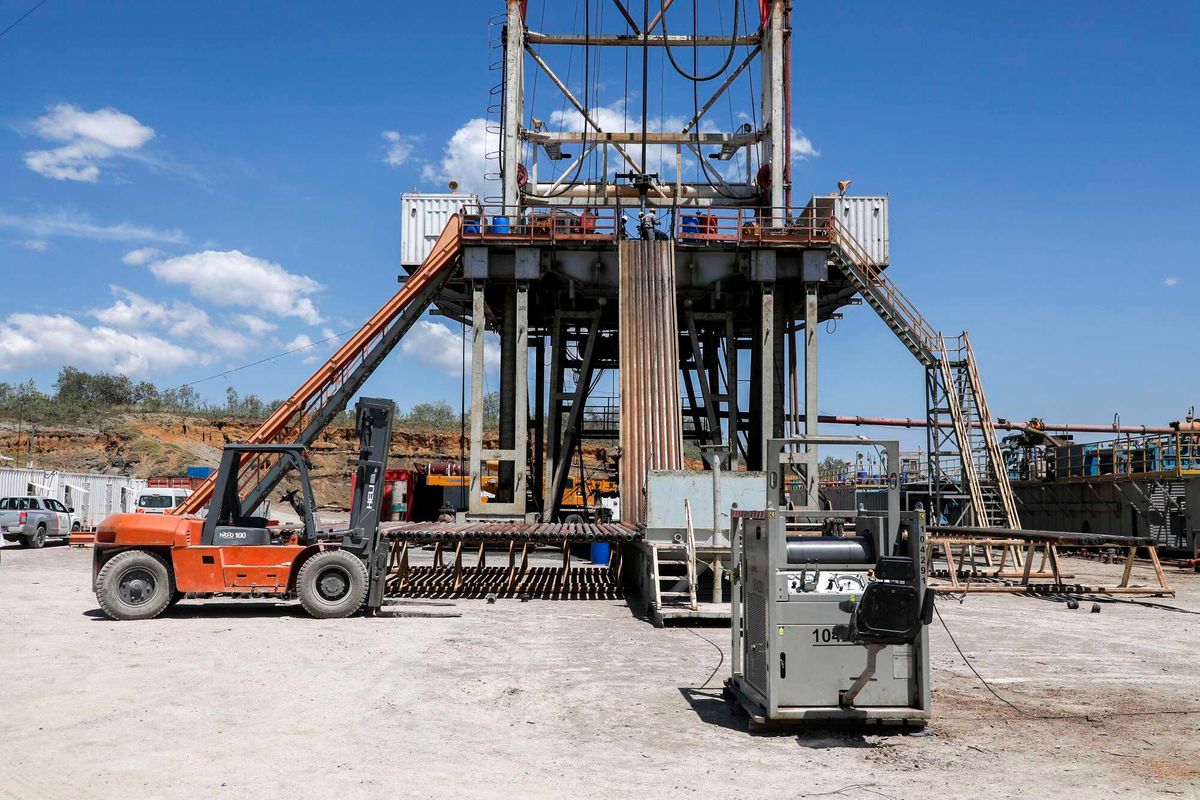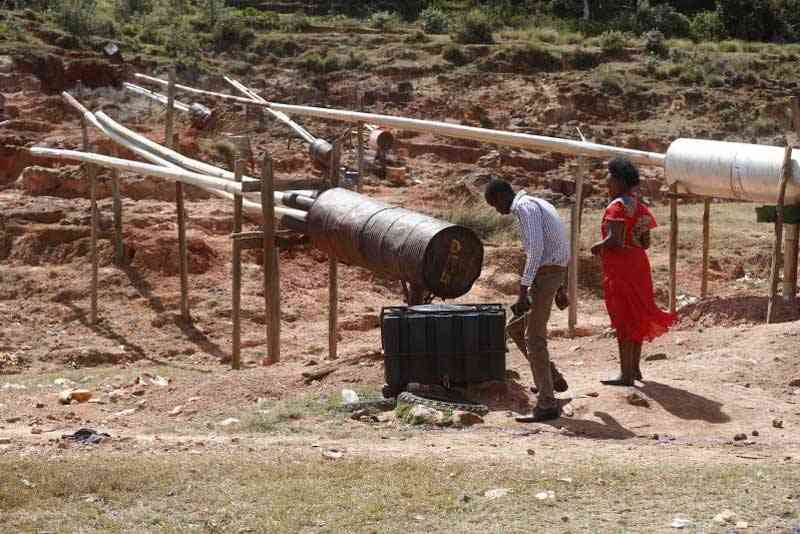
Residents check on water draining into a tank at an improvised equipment used in trapping steam from geysers at Eburru village in Gilgil.[Kipsang Joseph, Standard]Charles Mihuga lives on an eighth-acre piece of land in Nakuru County, where he's been a proud homeowner.Because of the minimal compound space, he opted for an underground water tank, which he found to be a great investment idea over a decade ago.Within a few years, however, the water started leaking due to a large crack in the wall caused by the roots of a giant jacaranda tree that had breached the tank's outer wall.The next headache was how to fix the problem.
Cutting down the tree wasn't the solution, as it would regrow.Excavating around the whole tank and refilling it was costly.
The repairs alone could even surpass the cost of a 10,000-litre capacity plastic tank.He went for the latter, which today is his primary storage tank.
It is an elevated ground-level platform. Like Mihunga, many homeowners would go for underground water storage tanks if they had less space.It could make sense if they were not connected to an external water piping system, like metered water offered by regulating bodies.But like in his situation, underground water tanks can give homeowners a headache in the long run, making them look like an investment waste. Chrispus Nginda, an architect and specialist in building such tanks, notes that, unlike the ground or overhead tanks, the underground ones can be hard to maintain. "You can't just pop their lids open to do general maintenance like cleaning unless you just drain them completely of water.