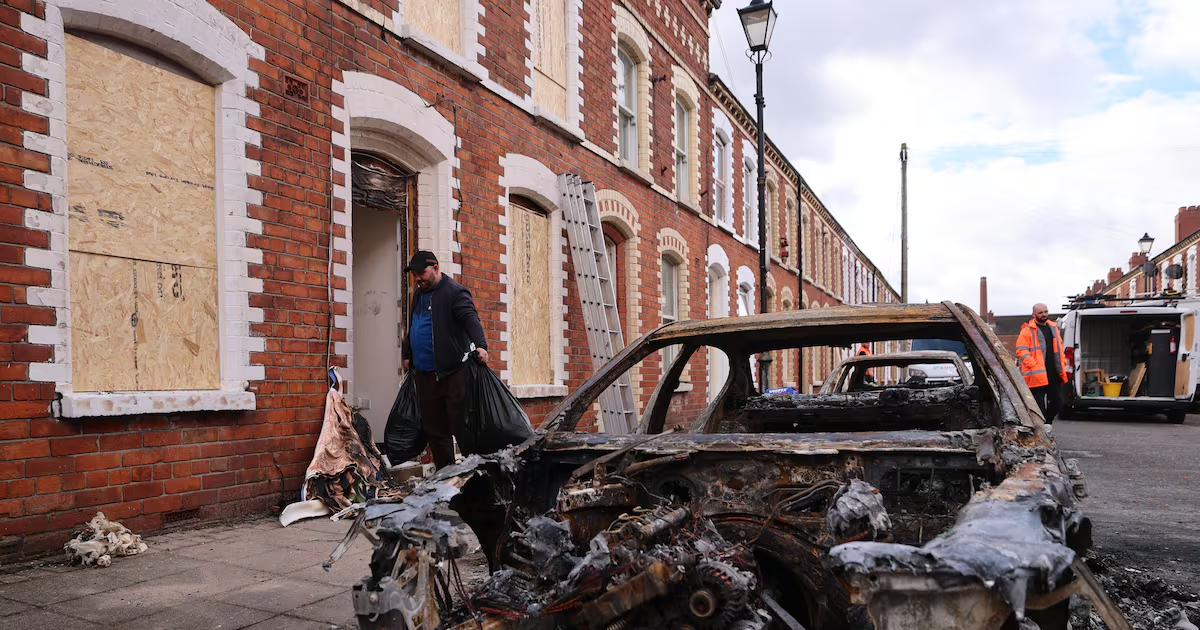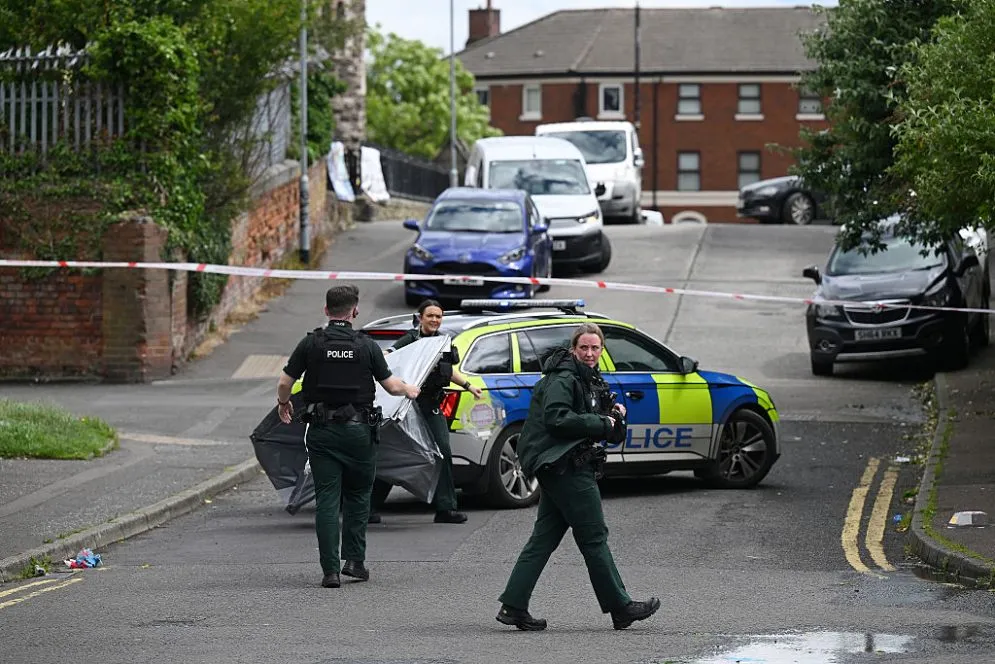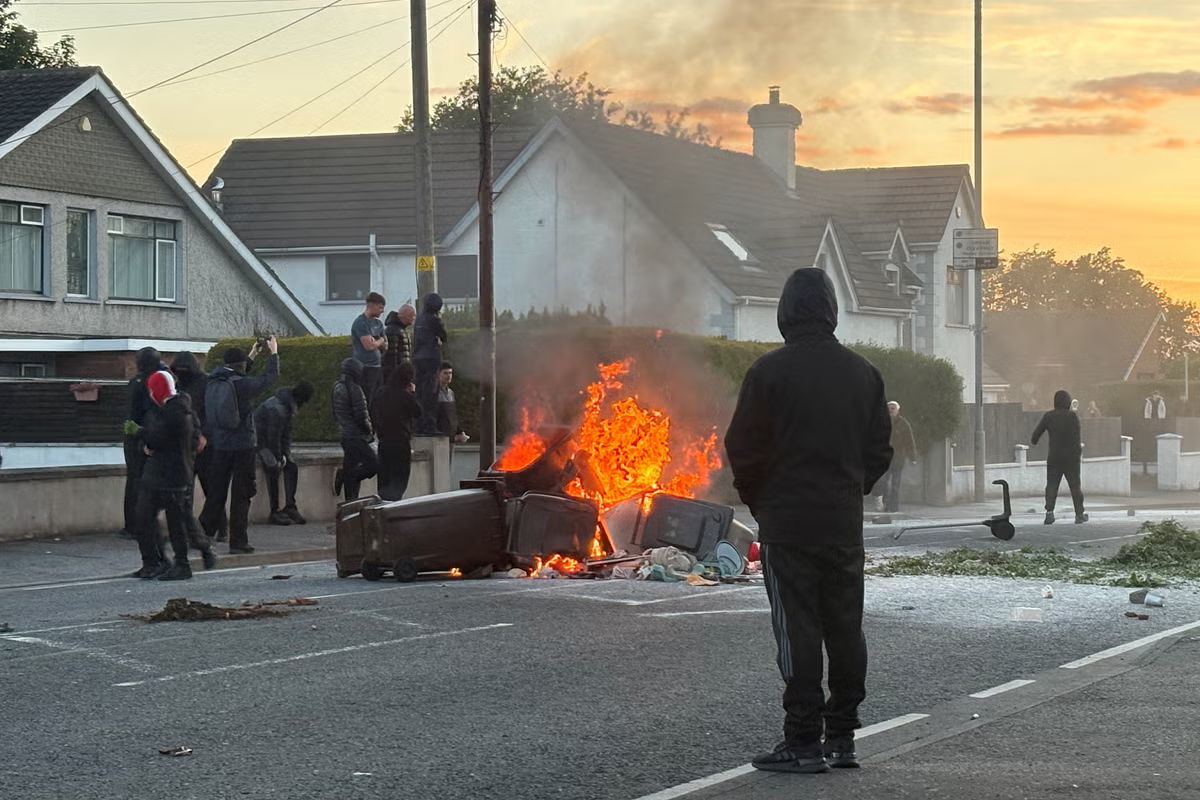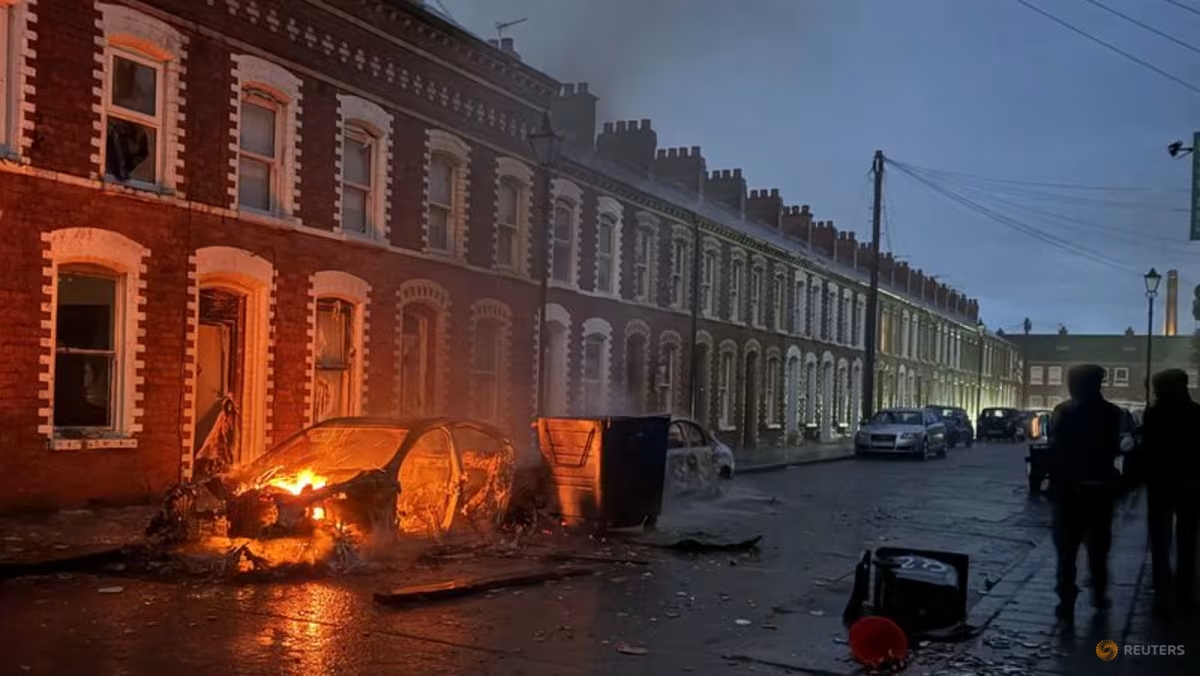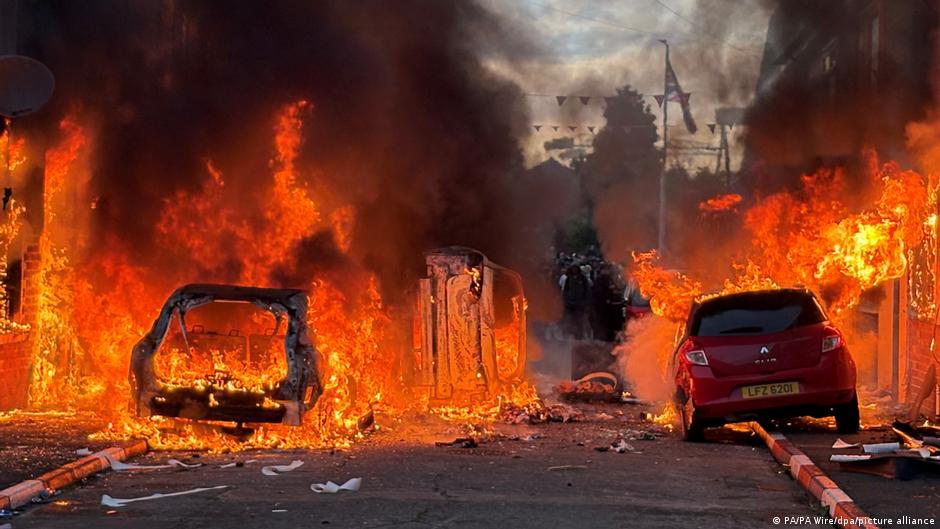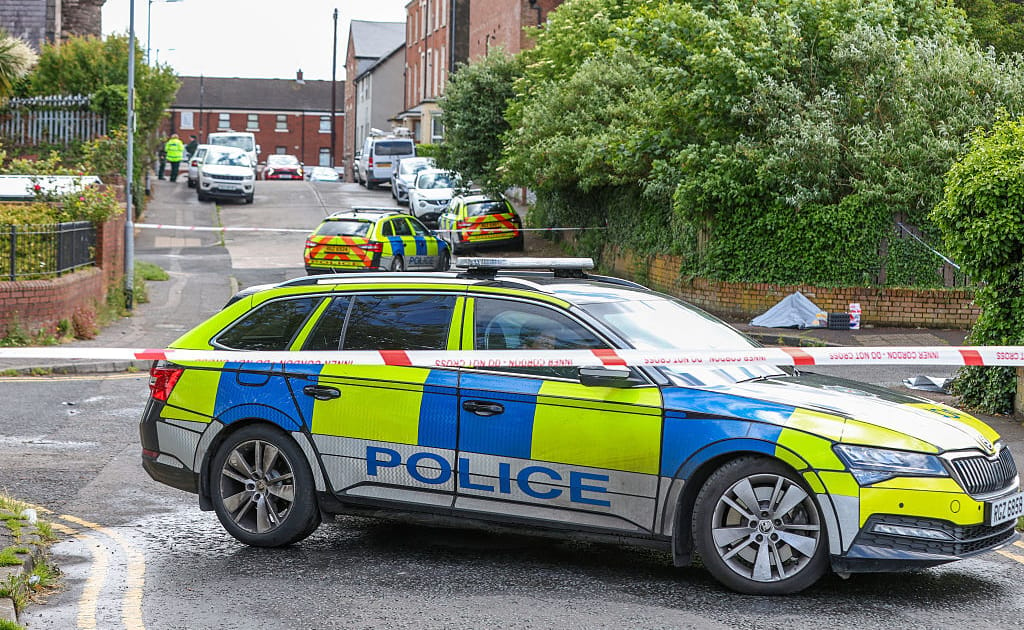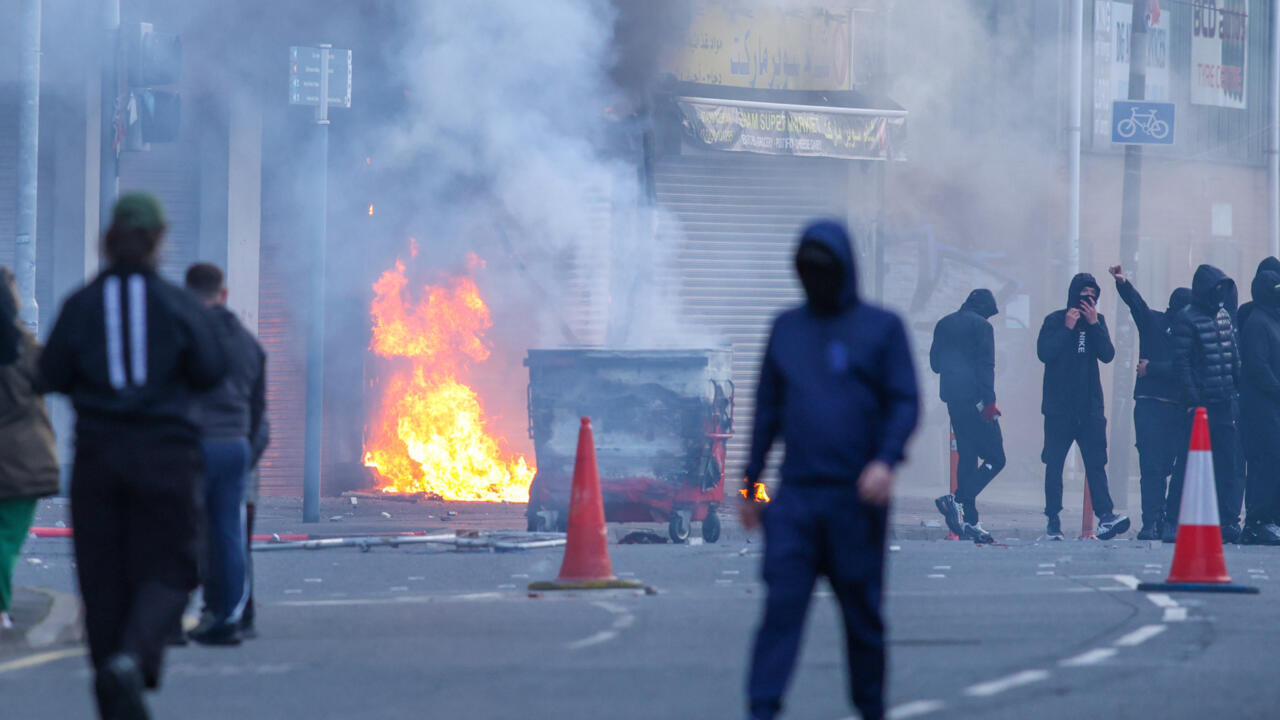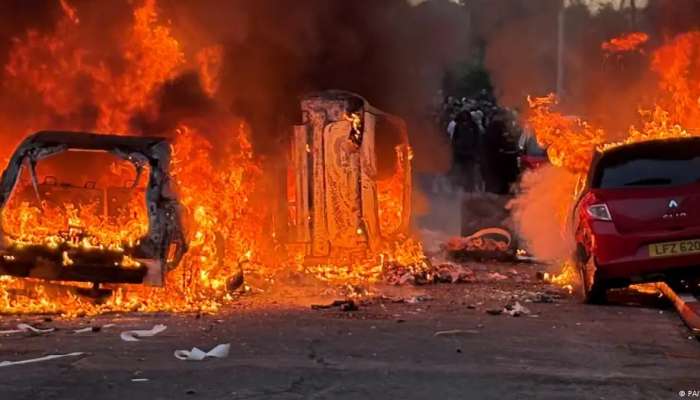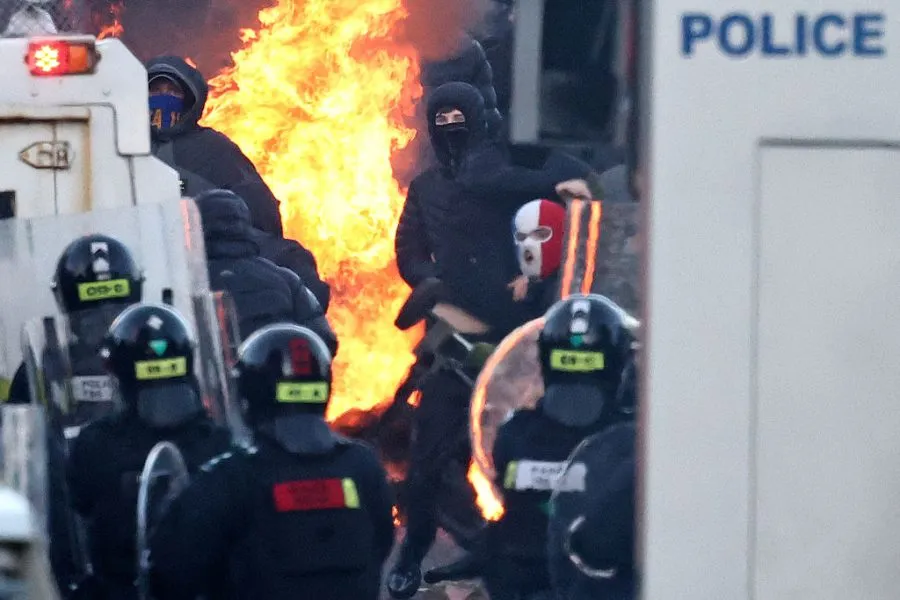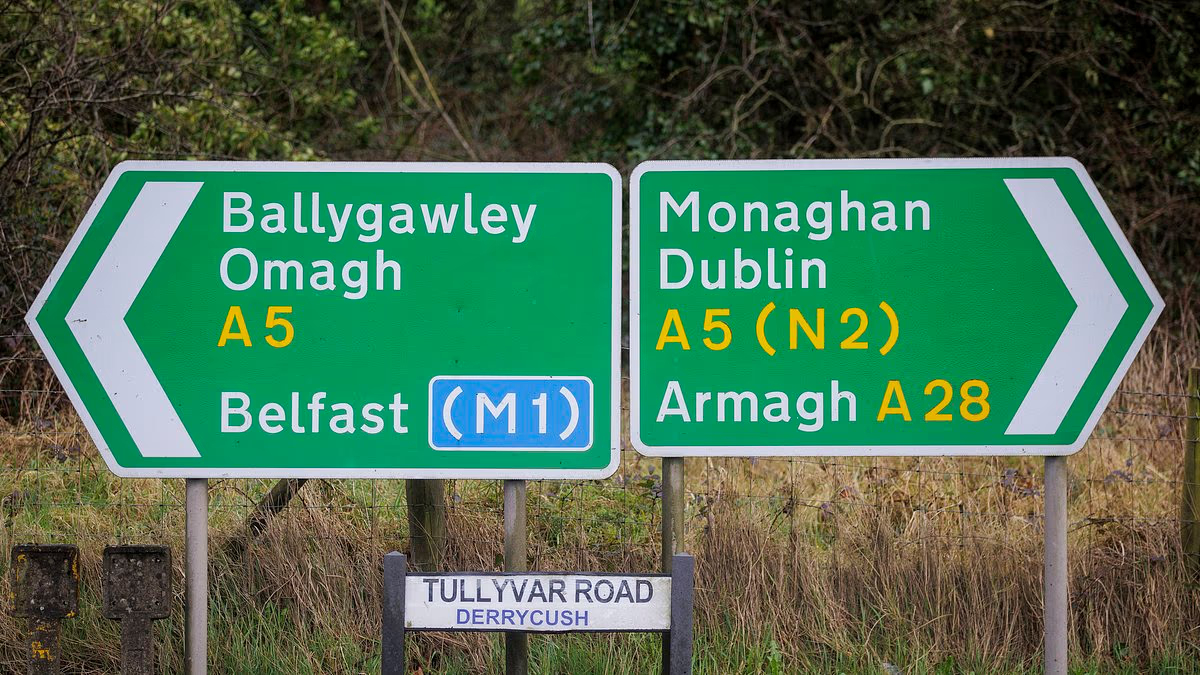
The UK has returned just one single migrant to Ireland after crossing the Irish border, amid warnings that national security is being put at risk in the wake of the Belfast attack. Labour ministers are now facing demands to clamp down on abuse of the Common Travel Area after a Sudanese man was charged with attempted murder over a knife attack in Belfast.The CTA has been in place for more than a century, stemming from the creation of the Irish Free State, the precursor to the Republic of Ireland.It allows Irish citizens and UK citizens to travel, work, live and study anywhere on the island of Ireland.But it was this rule that allowed Hadi Alodid, a Sudanese man charged with the attack on Monday night, into the country.Alodid first lived in Dublin before travelling north by bus. He crossed the invisible border into the UK in 2023 and claimed asylum in Belfast. But it was revealed that the government does not even publish figures on how many people claim asylum after using this route. A court artist's drawing of Sudanese national Hadi Alodid, 30, appearing via videolink at Belfast Magistrates Court Citizens of both Ireland and the UK can travel freely between the two countries by land under the CTAThere are 2,370 asylum seekers in supported accommodation in Northern Ireland, making up 2.5 per cent of all asylum seekers in the UK.Shocking figures from the Home Office showed that only one migrant had been removed under a post-Brexit returns deal signed with Ireland in 2020, while none had been transferred the other way, The Times reported. The agreement made between the two nations was not legally binding and the Conservative government paused the deal in 2024 after the Irish announced plans to introduce emergency legislation to return asylum seekers who fled to Ireland, fearing deportation to Rwanda.The Daily Mail reported earlier this year how the CTA is being exploited by illegal migrants and smuggling gangs as a 'back-entry route' into the UK.Deputy Chief Constable Wendy Gunney, who leads the Domestic Organised Immigration Crime taskforce, said gangs also use it to move drugs and black market goods.But while police are targeting criminals, the use of the border by asylum seekers is not seen as a priority.Because Ireland is in the EU, people can arrive in other parts of the bloc, travel to Ireland and then head north to cross the border without checks.Madeleine Sumption, director of the Migration Observatory at the University of Oxford, said the number of people entering the UK via Ireland was a 'relatively small' proportion of arrivals.But the government does not publish statistics on the actual number, with focus instead on the small boat crisis in the Channel.Instead, it is lumped together with other groups like the children of foreign-born UK nations, who make up about 8 per cent of arrivals every year, she told BBC Radio 4's Today programme.She added: 'It cuts in both ways, the Irish government have said that a lot of the asylum seekers they receive have come via the UK, sometimes on a small boat and then travelled through the Common Travel Area.'So it is not clear whether the number of people coming via Ireland to the UK is larger than the number going in the opposite direction.'A whistleblower told The Times that it was 'supremely easy' for Sudanese migrants to gain asylum in the UK in 2023. They were among six nationalities to have their cases streamlined as part of a push by the Conservative government at the time to clear a backlog of asylum claims. Similarly, a former Home Office official added that the CTA is a 'back door into Britain' for criminals, spies and illegal migrants. And a Border Force source added that officials were 'very worried' that the CTA would be exploited by people smuggling gangs after a crackdown in small boat crossings.Gavin Robinson, leader of the Democratic Unionist Party, called on Sir Keir Starmer to close the 'open, porous border' with Ireland.Democratic Unionist party leader Gavin Robinson told the Commons today that the Government's job was to defend borders Fires burn in the road surrounding the PSNI's armoured Land Rovers on Antrim Road On Tuesday night, Lendrick Road in east Belfast was engulfed in flames after fires leapt from cars to housesIn Belfast, violent clashes between protesters and police continued on a second night of chaos.Police sprayed aggressors with water cannons and rubber bullets in Glengormley, north Belfast, while coming under attack from hundreds of missiles and flaming hazards.Protestors later torched a building and several vehicles in the same area. Rioters, many hooded and masking their faces, began charging the police lines, forcing officers to shield behind their armoured Land Rovers.The rabble aimed traffic cones, wheelie bins, bricks, bottles and fireworks at police, using sledgehammers to arm themselves with debris from buildings and fences.Officers responded with water cannons, deployed for the first time since rioting erupted over the violent stabbing of Stephen Ogilvie in north Belfast on Monday night.Earlier in the day, a sinister hit list of addresses, purportedly houses where migrants live, was being circulated on X, countered by calls for locals to protect their occupants.Police warned that it could be a criminal offence to share the list, which includes more than 100 addresses across Northern Ireland, mostly in Belfast. Stephen Ogilvie's family also commented again on Wednesday night, saying they were 'deeply distressed' at false information being shared online, adding they had been 'disgusted' by the recent chaos.Alodid appeared before Belfast Magistrates' Court on Wednesday, charged with the attempted murder of Mr Ogilvie, with threats to kill an NHS radiographer and with possession of a knife.The court heard Mr Ogilvie lost his left eye and suffered deep cuts to his head, face and back.Alodid, who appeared in court via video link, made no reply to the charges when they were put to him through an Arabic interpreter.The court heard Alodid said 'I've killed someone, I don't know if they are dead' while in hospital receiving treatment for a hand injury and told medical staff 'I will kill you'.District Judge Stephen Keown refused bail after hearing police concerns there could be 'significant public disorder' if he was released due to 'strong public feeling' about the incident.The judge warned that anyone who plans to take part in further disorder in Northern Ireland should 'be prepared to go to prison'.
UK returns single migrant to Ireland after Belfast 'knife attack'
Labour ministers are now facing demands to clamp down on abuse of the Common Travel Area after a Sudanese man was charged with attempted murder over a knife attack in Belfast.
1,062 words~5 min read