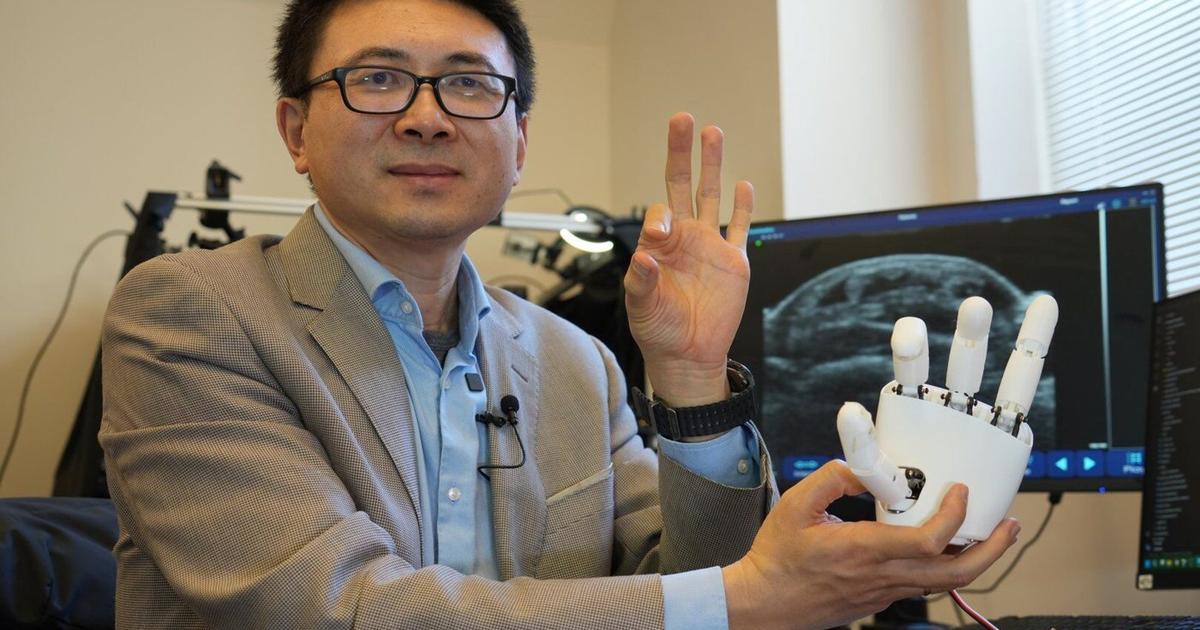
A 1990s Nobel-adjacent therapy, a webcam, and 21 hand keypoints — recreating the mirror-box illusion for phantom limb pain, no hardware required.
A therapy built on an illusion
In the 1990s, neuroscientist V.S. Ramachandran discovered something remarkable: amputees suffering phantom limb pain often felt relief just by seeing their missing limb move again. His apparatus was almost comically simple — a box with a mirror. Put your intact hand in, look at its reflection where the missing hand would be, and move. The brain, watching the "missing" hand obey commands again, often dials the pain down.
The limitation was never the science. It was the box: a physical apparatus, used in clinics, hard to scale, impossible to measure.
Replacing glass with keypoints