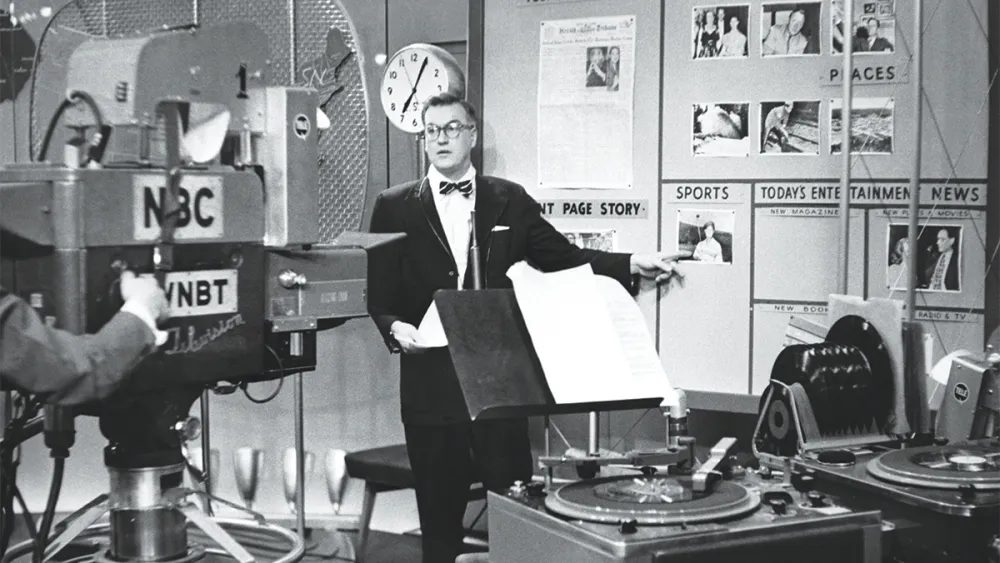
The first-to-market advantage is built right into the name: the National Broadcasting Company.
NBC was created a century ago amid the maelstrom of a mid-1920s gold rush that emerged around the cutting-edge technology of radio broadcasting.
The pages of Variety in that era were filled with stories about new radio sta- tions signing on and others quickly going out of business. It wasn’t long before we were reporting extensively on legal skirmishes around copyright concerns, music royalties and charges of monopolies leveled against the biggest players in radio — including Radio Corp. of America, AT&T and Westinghouse Electric Corp.
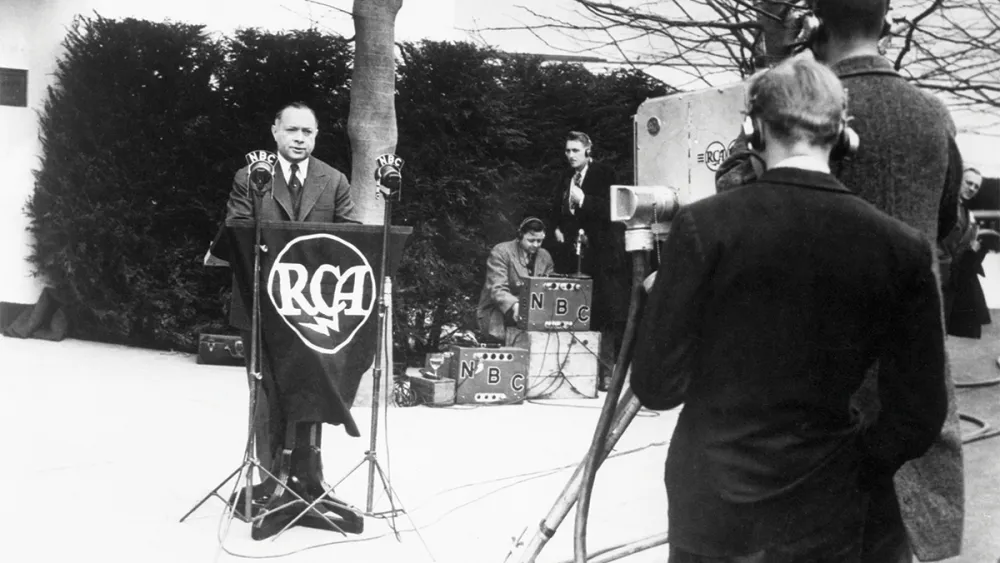
Those three pioneering communication firms joined forces in 1926 to solve the problem of a single station’s limited geographic reach. RCA purchased New York flagship WEAF from AT&T — which decided to get out of broadcasting — and used it as the flagship of the “NBC Red Network.” (NBC Blue, which originated on WJZ New York, was later divested and became ABC.) NBC debuted as America’s first national broadcast network on Nov. 15, 1926, the day its acquisition of WEAF was official.
The debut program was a four-hour live broadcast from a ballroom at New York’s Waldorf-Astoria Hotel. AT&T’s telephone wires helped transmit the program to the 18 other stations in the network, with a reach that extended as far west as Kansas City. To emphasize that NBC comprised a network of stations, the telecast included a performance from singer Mary Gordon that originated out of Chicago, while humorist Will Rogers delivered a monologue from Independence, Miss.