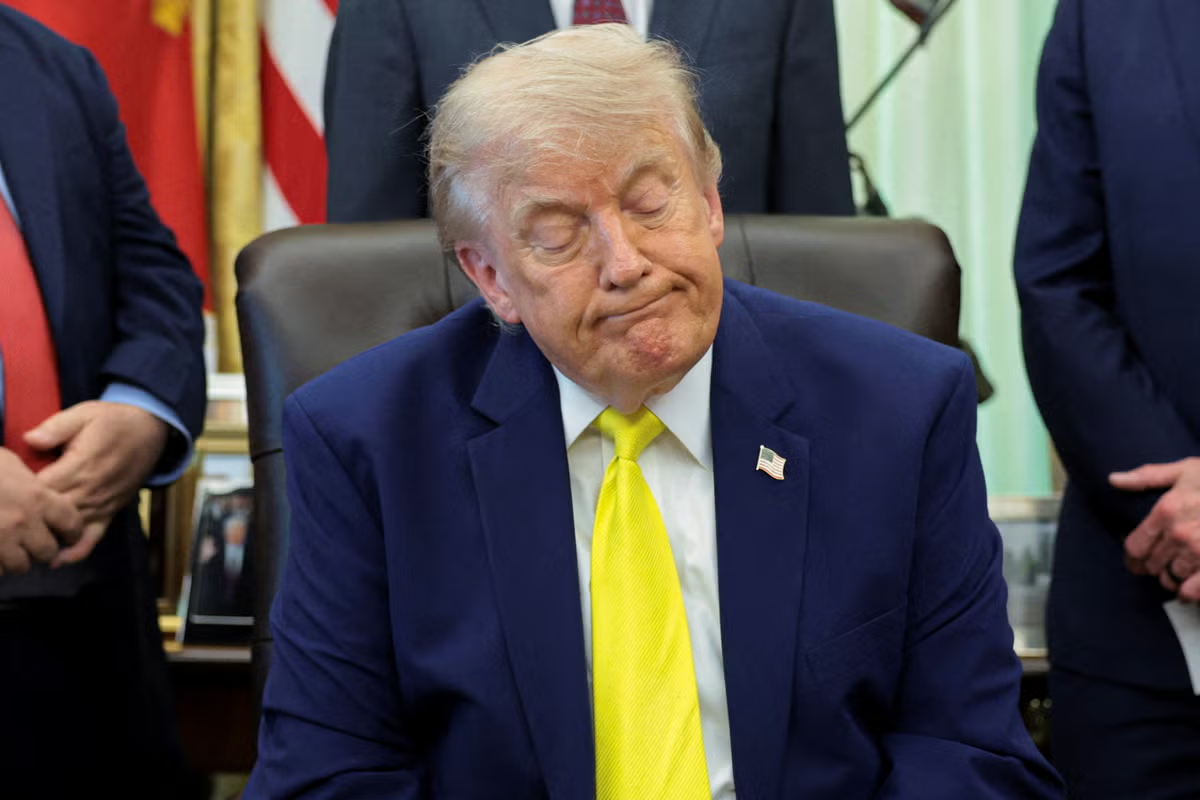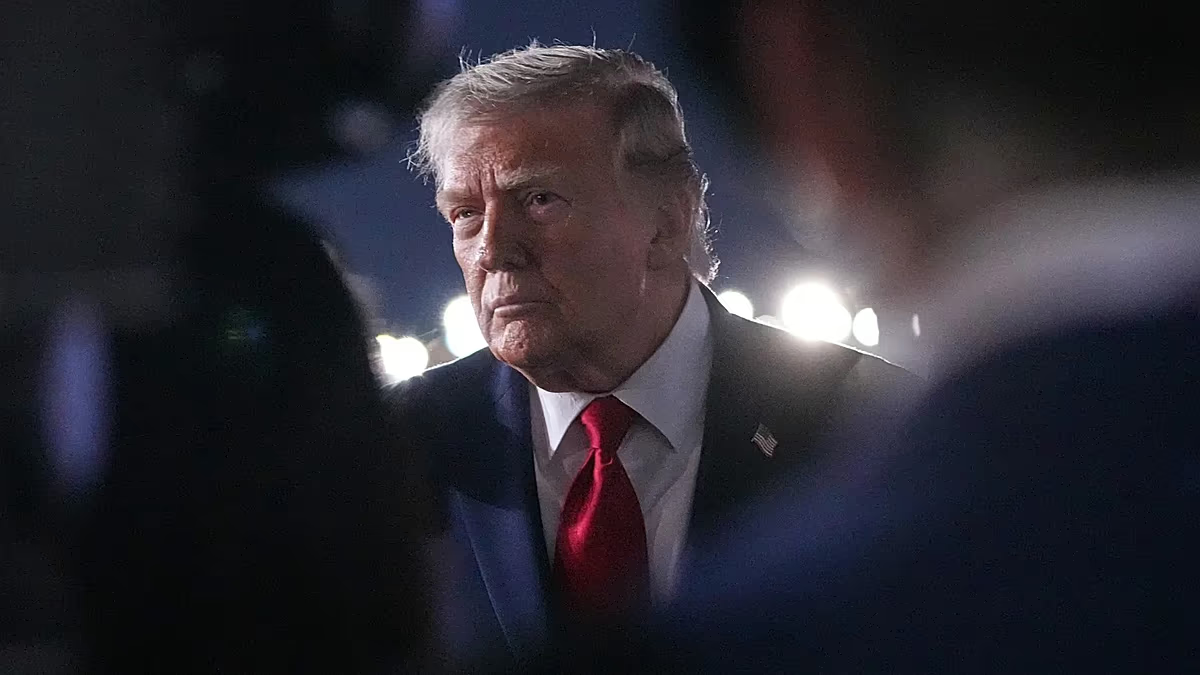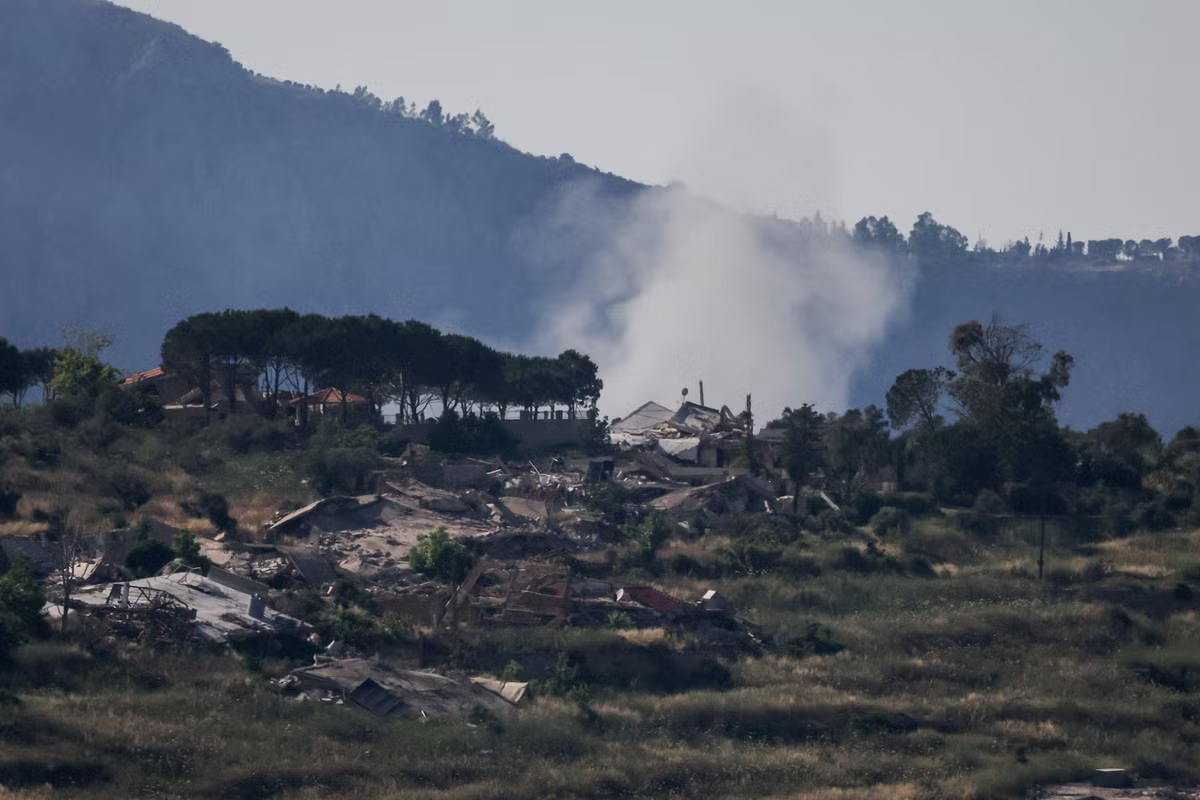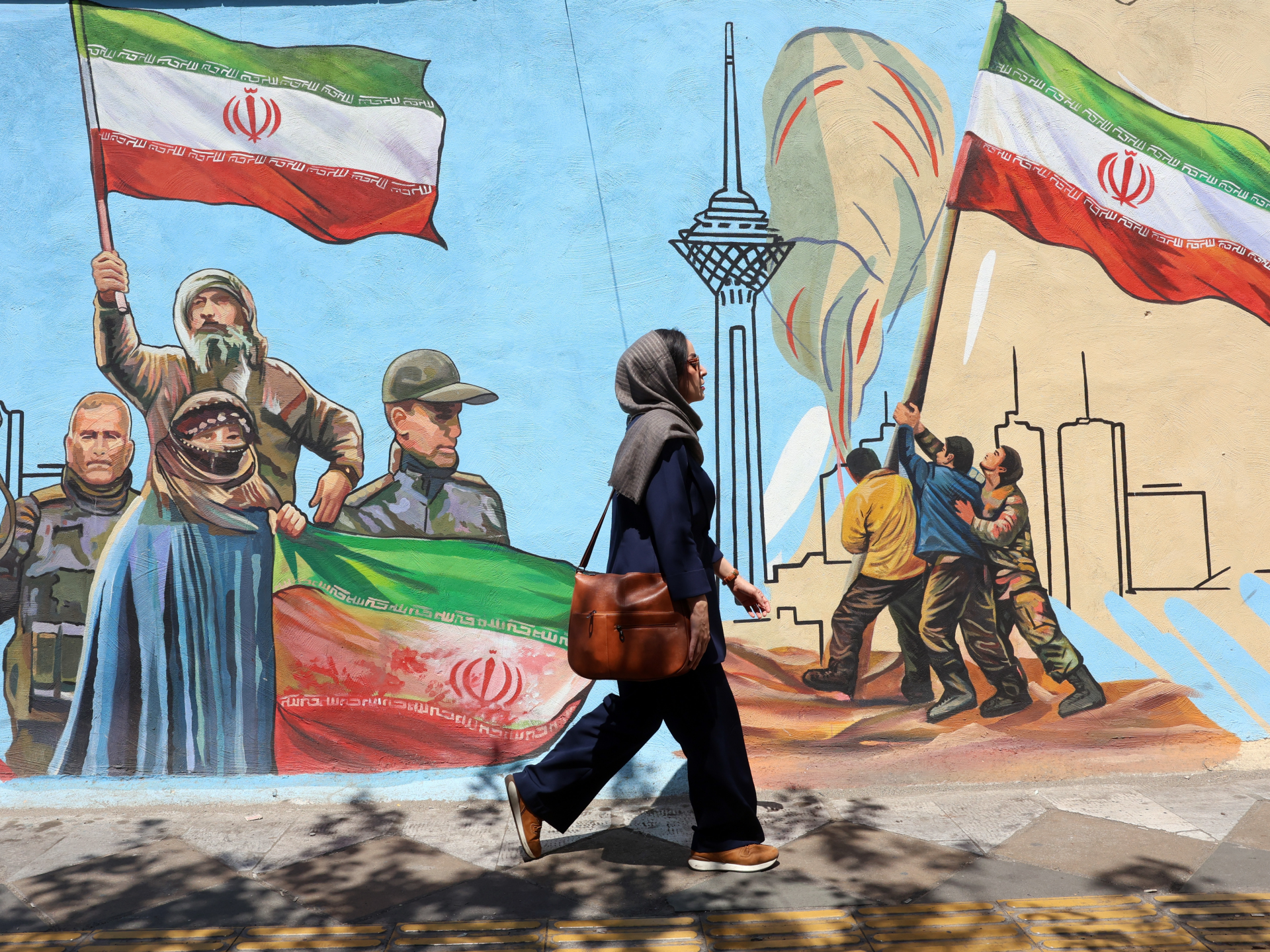
US President Donald Trump accused Iran on Wednesday of taking too long to negotiate a peace deal and warned it would "have to pay the price", as the head of the United Nations cautioned against a return to all-out war. The remarks came after Iran and the US once again traded fire following the downing of an American helicopter, further straining a ceasefire that took effect in April but has been marked by sporadic flare-ups of violence. The exchange drew international calls for restraint on the eve of the World Cup, which the US is co-hosting and Iran is participating in. Trump had said on Tuesday that talks to bring about a definitive end to the Middle East war were in the "final throes", only to offer a starkly different assessment a day later. "Iran is all talk and no action," he said on Wednesday. "They've taken too long to negotiate a deal that would have been great for them, now they will have to pay the price!!!" Separately, Trump told a Fox News journalist that because peace talks had stalled, he was getting closer to targeting Iran's power plants and bridges. "I may keep going," he was quoted as saying. "They had a chance to sign a deal and survive." In a sign that diplomacy was continuing, however, negotiators from Qatar -- which along with Pakistan has been assisting in mediation efforts -- travelled to Tehran on Wednesday "to meet with the Iranians in an effort to bridge the remaining gaps", a diplomat with knowledge of the situation said. At a Security Council meeting on the Middle East, United Nations chief Antonio Guterres suggested that an imperfect ceasefire was preferable to a return to full-scale hostilities. "We should not minimise the risks of a lesser fire becoming full fire, or in another word -- full war," he said. Warning to the Gulf The war, which began with US-Israeli strikes on Iran, threw the region into chaos and rattled global markets before the shaky truce began. Iran said it attacked American bases in Jordan and Bahrain on Wednesday after the US carried out strikes on the Islamic republic in retaliation for the downing of a helicopter. The Apache was the second crewed aircraft that Washington has confirmed to have been shot down by Iran during the war. Its two crew members were rescued, the US military said. Bahrain said it intercepted and destroyed "a number of Iranian aerial attacks", while Jordan's military said it shot down five missiles, with no casualties or material damage. The Kuwaiti military also said its air defences were engaging "hostile aerial targets". Iran has recently carried out deadly attacks there too. Tehran's foreign ministry "reiterated the legal and moral responsibility" of its neighbours not to allow the US or Israel to use their territory for attacks. US Central Command (CENTCOM), which oversees American forces in the Middle East, said on X that it had earlier "struck Iranian air defense, ground control stations, and surveillance radar sites near the Strait of Hormuz".
Iran will ‘pay the price’ for ‘all talk and no action’, Trump warns
US President Donald Trump accused Iran on Wednesday of taking too long to negotiate a peace deal and warned it would "have to pay the price", as the head of the United Nations cautioned against a return to all-out war. The remarks came after Iran and the US once again traded fire following the downing of an American helicopter, further straining a ceasefire that took effect in April but has been marked by sporadic flare-ups of violence. The exchange drew international calls for restraint on the eve of the World Cup, which the US is co-hosting and Iran is participating in. Trump had said on Tuesday that talks to bring about a definitive end to the Middle East war were in the "final throes", only to offer a starkly different assessment a day later. "Iran is all talk and no action," he said on Wednesday. "They've taken too long to negotiate a deal that would have been great for them, now they will have to pay the price!!!" Separately, Trump told a Fox News journalist that because peace talks had stalled, he was getting closer to targeting Iran's power plants and bridges. "I may keep going," he was quoted as saying. "They had a chance to sign a deal and survive." In a sign that diplomacy was continuing, however, negotiators from Qatar -- which along with Pakistan has been assisting in mediation efforts -- travelled to Tehran on Wednesday "to meet with the Iranians in an effort to bridge the remaining gaps", a diplomat with knowledge of the situation said. At a Security Council meeting on the Middle East, United Nations chief Antonio Guterres suggested that an imperfect ceasefire was preferable to a return to full-scale hostilities. "We should not minimise the risks of a lesser fire becoming full fire, or in another word -- full war," he said. Warning to the Gulf The war, which began with US-Israeli strikes on Iran, threw the region into chaos and rattled global markets before the shaky truce began. Iran said it attacked American bases in Jordan and Bahrain on Wednesday after the US carried out strikes on the Islamic republic in retaliation for the downing of a helicopter. The Apache was the second crewed aircraft that Washington has confirmed to have been shot down by Iran during the war. Its two crew members were rescued, the US military said. Bahrain said it intercepted and destroyed "a number of Iranian aerial attacks", while Jordan's military said it shot down five missiles, with no casualties or material damage. The Kuwaiti military also said its air defences were engaging "hostile aerial targets". Iran has recently carried out deadly attacks there too. Tehran's foreign ministry "reiterated the legal and moral responsibility" of its neighbours not to allow the US or Israel to use their territory for attacks. US Central Command (CENTCOM), which oversees American forces in the Middle East, said on X that it had earlier "struck Iranian air defense, ground control stations, and surveillance radar sites near the Strait of Hormuz".