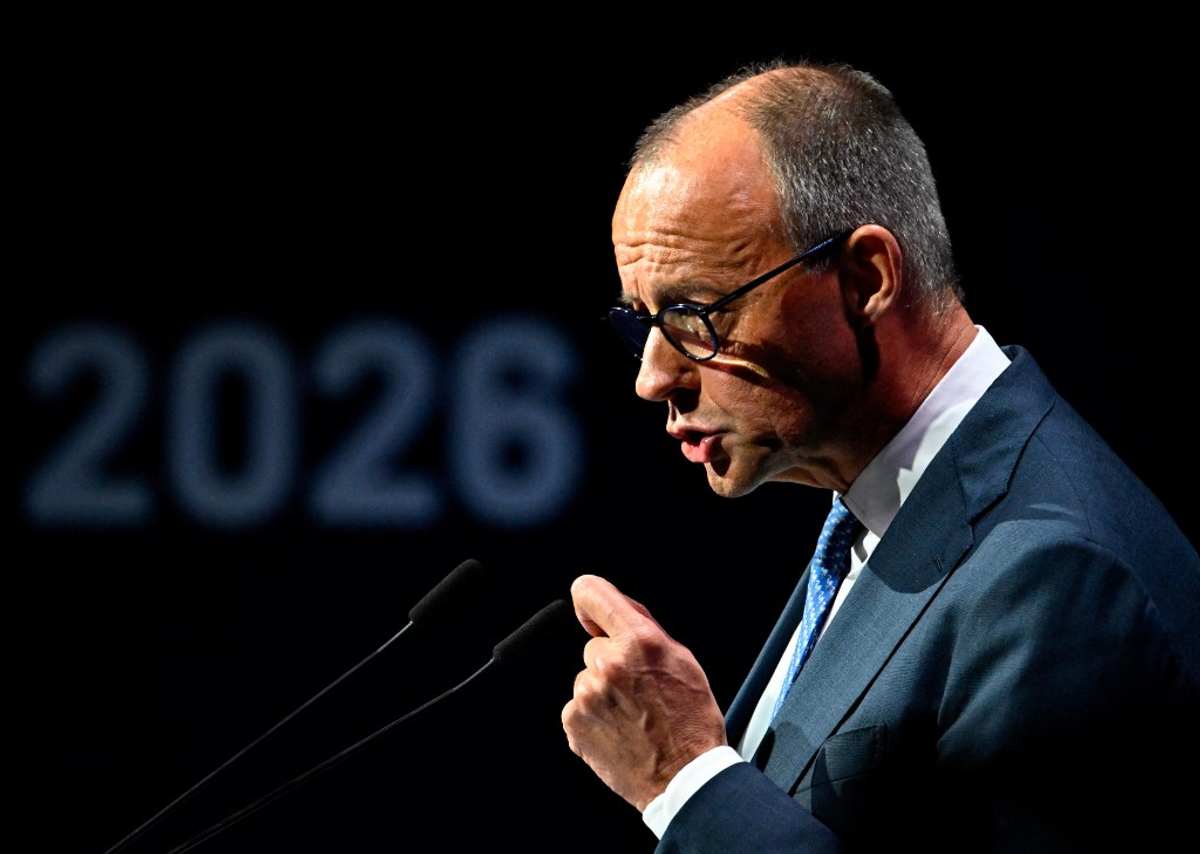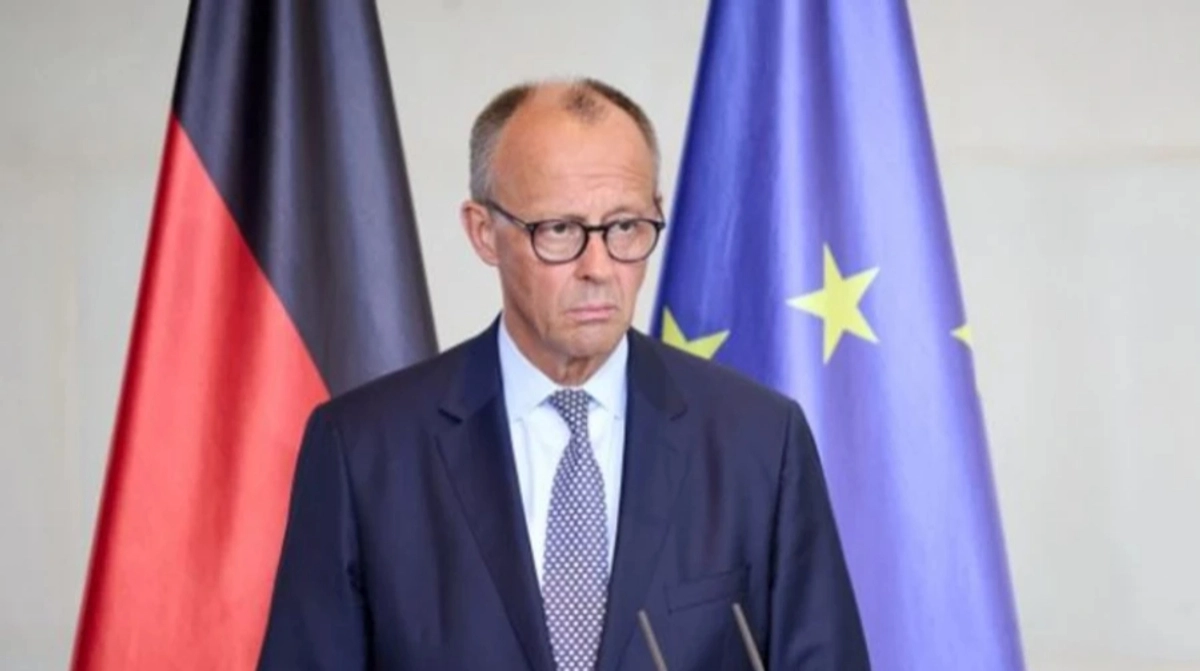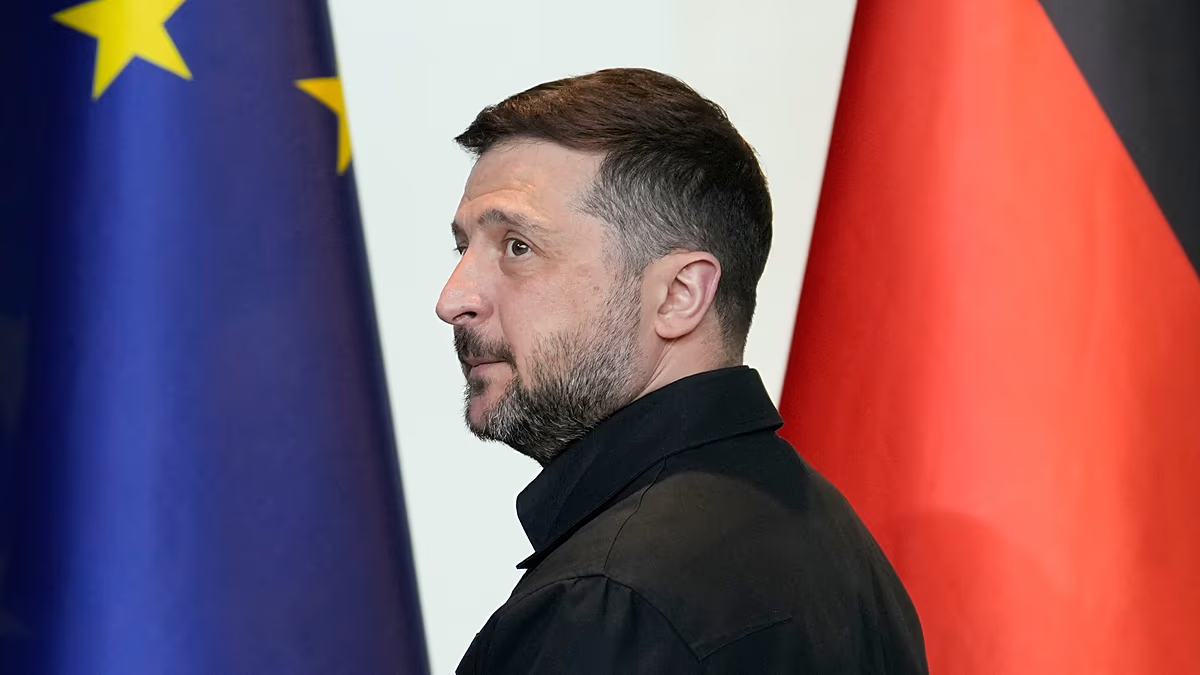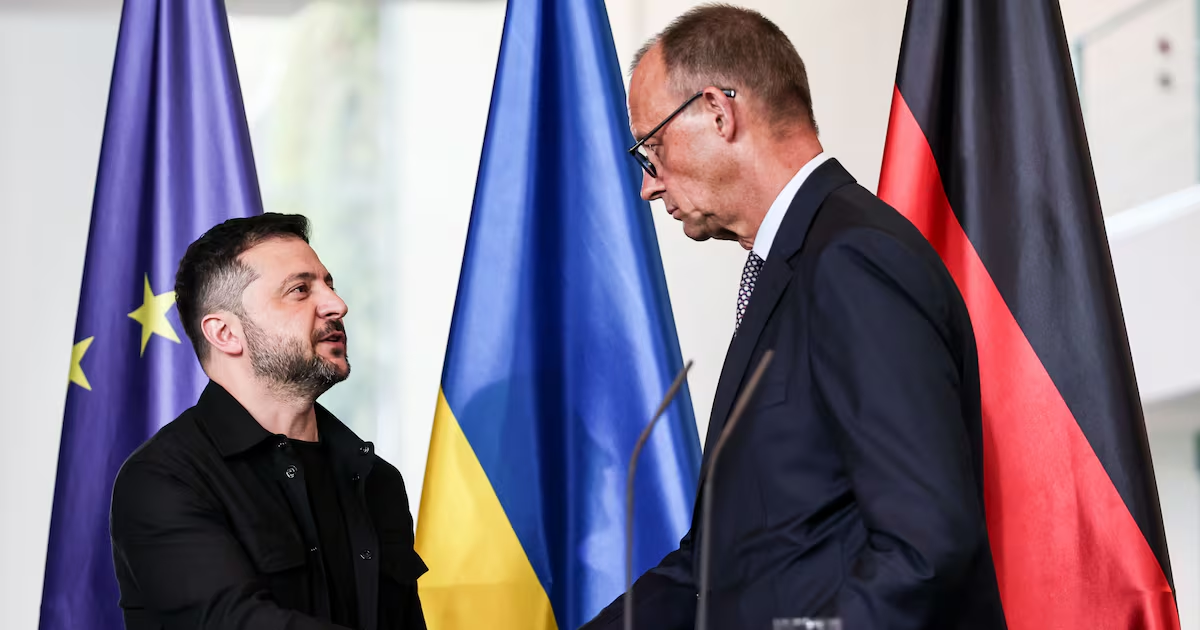
President Volodymyr Zelensky arrives for a press conference at the Chancellery in Berlin, Germany, on April 14, 2026. (Emmanuele Contini / NurPhoto / Getty Images)Volodymyr Zelensky made a rare misstep when German Chancellor Friedrich Merz proposed associate EU membership for Ukraine, offering institutional access, participation in Council meetings, gradual budget integration, and critically, Article 42(7) security guarantees.Zelensky rejected it, insisting Ukraine deserves full and equal membership. In principle, most Europeans would agree. On politics, however, we can argue.Ukraine's EU candidacy is not the problem Europe is currently trying to solve. Ukraine is the test that Europe's current enlargement model is failing, and has been failing for a while now.No country has acceded to the EU since Croatia in 2013.Serbia, Bosnia, Montenegro, Albania, Moldova, and Georgia remain stuck in a prolonged accession process that has imposed years of conditionality but yielded little real political progress. Not to mention Turkey, which has been trapped in this process since the early 1960s.The gap between Europe's promises and its ability to deliver on enlargement is becoming increasingly apparent, especially when all the factors are added into the equation: American retrenchment, strategic competition with China, and a land war on European soil.Associate membership should not be viewed as an institutional demotion, as it reflects a broader reality. Built in a different era and governed by unanimity and veto, the European accession system was designed for a trading bloc expanding into a stable post-Cold War neighborhood. It is not equipped for a continent that wants to become a strategically autonomous third pole, where enlargement has become a core instrument of geopolitical security.Kyiv should therefore see the offer for what it actually is: a serious attempt to break a potential decade-long deadlock and to prioritize Ukraine as an anchor within European architecture.Merz and his government know that under the current rules, hostage to unanimity and veto, full membership for Ukraine might never come. As EU leaders prepare to debate the proposal at the June European Council summit, Kyiv should accelerate efforts to shape this offer rather than reject it. That window might not stay open.German Chancellor Friedrich Merz (R) and President Volodymyr Zelensky (L) speak to the media after their meeting at the Chancellery in Berlin, Germany, on April 14, 2026. (Christian Marquardt / NurPhoto / Getty Images)A new multi-speed EuropeEurope is facing a reality in which it no longer has the luxury of treating Ukraine's membership as a bureaucratic governance question. It knows the cold logic of new geopolitics has made one thing clear: Europe must act as a unified strategic pole or risk irrelevance.In that context, Ukraine's ambiguous status, neither inside European architecture nor formally outside it, became the condition Russia has actively cultivated, exploited, and ultimately used for its war.
Ukraine should not reject associate EU membership
Volodymyr Zelensky made a rare misstep when German Chancellor Friedrich Merz proposed associate EU membership for Ukraine, offering institutional access, participation in Council meetings, gradual budget integration, and critically, Article 42(7) security guarantees. Zelensky rejected it, insisting Ukraine deserves full and equal membership. In principle, most Europeans would agree. On politics, however, we can argue. Ukraine's EU candidacy is not the problem Europe is currently trying to solv
854 words~4 min read