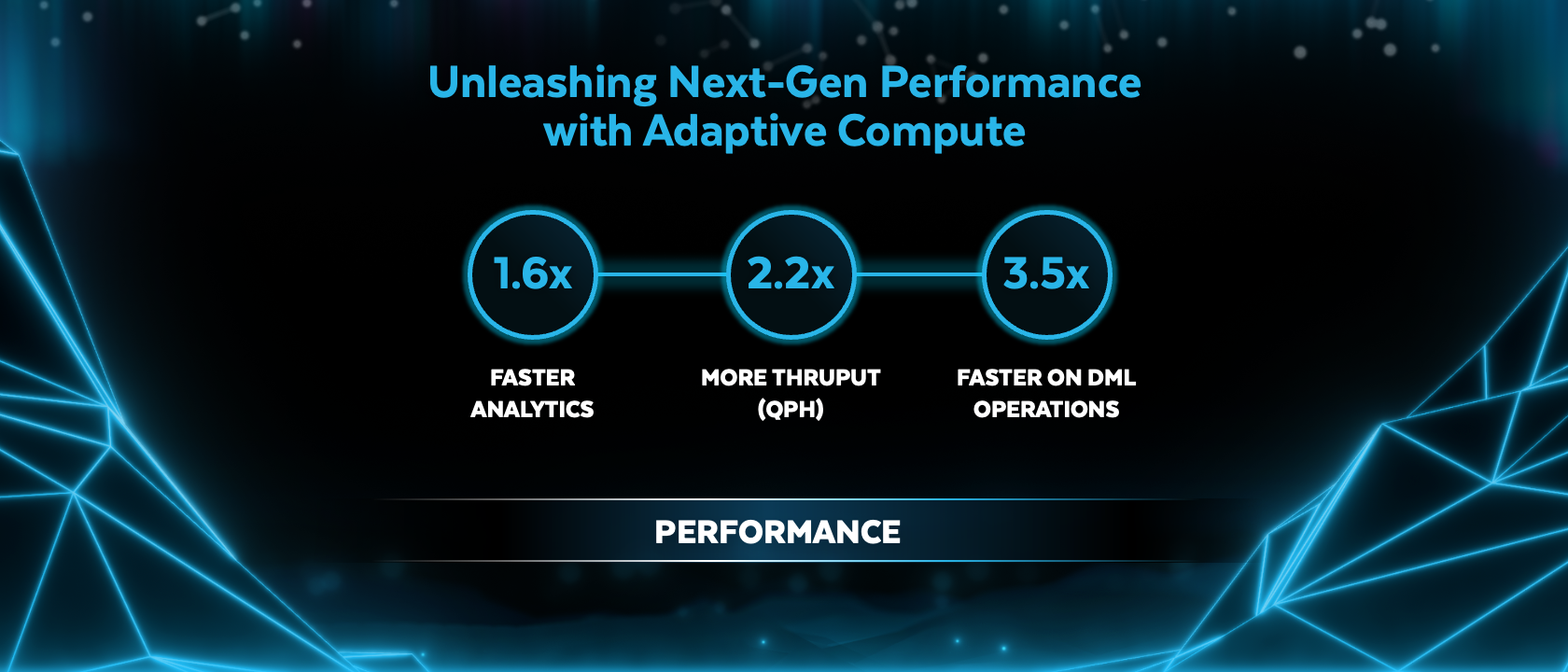
Hybrid Tables just got up to 8x faster (based on internal benchmarks),1 with standardized billing and dramatically improved batch performance. This breakthrough makes Hybrid Tables even more performant for high-concurrency, low-latency workloads like AI apps and workflow state management.
Here’s what this means in practice: Teams can now run thousands of concurrent point lookups, store AI agent state and manage transactional application logic directly on Snowflake, at speeds that previously required a separate, dedicated database.
Transactional workloads shouldn't require complex data movement
For too long, teams building transactional applications have been forced to maintain and connect separate online transaction processing (OLTP) databases alongside their analytical platform. This creates painful complexity: brittle pipelines, data inconsistency, and duplicated governance and engineering hours spent syncing systems instead of building products.
In the age of AI agents and real-time applications, this fragmentation can be a liability. When your agent needs to read fresh transactional state, query historical context and write back results — all in milliseconds — you can't afford the latency of data pipelines.