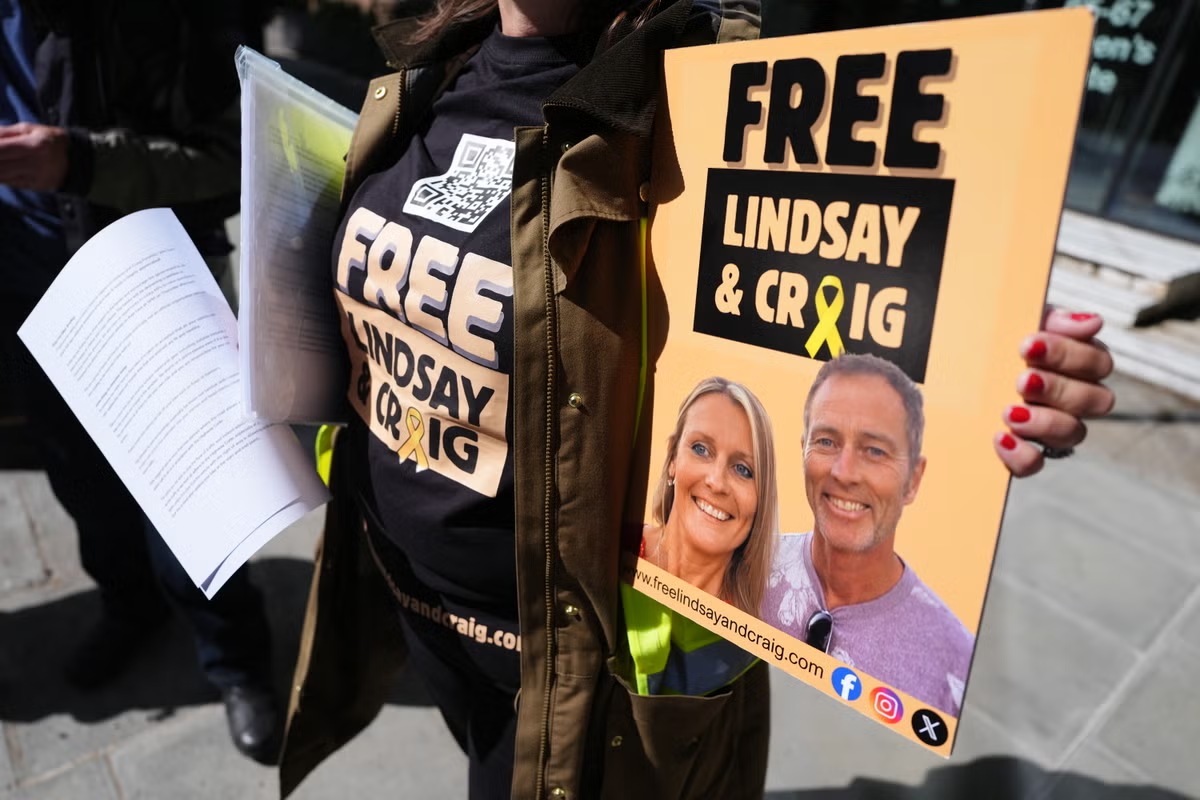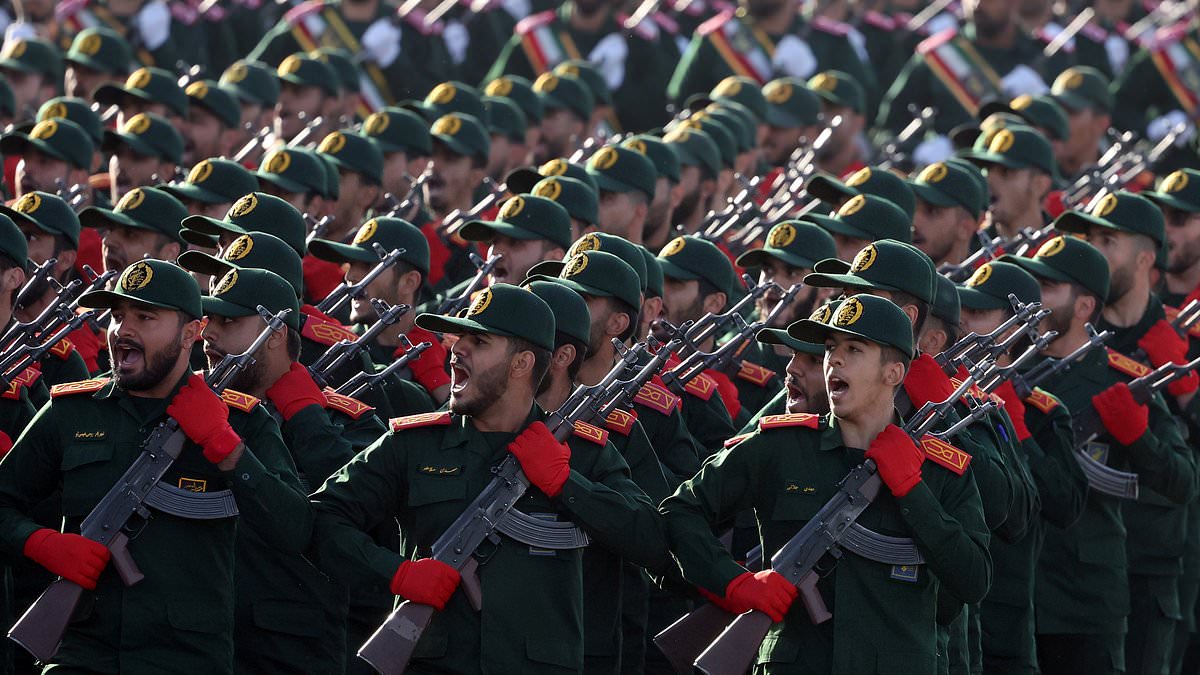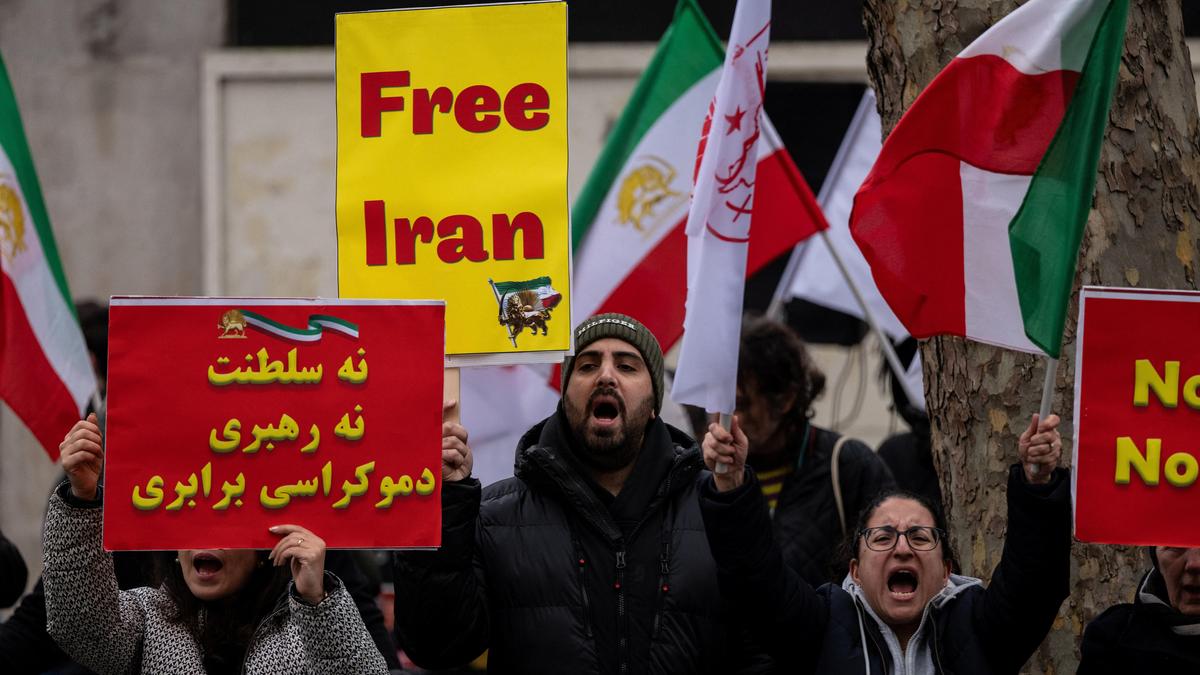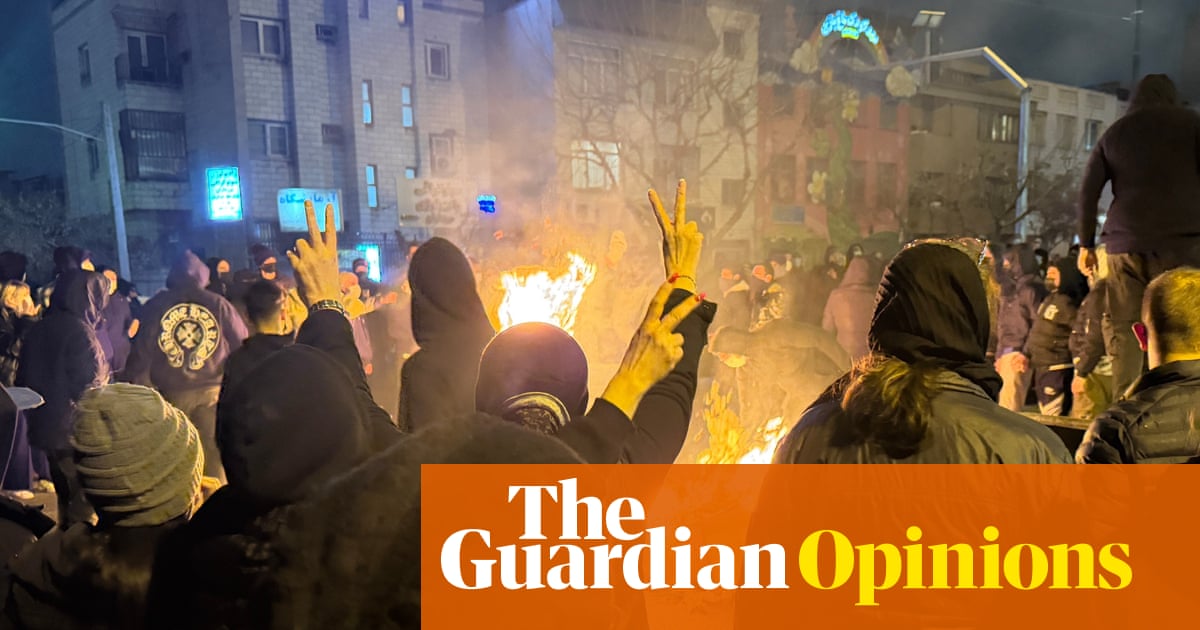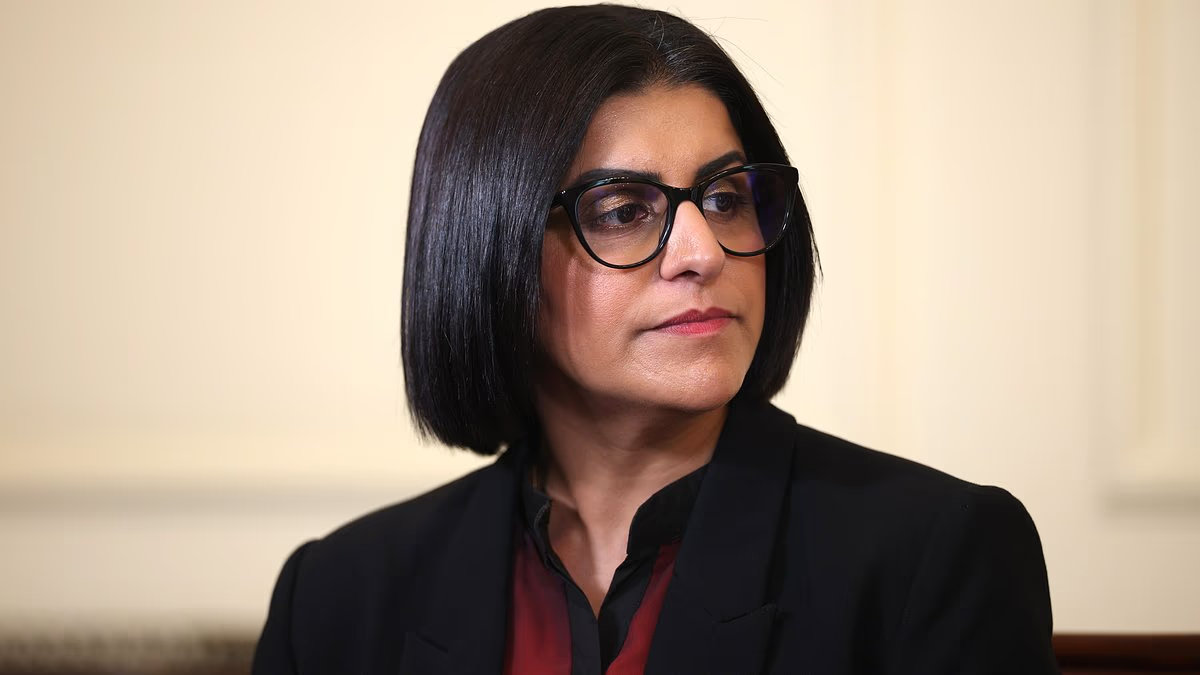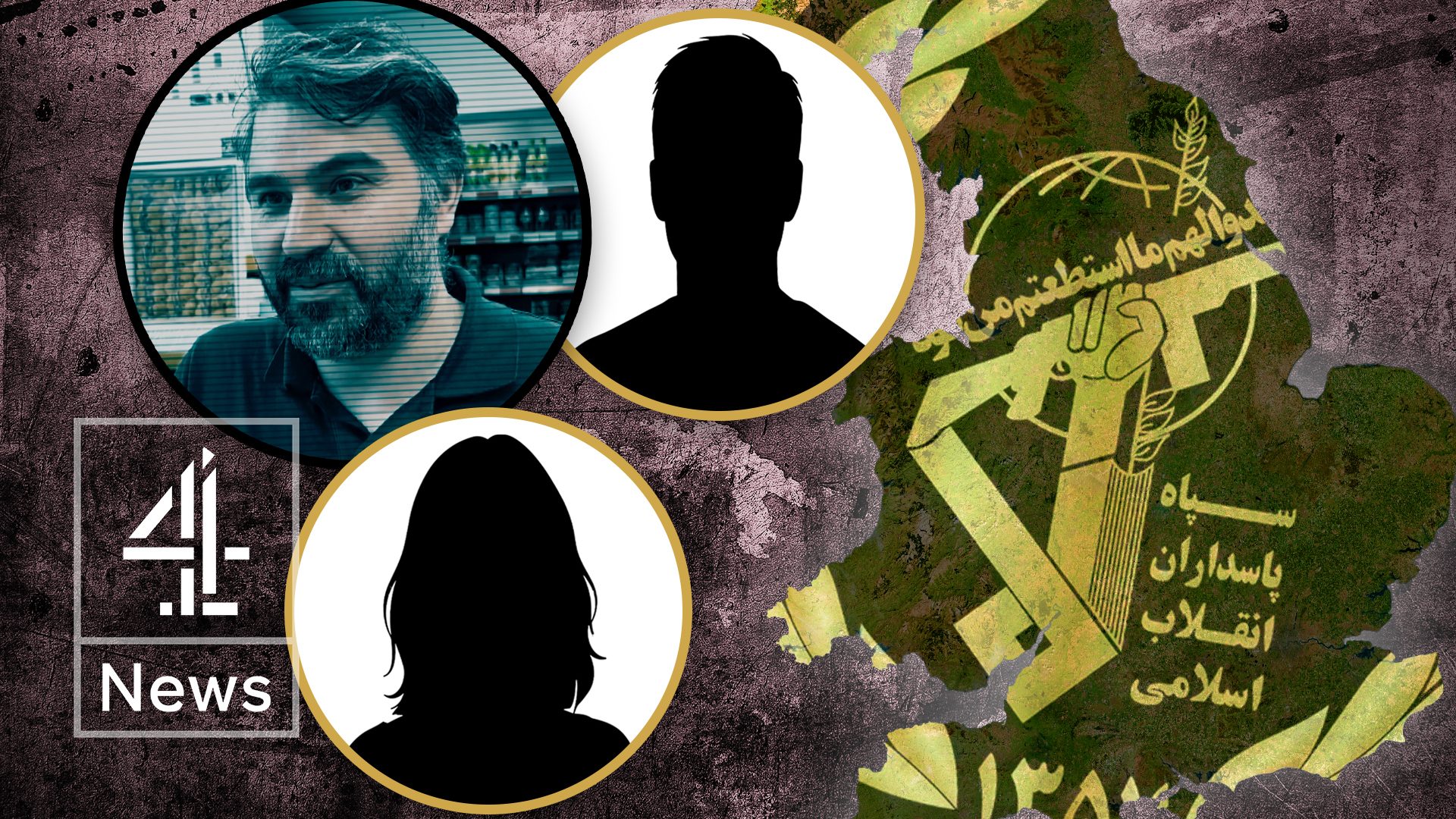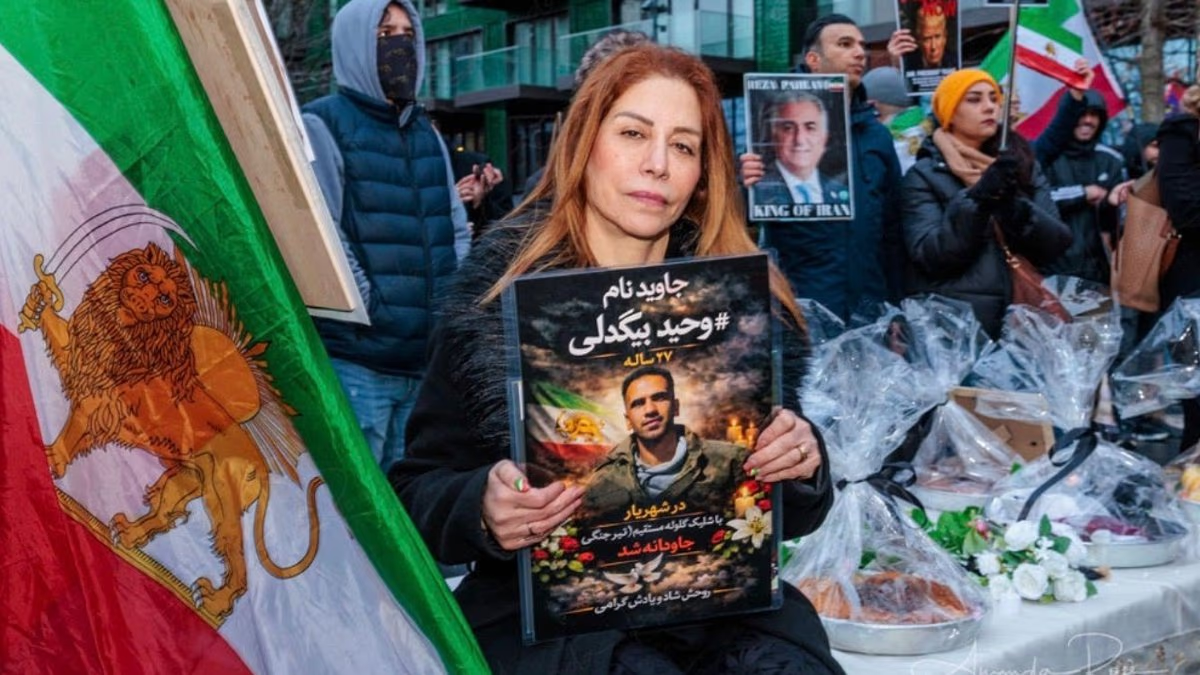
A British-Iranian woman who was brutally beaten, tortured and threatened under the Islamic regime says she will not feel any safer living in the UK until the Government takes stronger action. Nasrin Roshan, 62, who is originally from Tehran and has twice been imprisoned as a dissident, claims to have suffered severe emotional, mental and physical abuse at the hands of Iran's Islamic Revolutionary Guard Corps (IRGC).Now living in London, she is one of several voices behind the newly launched Ban IRGC campaign, which is calling on the UK government to join the US and Europe in proscribing the group as a terrorist organisation. The violent, Islamist-extremist IRGC was founded shortly after the 1979 revolution by loyal followers of former Supreme Leader Ayatollah Khomeini to defend the regime.It uses a mix of terror, extreme violence and ideological warfare to safeguard the Islamic Republic's revolution and target its enemies. The IRGC was the force behind a deadly crackdown of anti-government protesters at the start of the year, which resulted in the deaths of at least 30,000 people. But the IRGC's grip stretches far beyond the geographical boundaries of Iran. It has been linked to a string of kidnaps, assassinations and terror attacks, and is said to have funded proxy groups such as Hezbollah, Hamas and the Houthis. Nasrin Roshan, 62, claims to have endured severe emotional, mental and physical abuse at the hands of Iran's Islamic Revolutionary Guard Corps (IRGC) The IRGC was the force behind a deadly crackdown of anti-government protesters at the start of the year, which resulted in the deaths of at least 30,000 people (file pic) Tehran's notorious Evin prison where Roshan was held as a teenager and again in 2023 at the age of 59, where she was subjected to brutal treatmentMeanwhile a series of recent arson attacks and stabbings against Jewish and Iranian targets across London has prompted counter-terrorism police to investigate whether Iranian proxies in the UK are responsible.On Tuesday, proscription moved a step closer after the introduction of the National Security (State Threats) Bill in Parliament.The new law - which could come into effect within weeks - will see the Home Secretary handed counter terrorism-style powers to stand up to state-linked groups, including the IRGC, that pose a threat to national security. In Roshan's mind, the UK government's failure to outlaw or take stronger action against the IRGC has helped prop up the regime - and allowed Iran to bring terror to Britain's streets.'I'm not feeling safe in this country, I don't feel safe to express my opinions,' Roshan told Daily Mail, claiming she has been physically attacked while taking part in vigils for victims of the regime. 'The UK can't claim to be a democracy if you can no longer feel safe.'Roshan's feelings are a damning indictment against Britain, which offered her a place of refuge after spells of detention inside Tehran's notorious Evin Prison.Built in 1972, the infamous detention facility has become internationally renowned for its systemic human rights abuses - which include beatings, electric shocks, forced confessions and sexual abuse.Her maltreatment at the prison has thankfully not left permanent physical injuries, but there is a 'scar on my soul', Roshan said.She was still a teenager when she was handed a four-year prison sentence in 1981, having been detained for her political views.Roshan revealed she had tried to rally her classmates against the extremist Islamist views of the regime, which differed vastly from her pre-revolution memories of growing up under the Shah. She recalled: 'From day one, when they took over, they started to execute a lot of elites and nobles in Iran, and then slowly they removed equality, they enforced the compulsory hijab, they put journalists in prison, they shut down the newspapers and magazines. 'They tried to control and manipulate things, and turn the country into a dictatorship.'Aged 18, she still remembers the moment 'monster' IRGC officials 'broke into the house like savages' to take her away to Evin prison after she tried to stand up against the regime.'From the moment I got inside, they started to beat me up, all different men,' she recalled. 'They forced me to wear a chador [full body-length garment]. The first person beat me, then they passed me to the next person and so on until I ended up in an interrogation room. 'They separated the boys from the girls, and as I looked around some people were bleeding. A guy came up to me and asked, 'What's your shoe size?' I told him it was 37 European size, and he said, 'OK, I'll make it 40'.'I didn't understand until later when they took me to the room to torture me.' Since being freed and returning to Britain, Roshan has become one of several voices behind the Ban IRGC campaign pressuring the government to proscribe the groupOne by one, four men sat on Roshan's body, with one man sitting and crushing her feet until they were left swollen and bleeding.'For the next six months I couldn't walk properly - I had to walk on my knees,' she said. Roshan hints at further abuses she endured at the prison, but even 40 years on the memories are still too painful to share.Following her beating, Roshan said she was whipped and left on the floor of the room overnight, before being taken the next day to a basement. There she was hung for days from the ceiling by her wrists.'For 10 days they only fed me once a day. I lost so much weight that my wrists slipped from the rope by which I was hanging and I fell to the ground.'The vulnerable teenager was taken eventually to court, where she was charged with offences against national security. She was sentenced to four years imprisonment and transferred to Qazal Hesar Prison in Karaj. A short while after she had begun her sentence, she noticed several of her fellow prisoners began to go 'missing'. Roshan later discovered that they had been taken to a 'quarantine' section below ground level at the prison, where the inmates were brutally treated. On one fateful day, it was her turn to join them. 'They blindfolded us, and I had sleep on the floor. They placed a piece of wood between each person and we were told that if we touch it then they would beat us. We were only allowed once a day to go to toilet.'I stayed there in that situation for the next five months.'In another memory from her time in prison, Roshan recalled being blindfolded once again and taken to another place. 'When they asked us to open our eyes. I saw all our friends, all the dead bodies, all the people that had been executed by the regime. I saw many different things in that prison. Sexual abuse, torture, mental torture, you name it. That was the worst experience an 18-year-old girl could go through.'Over the next few years, Roshan despaired at what she had seen, but she 'never lost hope'.She said: 'Even when I was in a prison, I kept fighting because I believed one day injustice will eventually disappear. I believed one day the light would overcome the darkness.'When Roshan was finally released, she had to report to the IRGC every week for the next four years.In 2000, now aged 36, she made the decision to leave Iran and move to the UK. She has since married and lives with her husband, Arash and their daughter, Hasti, now 22.With her close family still living in Iran, Roshan made efforts to return to Iran at least once a year - but it was while on a visit to her unwell aunt in November 2023 that she found herself again at the mercy of the IRGC. Arrested at the airport as she tried to leave Iran, Roshan was bundled into a vehicle and taken to Evin Prison - the very same place she had been imprisoned as a teenager - where she was held on charges of 'assembly and collusion' and 'propaganda against the regime'.Her captors accused her of attending rallies against the Islamic regime, specifically protests following the 2022 death of Mahsa Amini, a young woman who died after being arrested by the morality police for allegedly not wearing a hijab.Roshan was also accused of having travelled to Egypt, where she visited the grave of Mohammed Reza Palavi, the last Shah of Iran, and took a photograph with his wife.As she was led to the interrogation room, her captors said to her: 'Let's see what the British government will give in exchange for you'.Being back in Evin Prison now aged 59 was, she said, simply 'unbelievable'. She said: 'They didn't torture me physically this time, but they made me suffer emotionally and mentally. They put me into solitary confinement where I could hear the screaming of people being beaten next door.'But perhaps most chilling of all were the threats they gave her if she did not comply. 'They kept telling me this is the address of your house in the UK, this is the address where your daughter lives at university, this is the address where she is on holiday. If we want to, we can put a sack over their heads, kidnap your husband and daughter and bring them here to Iran.'When I heard this, I died a million times over until I knew my daughter had arrived safely home. This is the nature of the IRGC. If they want to do something, they can do it. They can make anything happen.'They tried to force me into a confession, but I kept telling them I hadn't done anything wrong.'She was eventually transferred to Evin's women's ward, where she remained until her release in May 2025. Roshan had served 550 days of a three-year sentence that had been imposed on her - and even missed her daughter's wedding during the period she was incarcerated.Now just over a year since she returned safely back on British soil, Roshan and other campaigners are urging the British government to proscribe the IRGC, which they believe has 'spread terror'.In the UK, MI5 revealed that since 2022 it had responded to 20 Iran-backed plots that presented 'potentially lethal threats' against British citizens - and specifically Iranian dissidents.This year, that number has risen with the Joint Terrorism Analysis Centre raising the terrorism threat level from 'substantial' to 'severe'. 'The UK needs to ban the IRGC and cut all ties,' says Roshan. 'By continuing to negotiate with the regime, they are giving it oxygen. 'It feels like they have forgotten the people of Iran, but I know what monsters the IRGC are - I've seen it with my own eyes.'Gio Esfandeyari from the Ban IRGC campaign told Daily Mail it was 'baffling' the UK government had not yet proscribed the group.He said: 'The IRGC is a terrorist army that is involved in carrying out numerous attacks against Jews and Iranians in the UK. 'It runs schools and charities in Britain radicalising communities and poisoning young minds. It is also behind the slaughter of protesters in Iran earlier this year and funds Islamist terror groups around the world, including Hamas and Hezbollah. 'So it is baffling that the UK government has still not yet proscribed the IRGC, like the US and our European allies have already done. 'Keir Starmer must act now. As long as the IRGC is not banned in the UK, no one can feel completely safe. 'The British Government is finally taking steps towards a ban but it is moving far too slowly. It should treat this as an urgent national security issue and immediately ban the IRGC without any further delay.' The Home Office explained to Daily Mail that the National Security (State Threats) Bill will introduce a new power similar to terrorism proscription - and it will be fast-tracked for implementation as early as July.A new criminal offence will apply to anyone who expresses support for, assists or receives payment from a designated organisation.Anyone convicted could face up to 14 years behind bars. Home Secretary Shabana Mahmood said in a statement issued on Tuesday: 'Foreign states are becoming ever more aggressive – attacking our communities, our way of life, and our institutions – and hiding their tracks behind proxies. We must adapt to keep pace.'Our world-leading police and intelligence agencies do remarkable work every day to keep this country safe, and they will always have the government’s fullest support. 'That is why we are equipping them with stronger tools to take down these evolving threats wherever they occur.'These new powers should send a clear message to anyone doing the dirty work of a foreign state – we will come after you and you will face the full force of the law.'
Woman tortured by Iran's Revolutionary Guard calls on UK to ban them
British-Iranian Nasrin Roshan, 62, is one of several voices calling on the UK government to join the US and Europe in proscribing Iran's Islamic Revolutionary Guard Corps as a terrorist group.
2,123 words~10 min read