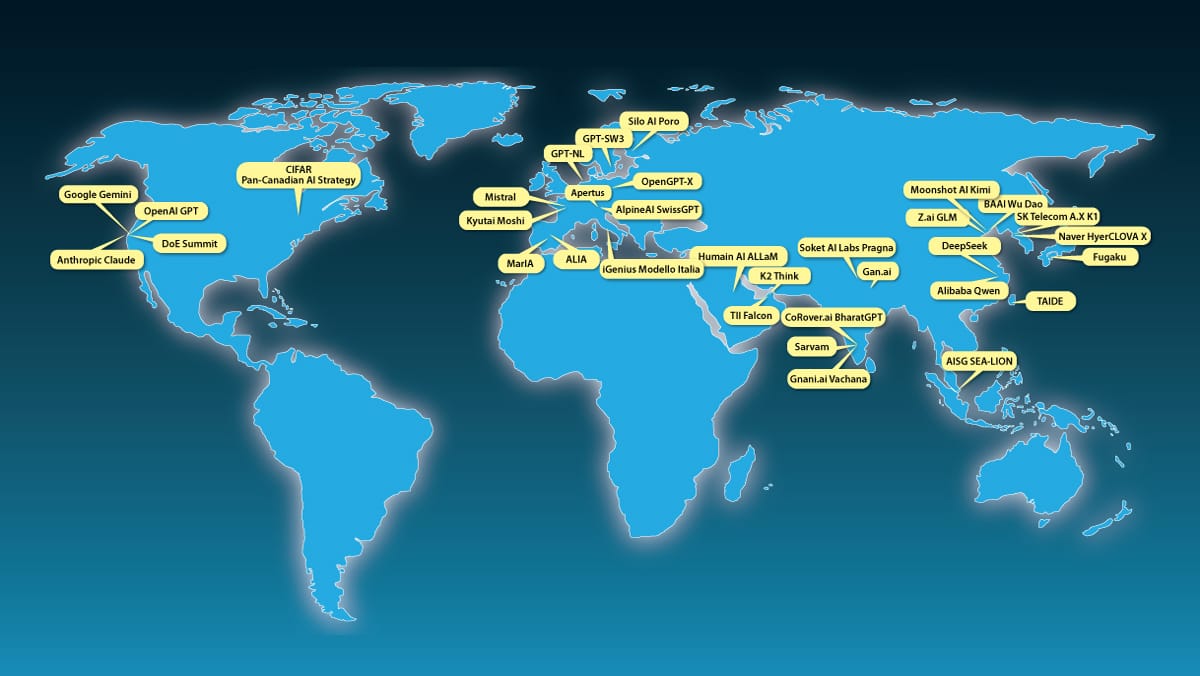
Middle powers are racing to procure and integrate artificial intelligence (AI) into their military operations. Almost all of the nations that are commonly considered middle powers have publicly announced deals to acquire or develop military AI. So far, most of those deals are for narrow applications, such as computer vision for drones and targeting. But as Anthropic’s decision to withhold its Mythos model over its offensive cyber capabilities shows, the military implications of frontier general-purpose models built by top American and Chinese labs are becoming unavoidable.
Where middle-power militaries source their AI is a matter of bipartisan concern in Washington. The White House’s “AI Action Plan” describes exporting American models to allies and partners as “imperative,” warning that failure would push other nations to “turn to our rivals,” namely China. The Trump administration’s Pax Silica initiative and AI exports program work toward these ends. Democrats such as former National Security Advisor Jake Sullivan have made similar cases.
But other nations are increasingly wary of overreliance on the United States—concerns that may heighten as the Trump administration considers taking stakes in the top AI labs. Convincing them to adopt U.S. AI poses challenges unlike any past arms export. Whether American technology underpins the next generation of military power—or whether its influence fragments—depends on navigating these risks.