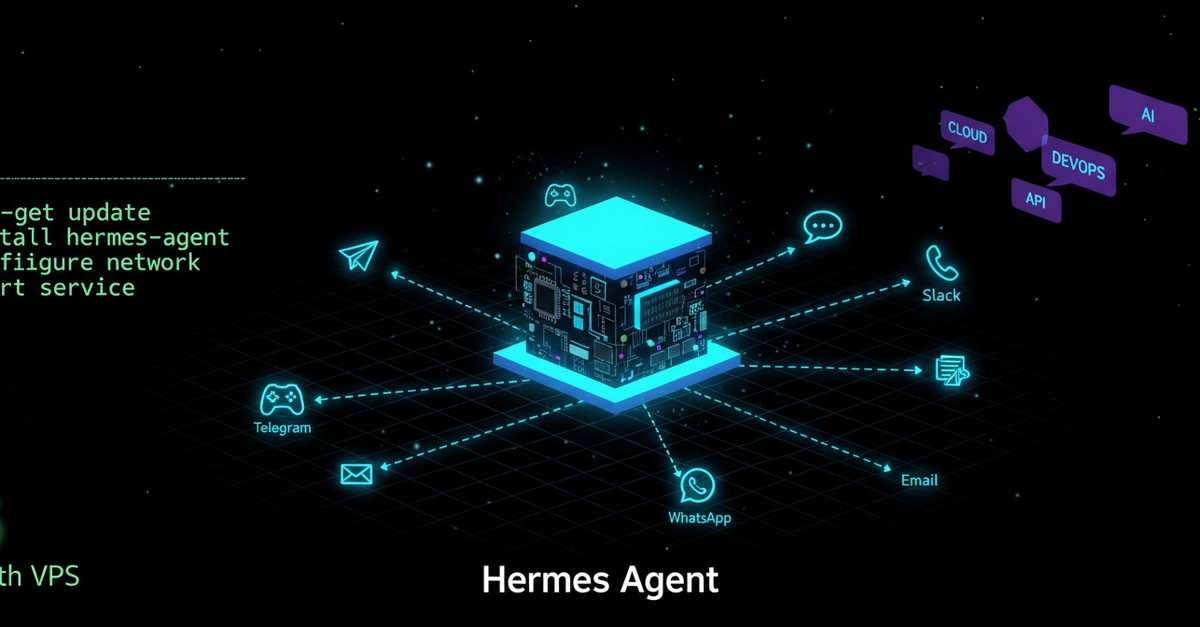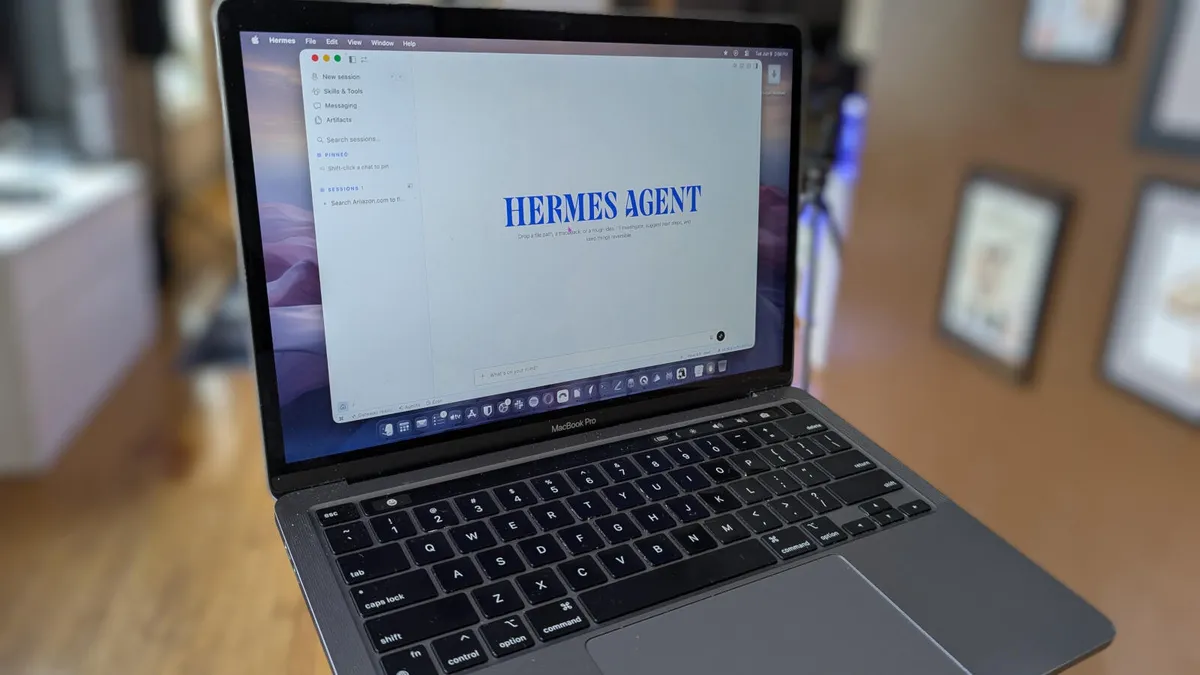
Jack Wallen/ZDNETFollow ZDNET: Add us as a preferred source on Google.ZDNET key takeawaysHermes is an AI desktop app with plenty of cool features.You can easily select models and check agent progress.Hermes learns as it goes and allows you to schedule queries.AI isn't everyone's favorite topic these days, and I totally get it. I avoid the most heated issues by using AI only for research (and checking for accuracy as I go). I also use locally installed AI to avoid straining the electric grid and to retain my privacy.In the grand scheme of things, AI isn't going away and does have valid uses, such as in the medical and scientific fields. Because of that capability, I cover AI because it's something people want to talk about, and I'm on a mission to ensure everyone knows that locally installed AI is the way to go. To that end, I test many apps that can be installed on machines in my local network.Also: Want local vibe coding? This AI stack might replace Claude Code and Codex - for freeA relatively unknown app called Hermes came to my attention recently -- and when I noticed that it can be used with the open-source tool Ollama, you can bet I jumped on it.Hermes isn't just a simple chat app where you can query it, though you can use it for that purpose. Instead, Hermes is an autonomous agent that lets you configure various tools, manage skills, view files, talk via voice, and keep several agent conversations organized in one place. Essentially, Hermes takes the chatbot concept and adds integrations, a terminal, a desktop app, messaging channels, memory, skills, scheduled jobs, and a learning loop.Hermes is many things, but it never feels overwhelming. And where some AI desktop apps seem limited, Hermes practically shrugs off those limitations as if to say, "Anything you can do, I can do better… and faster."Also: These top 30 AI agents deliver a mix of functions and autonomyBut what can Hermes do? To answer this question, you need to know what a Hermes Agent is.What is a Hermes Agent?The simple answer is a self-improving personal agent. But that definition doesn't say much, does it? Also: OpenAI's new image watermarks make it easier to spot AI fakes - here's howAs the official site says, "Hermes can remember what it learns, generate persistent skills, run scheduled automations, delegate to subagents, and use sandboxed backends like local, Docker, SSH, Singularity, and Modal."In other words, Hermes can start at Point A (say a query from you), and then navigate through points B, C, D, E, F, G, and more. To really understand what an Hermes agent is, consider what it consists of:Memory: The information you give Hermes for future actions.Skills: Playbooks used to create reproducible actions.Soul: The constituent elements of an agent: voice, style, preferences, and default behavior.Crons: Scheduled automations that ensure the agent can behave proactively.Session recall: A searchable history the agent can use to remember previous conversations, links, decisions, and projects.When you combine all the above elements, you get a reasoning loop that can read your messages, choose tools for the action, call up skills, update its memory, and then decide what action to take next.Hermes involves many elements, which means it does have a bit of a learning curve. However, some features have elevated this app to the top of my list for desktop AI apps. Also: I tested ChatGPT Plus vs. Gemini Pro to see which is better - and if it's worth switchingLet me show you how I installed and used Hermes and explain why it's become one of my favorite AI tools.Installing HermesThere are two different ways to install Hermes: via the official installer or via Ollama. I tried both and found the Ollama option to be considerably easier. Ollama also allows me to use Hermes for free (in conjunction with the GPT-OSS model).Also: US workers are the world's biggest AI skeptics - and it's not just about job lossI installed Hermes on Pop!_OS Linux, but you can install it on MacOS and Windows as well. To install Hermes on Linux, open a terminal and issue the command:
I've tested so many desktop AI tools, but Hermes with Ollama is my new favorite - here's why
Local AI is the way to go, and Hermes with open-source Ollama is my preferred setup right now.
1,314 words~6 min read