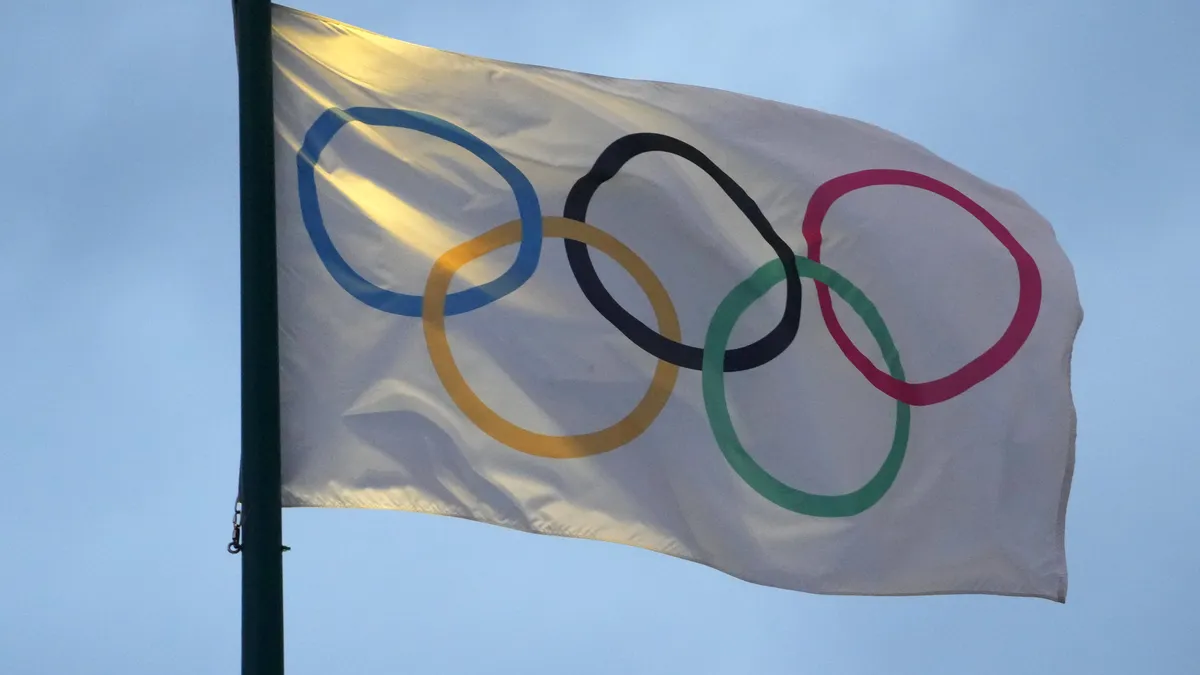
When the International Olympic Committee announced it is banning transgender women athletes from competing in women's events beginning with the 2028 Los Angeles Olympic Games, Veronica Ivy was disheartened, but not necessarily surprised.Ivy, who is transgender, won two consecutive world women’s track cycling championships in 2018 and 2019 representing Canada. But she was forced to retire from cycling in 2023 after the sport’s world governing body changed its policy and barred trans women from competing. Since then, she’s watched as other powerful sport organizations unraveled inclusive policies.The IOC’s decision to reinstate a genetic testing process it abandoned decades ago is a U-turn that athletes say will damage the livelihood and humanity of not just trans and intersex athletes, but all women.“This isn’t protecting the female category,” Ivy said. “This is only going to harm women and girls.”The IOC will now require SRY gene testing for all female athletes and ban those who test positive – including trans women or women with differences in sex development – from competing.“It was heartbreaking,” said transgender boxer Patricio Manuel. “Sports have been an amazing vehicle of inclusion in this society, and to weaponize it against athletes based on a hypothetical situation – to me, they are using sports to further weaponize and segregate trans athletes, and especially trans women, out of society by not allowing them into sports.”The IOC said it made the decision based on athlete feedback but has not released information about how many athletes were consulted or what questions they were asked. The IOC said only that feedback revealed, “a strong consensus that fairness and safety in the female category required clear, science-based eligibility rules, and that protecting the female category is a common priority.”The IOC has declined multiple requests from USA TODAY for further comment on the policy and its development, referring instead to an FAQ posted on its website.USA TODAY interviewed several trans and intersex athletes who said they fear the policy will have negative impacts on female athletes and said they do not believe the new framework reflects what most athletes want.“They don’t give a crap about women’s sport,” Ivy said. “Do you think girls and women are more or less safe if they have to prove their sex to someone? And when we look at the history of sex testing of women in sport, it’s a highly invasive process rife with sexual abuse and harassment.”In the history of the Olympic Games, there has been one openly transgender woman to compete. New Zealand weightlifter Laurel Hubbard placed last in her group at the Tokyo Games in 2021.Chris Mosier says IOC genetic testing policy will cause 'real harm' to athletesChris Mosier, a runner who in 2015 became the first known transgender man to represent the U.S. in international competition, said he's disappointed in the IOC's decision to backtrack on inclusion.Ten years ago, triathlete and duathlete Chris Mosier was a catalyst for changing the IOC’s policy so that trans athletes were no longer required to have gender reassignment surgery to compete. He was the first known transgender man to represent the United States in international competition in 2015, and five years later became the first trans athlete to compete in the Olympic trials in the category matching their gender identity.The IOC’s latest policy, Mosier said, feels like moving backwards.“I call bulls---,” Mosier said. “I believe this is rooted in politics, not in the actual lived experiences or the day-to-day experiences of athletes competing in women’s sports, because the truth is, there are very few trans women competing in women’s sports compared to the number of cisgender women. So this is largely a solution in search of a problem.”'A slap in the face' to trans athletesIn December 2019, as the IOC worked to build the framework for fairness, inclusion and non-discrimination that it would release in 2021, a select group of transgender athletes were flown to IOC headquarters in Lausanne, Switzerland.There, the five athletes – a group that included Ivy and Manuel – met with IOC leaders and shared their experiences and frustrations.But Ivy and Manuel said they were not invited to speak with IOC officials during development of the current policy, and it's unclear whether the IOC sought input from transgender individuals or medical experts whose research casts doubt on transgender athlete advantage. The IOC has declined USA TODAY's requests for information on who it consulted in forming the new policy."Confidentiality was often a necessary condition to obtain full consideration and information throughout the review," the IOC wrote. "The working group members came from all five continents and included specialists in sports science, endocrinology, transgender medicine, sports medicine, women’s health, ethics and law. The group also included IF (international federation) Chief Medical Officers representing individual and team sports."Manuel said the new policy, “felt like a slap in our face for the work that had been done to try to actually make inclusion in a sport."“Unfortunately, the IOC has now betrayed all of its values it claims to have in things like the Olympic charter,” Ivy said. “The Olympic Charter has these seven fundamental principles, one of which is that sport is a human right. Everyone has the right to participate with freedom from discrimination of any kind. Well, this is a plainly discriminatory policy not based in science that violates international human rights law all over the place.”Notably, the IOC will not require genetic testing for athletes in men’s sports. Mosier and Manuel, both trans men, said they’ve mostly been ignored or dismissed as lesser competitors – an attitude rooted in the misogynistic assumption that women are inferior to men.“If anything, it’s been dismissal of my presence in those competitions,” Mosier said. “Even making Team USA nine times, every single time is just a shrug, like it’s a one-off, like I’ll never be competitive with men because I was assigned female at birth.”In women’s sports, however, detractors paint transgender women or cisgender women who look more masculine as threats – even though women’s sports have led the way for inclusion. Transgender women have competed in the WNBA and NWSL, considered two of the most competitive leagues in the world.Brianna Turner, an eight-year WNBA veteran who has played basketball for the United States in international competition, denounced the IOC's transgender ban in an op-ed published by USA TODAY."In more than 15 years of organized basketball, I’ve played with and against people who are transgender and undoubtedly people with intersex variations, and I've never experienced any unfair advantages," Turner wrote. "I saw these players as my fellow athletes, not my enemies. We cannot choose our genes or chromosomes, but we can choose how hard we work, how we treat one another and whether we protect the dignity of every athlete." Are you woman enough?The IOC has positioned itself as wanting to protect women’s sports, but athletes say the new gene testing policy will invite unfair scrutiny of women’s physical appearance, especially those whose bodies are not deemed traditionally feminine.In 2023, the International Boxing Association barred Algeria’s Imane Khelif and Taiwan’s Lin Yu-ting from competing in the world championships and alleged they had failed gender eligibility testing. Neither woman is transgender.The IOC later criticized the IBA’s decision and confirmed that Khelif and Lin were eligible to compete in women’s boxing at the 2024 Olympics, where Khelif won a gold medal. But that didn’t stop both athletes from being abused online. “Who gets to decide who is a woman?” Manuel said. “An athlete isn’t just based off of their physiological component. If that was the case, then people who were more muscular or able to lift (the most) weight or had the highest levels of testosterone would automatically be the best. But especially in a sport like boxing, a sport that I am very much in love with, the beauty of the sport isn’t about the physical strength of an athlete. It’s also the skill, the drive, the dedication, the heart that goes into it. And to distill that and then question an athlete and say that they only won as a result of a possible variance of genetics, I think it’s insulting to all female athletes."Two-time Olympic champion Caster Semenya, the South African middle-distance runner, was forced to undergo sex verification testing in 2009 and found to have differences in sex development (DSD), an umbrella term used to describe various conditions. Semenya has female physical traits but also has the typical male XY chromosome pattern and naturally high testosterone levels.Semenya was banned from competing by World Athletics after she refused to take medication to lower her testosterone levels. She filed numerous legal challenges to restore her eligibility and opted not to challenge further after the European Court of Human Rights ruled in her favor in July 2025. In a TIME Magazine article published April 1, Semenya called the IOC’s policy a “disgrace” and wrote, “There is no single marker for what makes someone a woman, or for what makes an athlete great. We celebrate the exceptional in men’s sports all the time. But when it comes to women’s sports, there are such narrow definitions of who is allowed to participate. Sports are supposed to be about celebrating the exceptional, not forcing us to conform to outdated perceptions of what it means to be a woman."The policy is also likely to disproportionately affect women of color and those from the global South, as evidenced already by the cases of Semenya, Khelif, Indian sprinter Dutee Chand and others.“When you’re hyper focusing on bodies, especially the bodies of women, it’s impossible to take out the history of racism in Western countries, especially,” said Maya Satya Reddy, a former professional golfer who consults on LGBTQ law and policy. “So you cannot think about these policies targeting trans people without considering and acknowledging that their focus on the bodies of women is just part of a history of policing women’s bodies that is racially tinged."Even Serena Williams and Simone Biles, two of the most accomplished athletes on the planet, have faced criticism for their physical appearances. Reddy, who is Indian and identifies as queer, recalled that when she was golfing professionally in 2016, she felt that the tour highlighted a certain type of player: thin, White and feminine.“There are so many different and beautiful ways to look like a woman,” Reddy said, “and when a sport is idealizing a really specific way to be a woman in many of the same ways these policies are doing, it makes it really difficult for these players to come out or be vulnerable and proud of their identities and who they are.”Genetic testing can cause unintended harmThere’s also the possibility that athletes will learn through the required genetic testing that they have chromosomal or developmental differences, which aren’t always physically obvious. Such a discovery, in addition to derailing an athlete’s career, can cause intense emotional distress.Aces Fox, a former competitive track and field sprinter from ages 11-16, was raised as a girl and won two junior Olympics gold medals competing against both boys and girls. But at 19, Fox found out they were intersex – in this case, born with two different sets of DNA and developed male and female internal sex organs.Some of Fox’s physical traits offered clues, especially during puberty. Fox had two differently colored eyes, irregularities in bone growth, one leg that was shorter than the other, and an erratic menstrual period. But Fox’s mother never told them about their genetic differences, and Fox recalled feeling as a teenager the need to prove they were a girl.Although Fox was never genetically tested while competing in sports as a minor, when they were 19 a clinician tested Fox without their knowledge and disclosed the findings. The IOC plans to require testing for adults and minors, meaning athletes could find out life-altering results at a young age.The youngest girl to compete in the 2024 Summer Olympics was 11 years old. The youngest girl Winter Olympian this year was 15. Under the new rules, both girls will be tested before their next Olympic opportunity. For the Youth Olympic Games, the new rules will be mandatory starting in 2030."It’s crushing, at least for me it was," Fox said. "I think my big concern at 19 though was my path and journey concerning relationships. It’s been hard at every turn, whether it’s at work or personal relationships or family."There are also potential privacy and cost issues. Although the IOC said it will provide guidance to relevant governing bodies on best practices and how to finance screening, it is up to international federations to determine screening protocols, chain of custody, verification processes and athlete safeguards.In an FAQ posted on its website, the IOC said that international federations and national organizing committees "should lead the education of athletes and entourage members, with a particular emphasis on the responsibility of coaches, managers and entourage members to support the athlete’s autonomy, privacy and well-being, and to refrain from sharing information beyond authorised channels."The IOC is attempting to restrict two distinct groups of people, Fox said. While being transgender is tied to gender identity and presentation, being intersex is about biological sex variations. Some people are both intersex and transgender.If Michael Phelps can be celebrated for his unique genetic markers and lung capacity, why punish intersex people for sex trait variations they cannot control?"I think in a funny way it will backfire because if they test all the people that are presenting female, they’ll find out what a variety pack everything is," Fox said. "And with the Olympics, aren’t we exceptional anyway? The people that are there are genetic phenomena, all of them, and they don’t always have it affecting their gonads."Critics fear trickle-down effect of testing mandateWhile the IOC says its policy does not apply to youth or grassroots sports organizations, national federations and the smaller organizations that feed to them often look to the international governing body for guidance on creating their own policies.Athletes fear there will be a trickle-down effect where similarly restrictive policies are enacted even in recreational sports."If there are lower levels of sport that are adopting genetic testing, it's going to be catastrophic," Mosier said. "Not only for transgender people and intersex people, but also for every young woman and girl who wants to participate in sports but is living with this fear of having their body scrutinized and their behaviors policed in these sporting environments, which we know ultimately also goes outside the boundaries of the court, the field or the locker room."They also worry that pushing trans people out of sports will make it more acceptable to exclude them from society at large. Manuel, who competed in the first women’s boxing Olympic trials in 2012 before he transitioned, said that being respected in the boxing world helped him connect with people who otherwise might never have interacted with a trans person."I think forcing trans people out of the sporting space is going to force us further from having those connections, from being able to see each other as human," he said.Ivy said that while she received backlash from a "small, vocal minority" of people who did not believe she had a right to compete, she felt supported by the general public. She and Reddy believe that though most Olympic women’s sports athletes support including trans and intersex women, they might fear speaking out and jeopardizing their own careers, especially since many Olympians struggle to earn substantiative money through sports. "The reality is, not everyone has the privilege to (speak out)," Reddy said. "I hate that that’s the situation that we’re in, but you’re playing for your livelihood and it's so real to be afraid of backlash, even if it’s something you believe in."
IOC's 'heartbreaking' return to gene testing slammed by trans, intersex athletes
New Olympic gene testing rules are drawing sharp criticism from athletes who warn the policy could cause harm and exclusion in women's sports.
2,616 words~12 min read