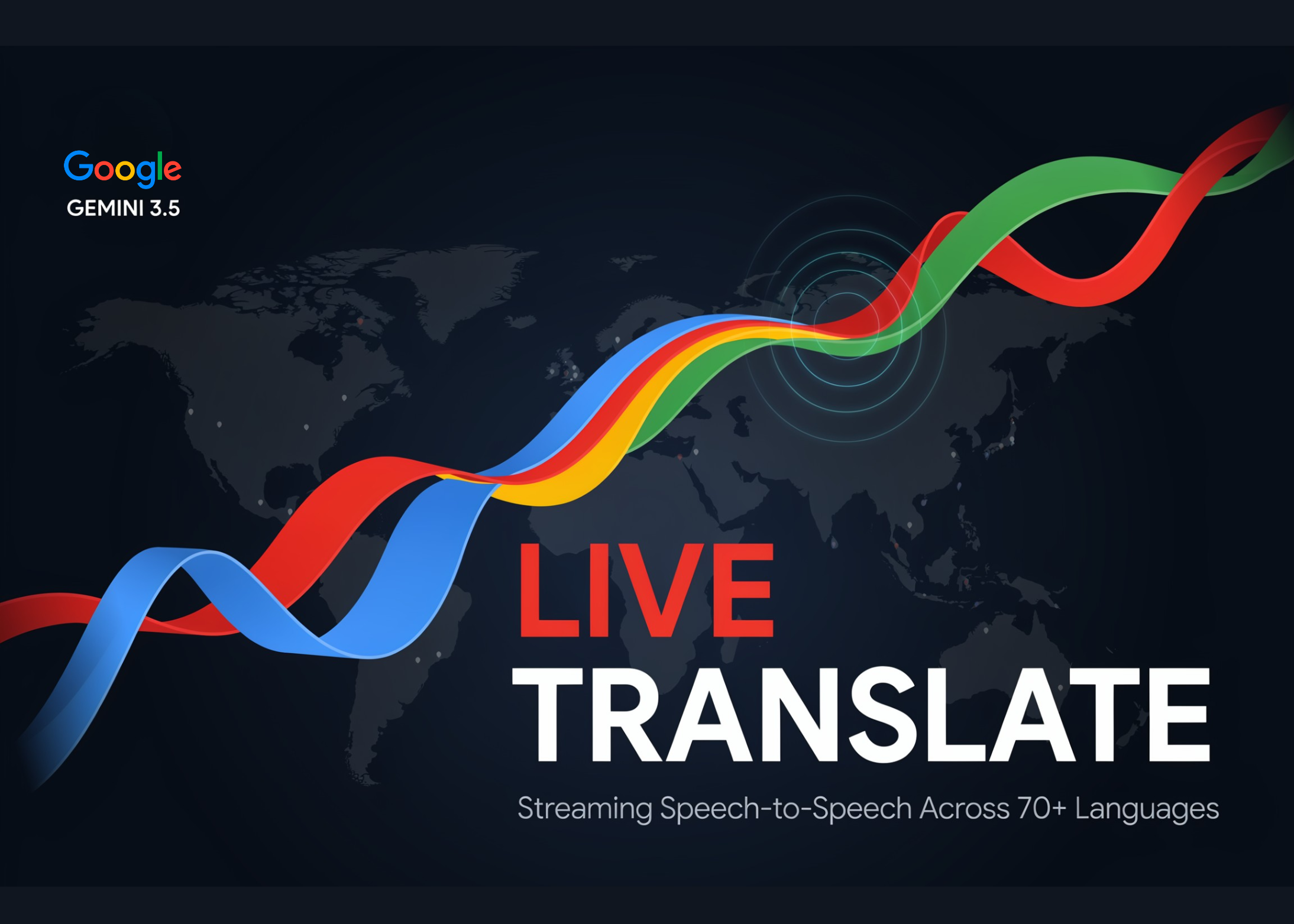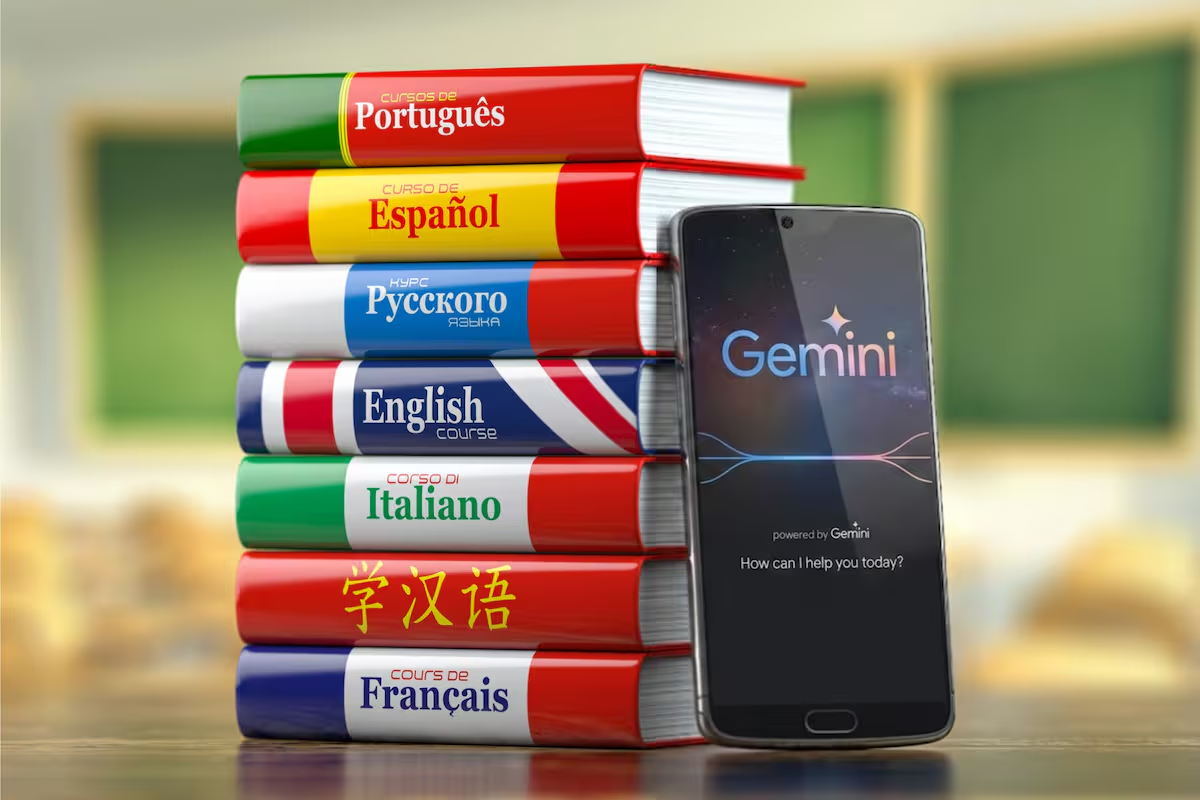
Photo credit: blog.googleGoogle is bringing one of its most ambitious AI-powered communication tools to users and businesses. The company has announced Gemini 3.5 Live Translate, a new speech-to-speech translation model that can translate conversations in near real time across more than 70 languages while preserving the speaker's tone, pacing and speaking style. The model is rolling out across Google Translate, Google Meet and Google's developer ecosystem.Key TakeawaysGoogle has introduced Gemini 3.5 Live Translate, a new AI-powered speech translation model.The model supports more than 70 languages and over 2,000 language combinations.It delivers near real-time speech-to-speech translation instead of traditional turn-based translation.Google Meet is receiving major translation upgrades powered by the new model.Google Translate on Android and iOS is getting the technology globally.Android users are also getting a new listening mode for private translations.Developers can access the model through Gemini Live API and Google AI Studio.Google wants conversations to feel less like translationsMachine translation has existed for decades, but live conversations have often felt awkward. Traditional systems usually wait for a speaker to finish an entire sentence before generating a translation, creating delays that interrupt the natural flow of discussion.Gemini 3.5 Live Translate takes a different approach. Instead of waiting for a sentence to end, the model translates continuously as people speak. Google says the system automatically balances speed and context, allowing translations to remain accurate while staying only a few seconds behind the original speaker.The result is intended to feel more like a natural conversation and less like a series of translated exchanges.Google also says the model preserves aspects of speech that are often lost during translation, including intonation, pitch and pacing. That means a translated voice can sound closer to the original speaker rather than a generic synthetic narrator.Google Meet is getting one of its biggest translation upgrades yetPerhaps the most significant impact of Gemini 3.5 Live Translate will be felt inside Google Meet.The company says speech translation in Meet will soon support more than 70 languages, a major jump from the previous limit of five languages. The upgrade also expands support from English-centric translation to more than 2,000 language combinations, enabling conversations between a much wider range of participants.Google is also redesigning how translation tools appear within Meet, making them easier to access during calls and meetings.For multinational businesses, remote teams and global organisations, the update could remove one of the biggest barriers in virtual collaboration: language differences. Instead of relying on translated captions alone, participants will be able to hear translated speech while conversations are taking place.The feature will initially enter private preview for select Google Workspace enterprise customers before expanding more broadly later this year.Google Translate gets smarter and more conversationalGoogle is also rolling out Gemini 3.5 Live Translate globally through the Google Translate app on Android and iOS.The update aims to improve live translation scenarios such as travel, business meetings, guided tours and everyday conversations. Users can connect headphones and hear translated speech that mirrors the tone and delivery of the original speaker.Unlike older translation systems that often sounded robotic, Gemini 3.5 Live Translate focuses on maintaining conversational flow. The company believes this can make interactions feel more personal and easier to follow, especially during extended discussions.The rollout marks another step in Google's broader effort to integrate Gemini across its consumer-facing products rather than limiting advanced AI capabilities to standalone chatbots.Android users are getting a new listening modeOne of the more practical additions arriving alongside the new model is a feature Google calls Listening Mode.The feature allows Android users to hold their phone against their ear, much like a normal phone call and hear translated audio directly through the device's earpiece. This eliminates the need for headphones in situations where users want a more private translation experience.Google suggests the feature could be useful during situations such as guided tours, travel interactions or conversations where using external speakers would be inconvenient.The listening mode represents Google's effort to make AI translation more accessible in everyday situations rather than limiting it to specific hardware accessories.Developers gain access through the Gemini Live APIBeyond consumer products, Google is also opening the technology to developers.Gemini 3.5 Live Translate is available in public preview through the Gemini Live API and Google AI Studio. Developers can use the model to build applications involving multilingual meetings, customer support, education, broadcasting and real-time communication.Google says the model automatically detects languages without requiring extensive manual configuration and is designed to work in noisy environments.Several companies are already testing the technology. Ride-hailing giant Grab, for example, is exploring how it can facilitate communication between drivers and travellers who speak different languages. According to Google, those interactions account for millions of voice calls every month.Gemini 3.5 Live Translate rolloutPlatformAvailabilityGoogle Translate (Android)Rolling out globallyGoogle Translate (iOS)Rolling out globallyGoogle MeetPrivate preview for select Workspace customersGemini Live APIPublic previewGoogle AI StudioPublic previewAndroid Listening ModeBeginning rolloutLanguage Support70+ languagesLanguage Combinations2,000+ combinationsBased on Google's official announcement.Why this mattersAI companies have spent the past two years racing to build more capable chatbots. The next phase appears to be making AI disappear into everyday interactions.Gemini 3.5 Live Translate is an example of that shift. Instead of asking users to open a chatbot and type questions, the technology operates in the background, helping people communicate naturally across language barriers.For Google, the launch is also strategically important because translation remains one of the company's most widely used services. By bringing Gemini-powered capabilities into Translate and Meet, Google is integrating AI into products that already serve billions of users rather than asking them to adopt entirely new tools.The company's challenge now will be maintaining accuracy across dozens of languages while ensuring conversations remain fast, natural and contextually correct.Frequently Asked QuestionsCan Gemini 3.5 Live Translate replace human interpreters in meetings?Not entirely. The new model is designed to make multilingual conversations smoother by translating speech in near real time, but businesses handling sensitive negotiations, legal discussions, or highly technical conversations may still rely on professional interpreters.How is Google trying to make AI translations sound more natural?Google says Gemini 3.5 Live Translate preserves elements such as tone, pacing and speaking style, allowing translated speech to sound closer to the original speaker rather than a generic AI voice.Why is Google bringing this feature to Meet first?Video conferencing has become a major use case for real-time translation as companies increasingly work across countries and languages. Meet allows Google to integrate the technology directly into workplace communication.What could this mean for international travel?The feature could reduce language barriers during activities such as asking for directions, speaking with hotel staff, navigating public transport or participating in guided tours, especially with the new listening mode on Android devices.How does Gemini 3.5 Live Translate fit into Google's broader AI strategy?Rather than limiting Gemini to chatbots, Google is increasingly embedding AI into products people already use, including Search, Workspace, Android, Translate and Meet.Could this change how global teams collaborate?Potentially yes. By supporting more than 70 languages and thousands of language combinations, the technology aims to make multilingual meetings more accessible without requiring every participant to speak the same language.Who gets access to Gemini 3.5 Live Translate first?The technology is rolling out through Google Translate apps globally, while Meet translation upgrades are initially entering private preview for selected Workspace enterprise customers.end of article
Google rolls out Gemini 3.5 Live Translate: Real-time speech translation now comes to Meet, Translate and developers
Find latest technology news, gadgets reviews & ratings. Popular & latest gadgets specifications, features, prices, photos & videos. Trending mobile phone comparisons, slideshows, how tos and videos for latest mobile phones, tablets, technology news updates.
1,202 words~5 min read