Tammy Park
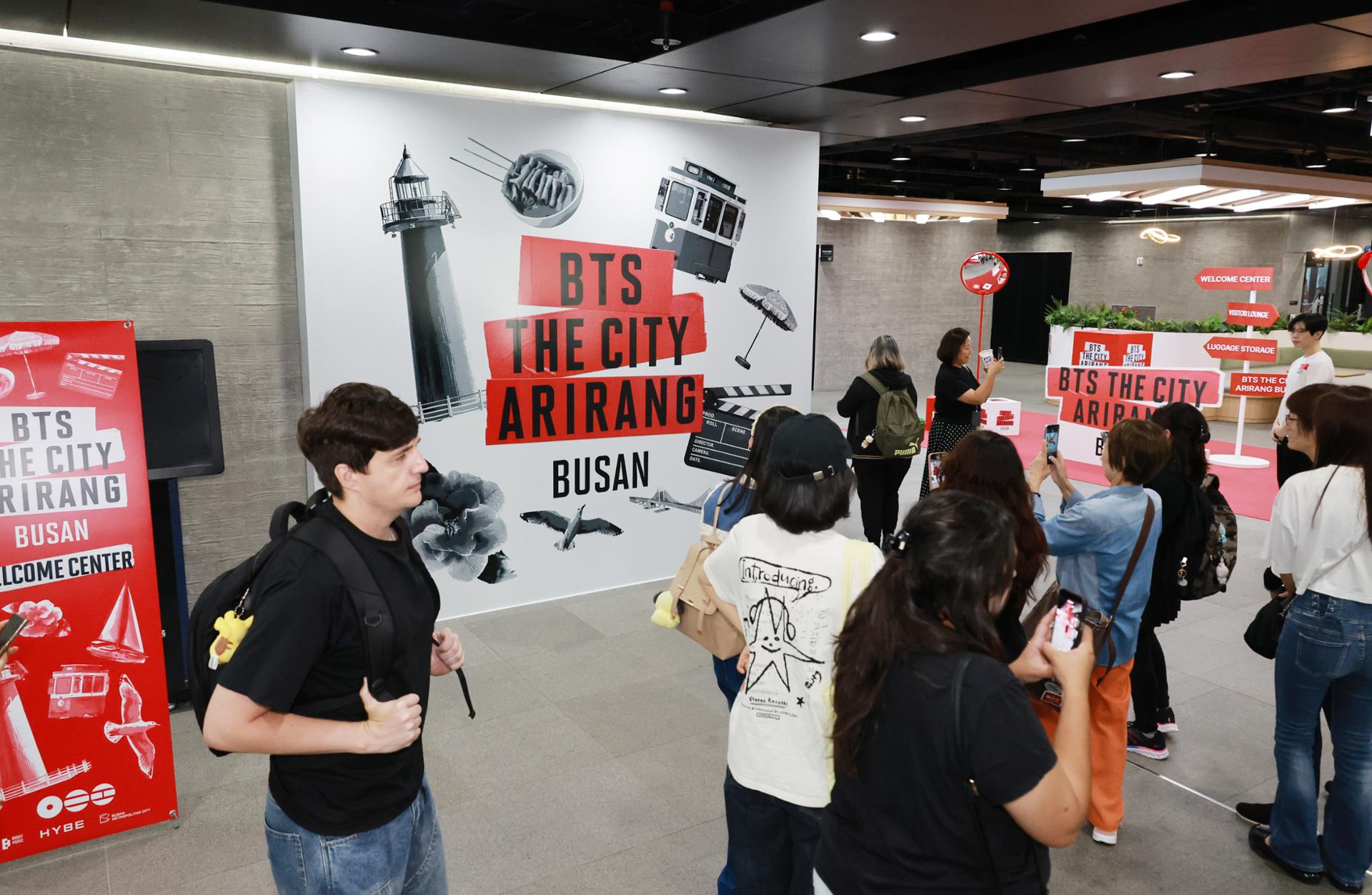
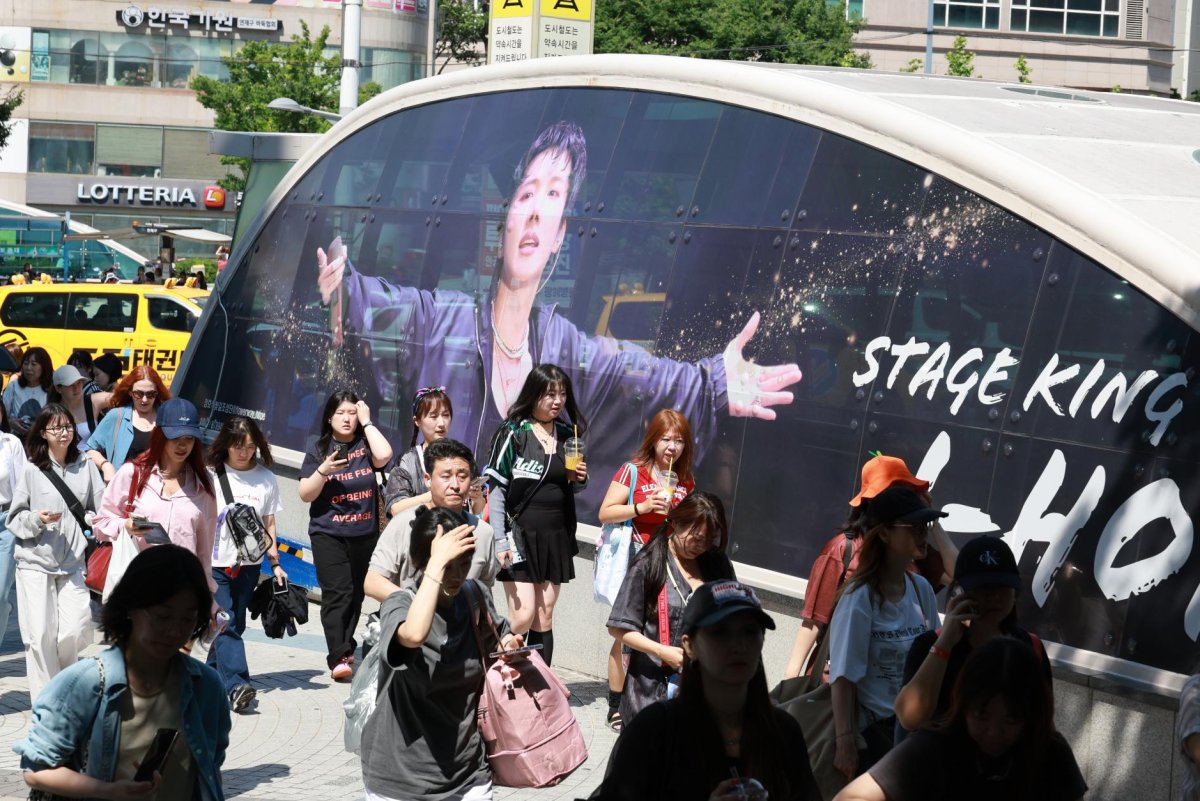
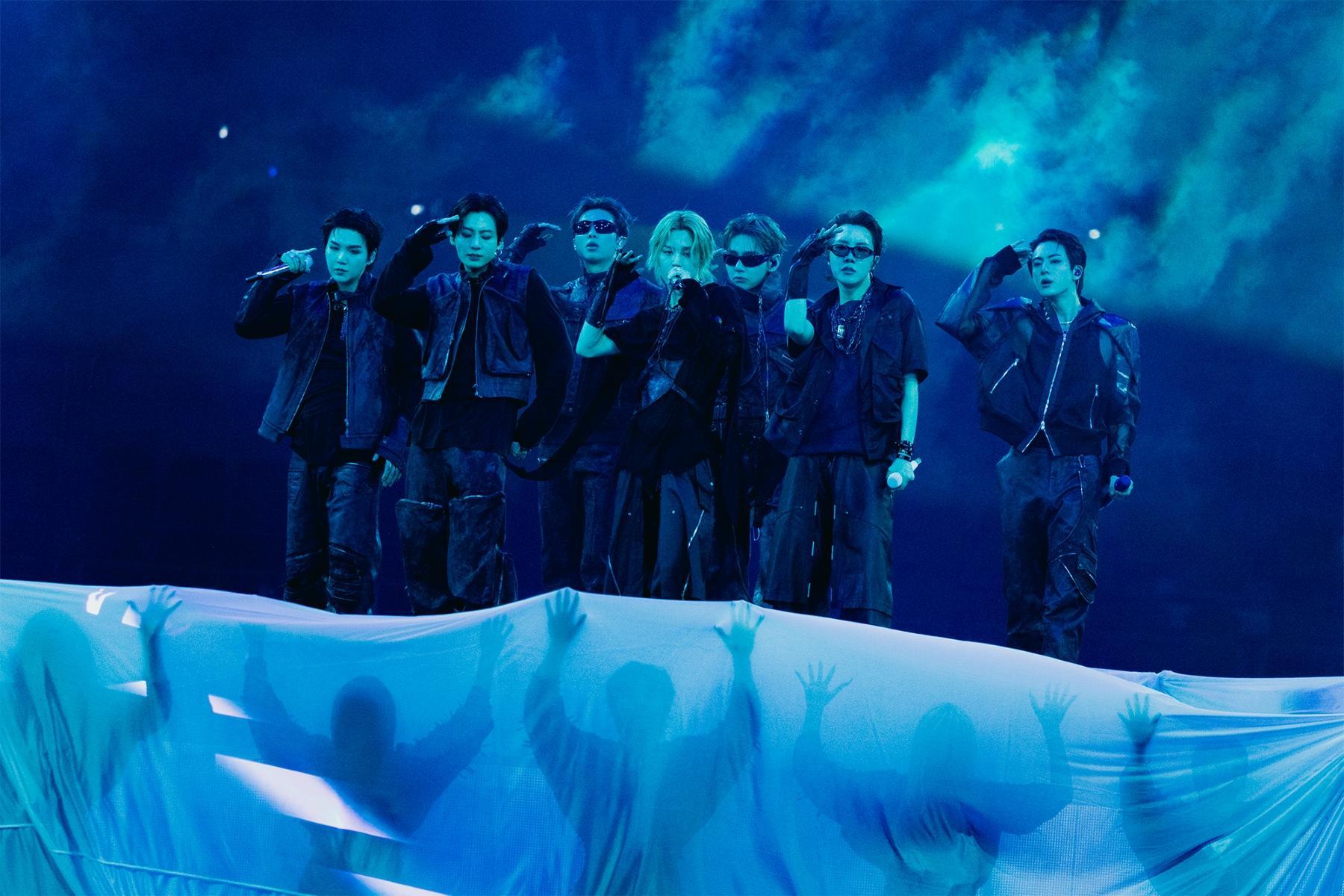
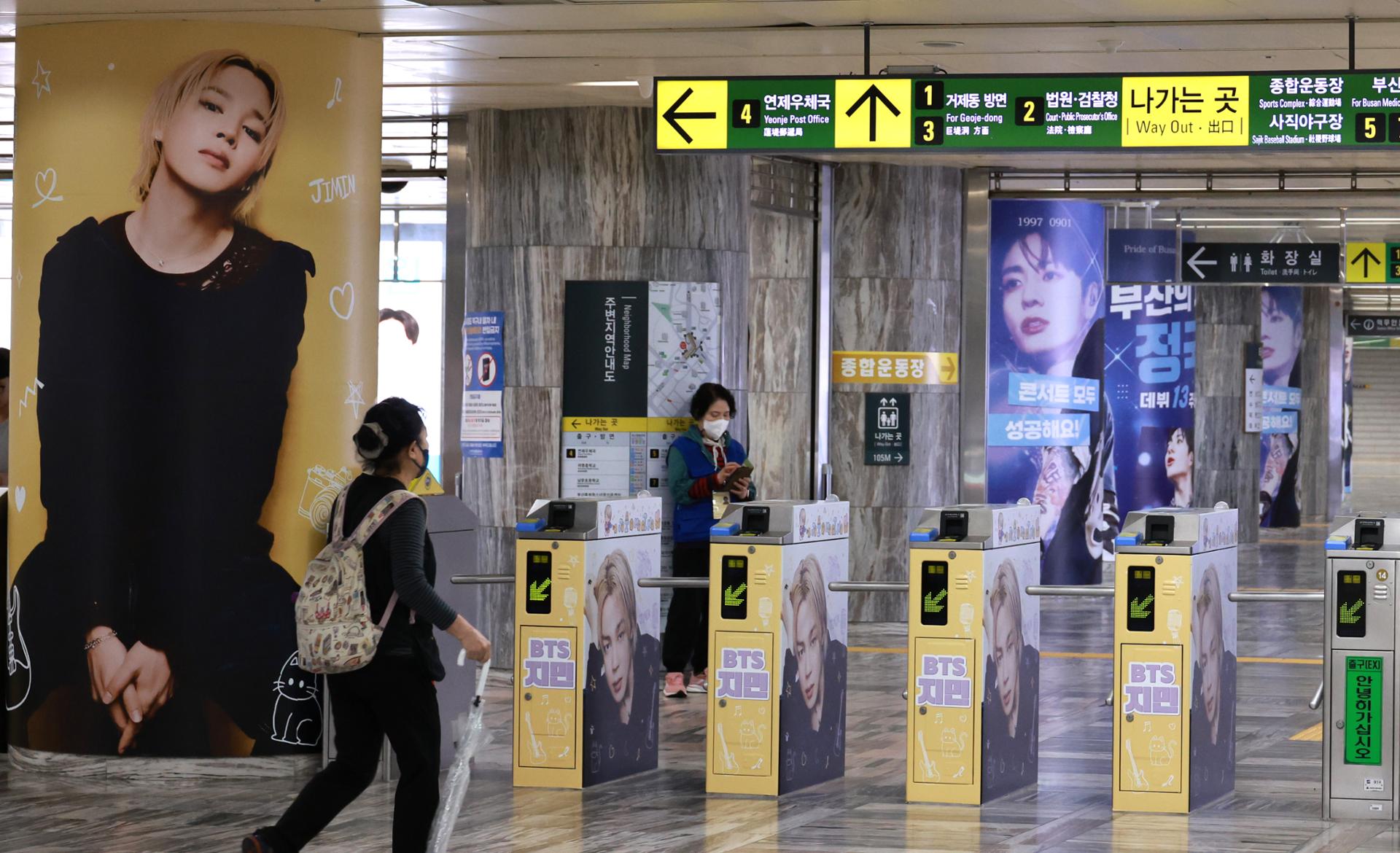
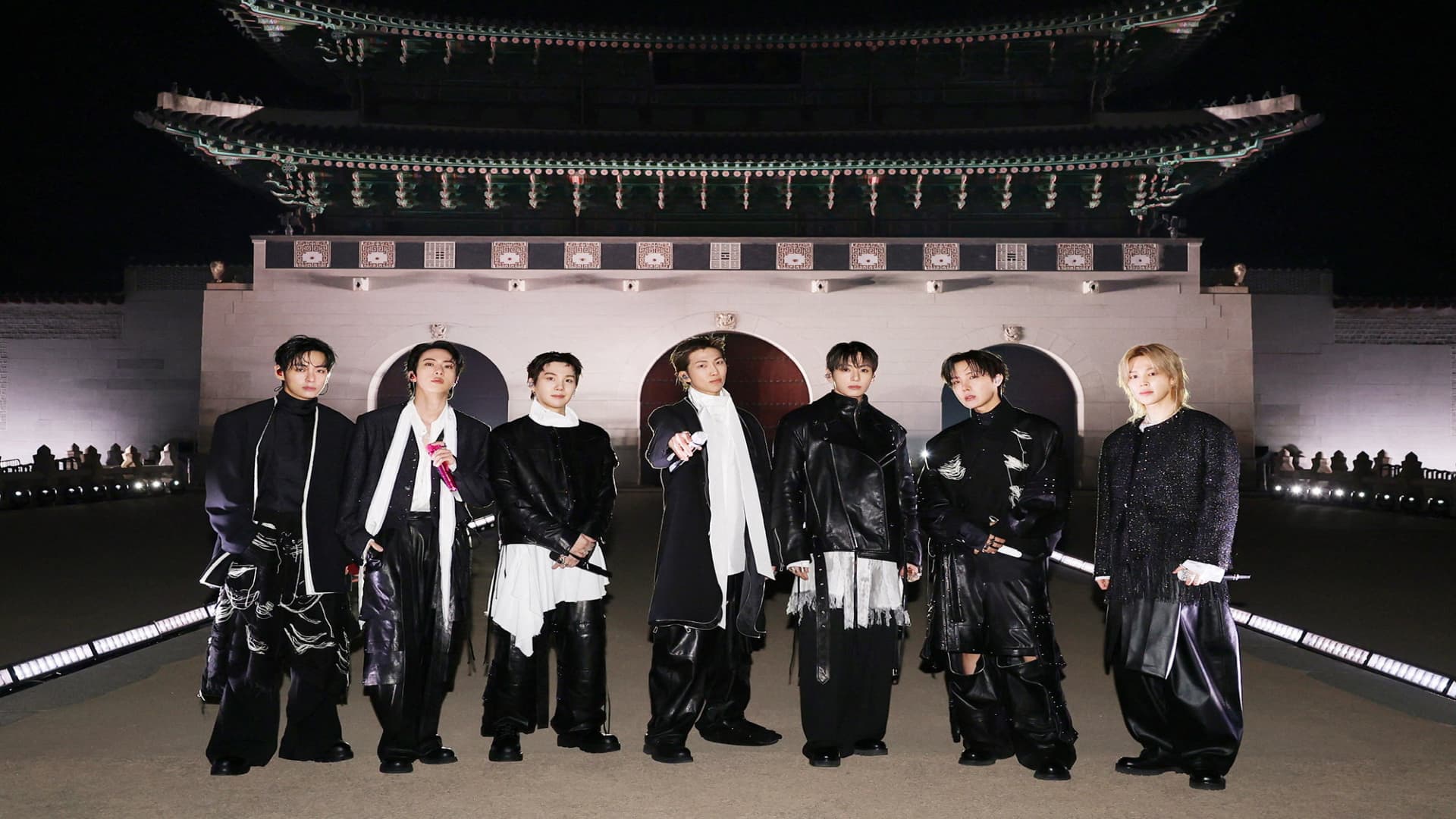
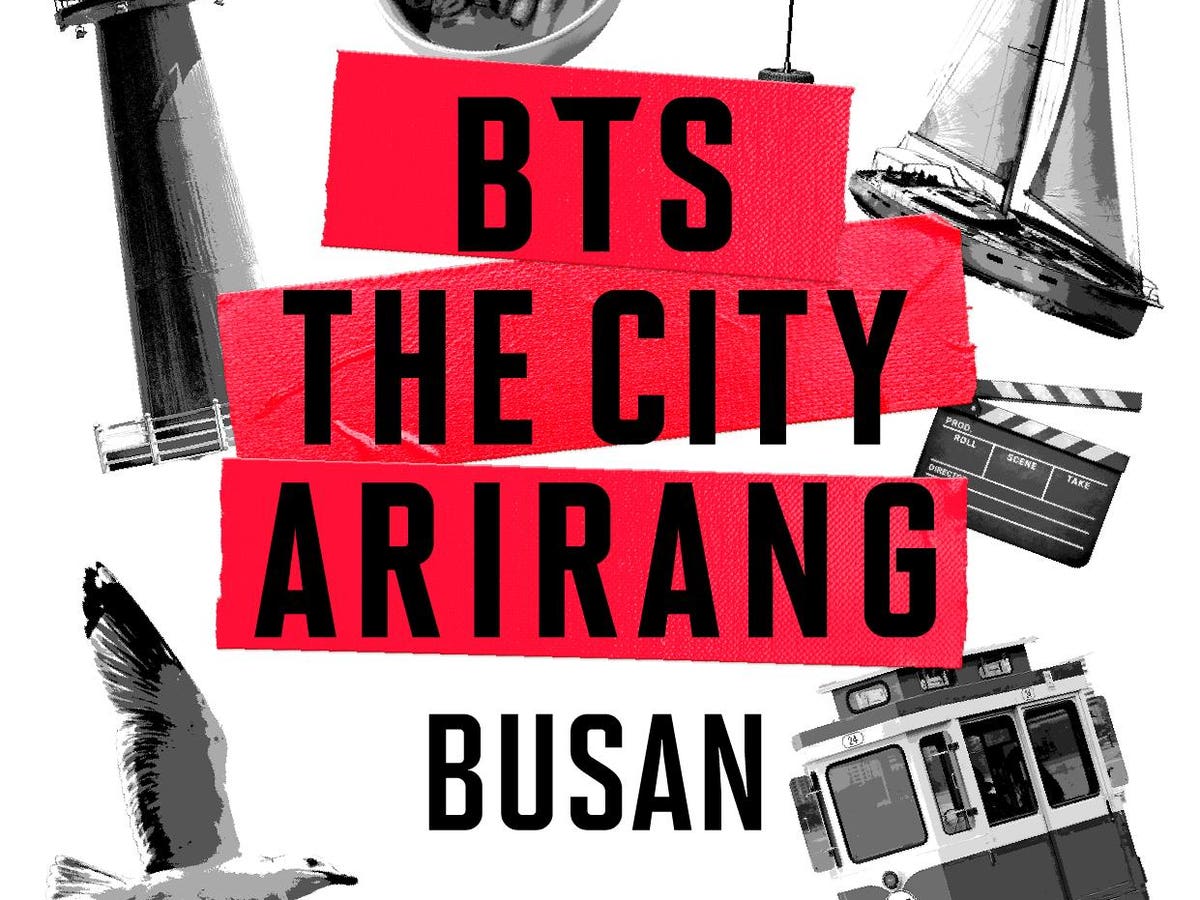
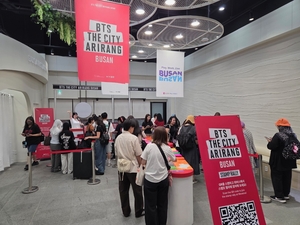
After months of planning, debate and a scramble to solve accommodation woes, Busan is ready to roll out the purple carpet for Army Visitors line up at the Welcome Center near Busan Station to take part in a citywide stamp rally organized ahead of BTS' concerts slated to take place in the city on Friday and Saturday. (Jin Sia/Busan Metropolitan City) BUSAN -- With BTS set to perform at Busan Asiad Main Stadium on June 12 and 13, South Korea's second-largest city is preparing for what officials expect will be an influx of roughly 100,000 visitors from around the world.The effort is part of "BTS The City Arirang," a citywide tourism initiative running from June 5 to 21 that includes exhibitions, fan experiences, cultural programs and special events across Busan. Kim Dong-hoon, director of Busan Metropolitan City's Tourism Policy Division, speaks about preparations for the Welcome Center and other BTS-related tourism programs. (Tammy Park/The Korea Herald) "We are turning the entire city into a festival," Kim Dong-hoon, director of the Tourism Policy Division at Busan Metropolitan City, told The Korea Herald.The stakes extend beyond a typical concert weekend.The performances coincide with BTS' anniversary celebrations and come amid intense global demand following the group's reunion after military service. Previous BTS-related events in Goyang and Seoul's Gwanghwamun Square drew massive crowds and international media attention, while overseas demand for concert tickets has continued to dominate social media discussions.For Busan, the event is also an opportunity.Officials say the goal is to help visitors experience more of the city beyond the concert."We hope visitors leave with good memories of Busan and see it as a city they would like to visit again," Kim said.Scams, resellers and soaring room rates This photo provided by BigHit Music shows BTS kicking off its “Arirang” world tour with three concerts in Goyang, Gyeonggi Province, on April 9, 11 and 12, 2026. (BigHit Music) The preparations, however, have not been without challenges.Following the announcement of the concerts, accommodation prices in Busan received widespread criticism after some lodging listings appeared online at sharply inflated rates. The controversy grew after reports emerged of rooms being relisted at significantly higher prices during the concert period.The issue drew national attention, prompting discussions about tourism pricing and Busan's image among international visitors."We had been following the news for months about lodging establishments charging 10 to 50 times the usual rate," said the Ven. Jang San, a monk who oversees the templestay program at Beomeosa, a 1,300-year-old Buddhist temple, in Busan. "It even got to the point where some fans were saying they wouldn't spend a single dime in the city."For the Ven. Jang San, who has lived in Busan for a decade, the reports were troubling."Personally, I did not want international visitors to have a bad experience visiting this country, especially here in Busan," he said. The Ven. Jang San discusses preparations for Beomeosa Templestay program and the origins of the city's accommodation initiative during an interview with The Korea Herald. (Tammy Park/The Korea Herald) At Beomeosa, that concern took the form of a simple offer: free temple stay accommodations for international fans. The temple could host only about 20 guests per night, but the idea resonated far beyond its mountain grounds.Other temples joined. Churches followed. Universities opened dormitories. Public institutions and civic organizations stepped forward as well, helping spark a broader citywide effort to provide affordable lodging for visitors through Busan's Fair Accommodation campaign."Korea has become a very capitalist country now where a lot of emphasis is put on money and personal wealth," the Ven. Jang San said. "But Korean people still have this sense of unity to gather and work together in times of need, especially if it's for the greater good."Kim, the Busan official, described the response as a ripple effect, attributing it to what he calls the "Busan spirit.""Busan people have a 'Let's give it a shot' mentality," Kim said. "If we're not going to do it, we won't do it at all. But if we do, we want to do it properly. That's how the positive energy kept spreading."For both the city and the temple, the ultimate goal is simple."We hope they remember Beomeosa and Busan as a warm place where they are always welcome," the Ven. Jang San said. BTS figures are displayed at the information desk of Beomeosa's Seon Education Center, adjacent to the templestay accommodations, in Busan. (Tammy Park/The Korea Herald) Beomeosa Templestay, about a 40-minute drive from Busan Asiad Main Stadium, is offering free accommodations to international concertgoers. The temple's proposal helped inspire a citywide initiative to provide visitors with free or reasonably priced lodging amid controversy over soaring accommodation costs. (Tammy Park/The Korea Herald) The hometown pridePart of the enthusiasm surrounding the concerts stems from the city's special relationship with BTS.Two of the group's seven members, Jimin and Jungkook, were born and raised in Busan, and their presence continues to be felt throughout the city. Fans routinely visit locations associated with their early years, while Z-Millennial, formerly Magnate, the cafe run by Jimin's father, has become a destination in its own right.Mentioning the cafe to a local taxi driver prompted an immediate response."Ah, Jimin's place!" the taxi driver says with a smile. "I know the father! We've met before at a gathering.""I think that's a very significant factor," Busan official Kim said. "Many people in Busan feel a sense of pride because Jimin and Jungkook are from here," reflecting the sense that, for many residents, BTS is not simply a global success story — it is also a local one. Z-Millennial, the cafe operated by Jimin's father in Busan, is adorned with BTS photos and letters from visiting fans, making it a popular stop BTS' fandom, Army. (Tammy Park/The Korea Herald) A banner of BTS member Jungkook reading "The Pride of Busan" is displayed near Sports Complex Station, a key transit point for concertgoers heading to Busan Asiad Main Stadium. (Yonhap) Images of Busan-born BTS members Jimin and Jungkook cover Sports Complex Station on Seoul Subway Line 3, a key gateway to Busan Asiad Main Stadium, ahead of the group's concerts in Busan. (Yonhap) Behind the celebration, a local burdenThe scale of the preparations has also sparked debate.On Blind, the anonymous workplace app, public-sector employees questioned why municipal workers were expected to devote significant time and resources to a privately organized entertainment event. Labor unions similarly criticized early staffing plans, arguing that public resources should not be disproportionately directed toward supporting a commercial concert.Amid the debate, the city shifted to a voluntary participation system while maintaining that extensive coordination was necessary to ensure public safety around venues, transportation hubs and major gathering areas.By Tuesday, 390 city employees had volunteered to support operations near the concert venue, where they will be deployed for traffic control, crowd management and safety measures in areas expected to attract large numbers of visitors. A giant screen mounted on the exterior of the Grand Josun Busan hotel overlooking Haeundae Beach displays a promotional video for BTS-related events ahead of the group's concerts in Busan. (Yonhap) Busan's welcome planBusan was already one of South Korea's most popular tourist destinations, and places such as Beomeosa have long attracted visitors. The city welcomed 2.93 million foreign visitors in 2024 and 3.64 million in 2025, an increase of more than 23 percent.In the weeks leading up to the concerts, however, organizers across the city have found themselves adapting plans with BTS fans in mind.At Beomeosa, monks discussed adding touches of purple throughout the temple grounds. At the Welcome Center near Busan Station, one of the flagship projects under the city's BTS-related tourism campaign, officials prepared "Random Play" dance events, K-beauty experiences, photo booths, multilingual tourism assistance and a citywide stamp rally designed to encourage visitors to explore the city beyond the concert venue.Taken individually, they are small adjustments. Together, they reflect a broader effort to ensure that the city and the concert work in tandem rather than compete for visitors' attention. Boogi, Busan's official mascot, greets visitors at the Welcome Center near Busan Station. (Jin Sia/Busan Metropolitan City) Fans gather at the Welcome Center near Busan Station beneath a wall reading, "What is your Arirang?" (Jin Sia/Busan Metropolitan City) Elsewhere in the city, Busan has organized a series of linked events and attractions. A "Love Song Lounge" on Haeundae Beach will provide a space for visitors to rest, while the city's annual Port Village cultural event has been adapted to overlap with the concert period. Additional programs are planned at The Bay 101, and Gwangalli Beach is expected to feature special content linked to the Gwangalli Eobang Festival, including a lighting show by the Gwangan Bridge and the area's signature drone show.At Beomeosa, preparations have focused on accommodating concertgoers' schedules. The Ven. Jang San said staff have been discussing additional lighting around the temple grounds so visitors can safely return after the concerts, while programs and meals are being tailored to the international guests selected for the program."Usually for the Templestay program, (our guests) don't come at night. But for the fans, if they want to come back after the concert's over, they're going to need more lighting, you know, for safety reasons and all that," he said.While Busan's foreign visitor base has traditionally been concentrated among travelers from Taiwan, China, Japan, the United States and Vietnam, officials expect the BTS concerts to draw a more geographically diverse crowd. Visitors selected for Beomeosa's Templestay alone come from countries including Peru, Mongolia, Poland and the Philippines, with participants ranging in age from their 20s to their 60s. Fans leave messages for BTS members at the Welcome Center near Busan Station. (Yonhap) After months of preparation and public debate, Busan's plans are finally coming to life. Across the city, from the Welcome Center near Busan Station to the mountainous grounds of Beomeosa, organizers say they are looking forward to welcoming visitors from around the world."A handful of accommodation providers seeking excessive profits can end up damaging the image of the entire city," city official Kim said. "But Busan is full of kind people, honest business owners and great food. I hope visitors put those concerns aside, come stay with us and enjoy everything the city has to offer." BTS fans from around the world collect souvenirs at a welcome booth operated by the Busan Tourism Organization at Gimhae International Airport on June 10. The group's "Arirang" world tour concerts in Busan are scheduled for June 12 and 13. (Yonhap)