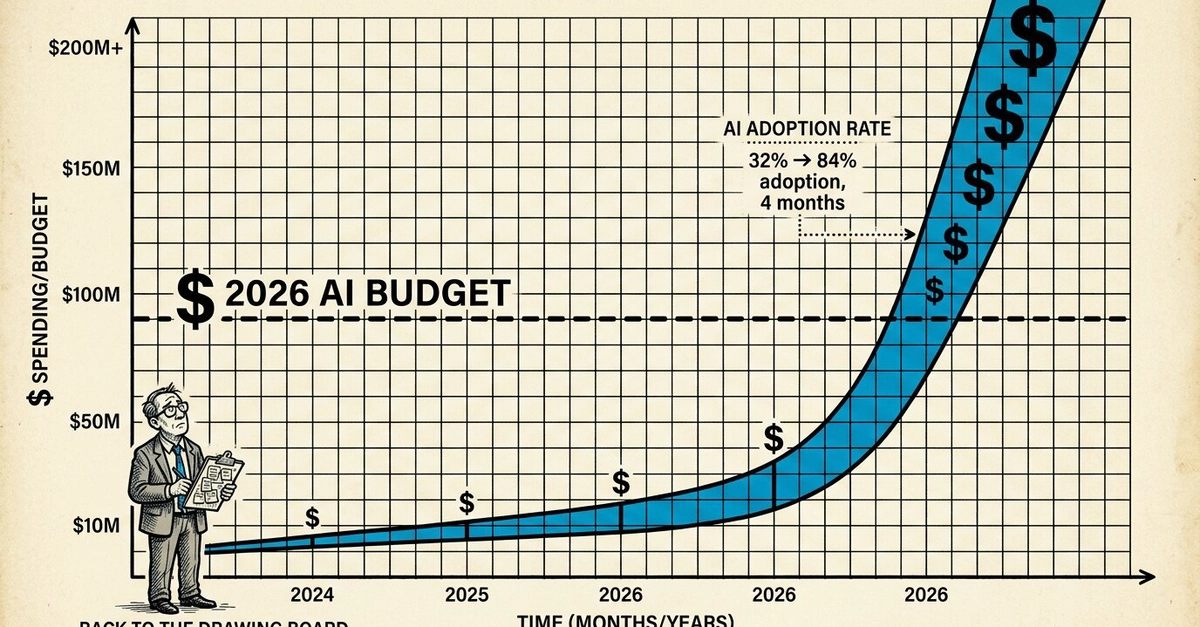
Uber's CTO told the world this month that the company spent its entire 2026 AI allocation by April. The story has been reported in a handful of outlets, hit the front page of Hacker News for 397 points and 469 comments, and is mostly being read as a cost-of-AI-tools story. It is one. It is also, on a closer reading of the numbers, a pricing-model story — and the structural fact that almost none of the coverage has emphasized is the one that determines whether this is a one-company anomaly or the beginning of an industry-wide budgetary crisis.
The structural fact is that Claude Code, like most enterprise AI tooling in 2026, is priced on token consumption, not per-seat licensing. Token-based pricing scales with how aggressively the tool is used. Per-seat enterprise SaaS pricing — the model corporate IT budgets are built around — scales with how many people have access to it. Those two cost curves diverge in exactly the territory where productivity tools are designed to operate: high-engagement, daily-use, gradually-deepening workflows. The Uber data is the first public-facing version of a math problem most enterprise IT departments are about to discover privately.
The numbers
Uber CTO Praveen Neppalli Naga, named in Yahoo Finance's and Benzinga's coverage, said publicly that Uber is "back to the drawing board" on AI budgeting after the surge in Claude Code use blew through internal projections. The specific numbers, as reported across the multiple outlets covering the story: