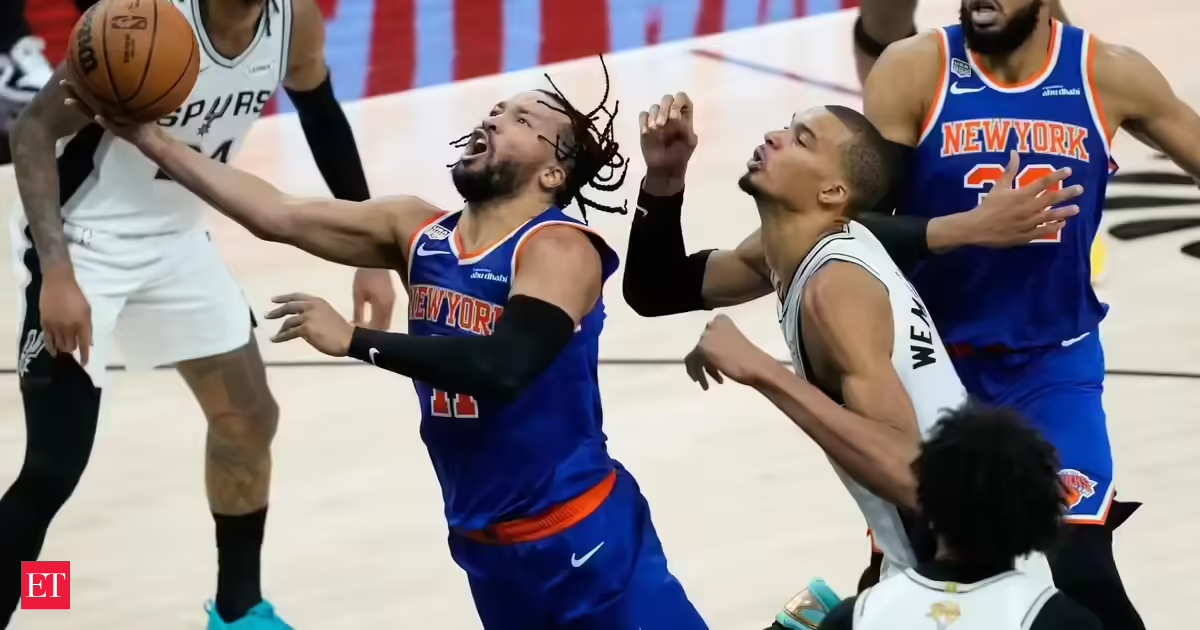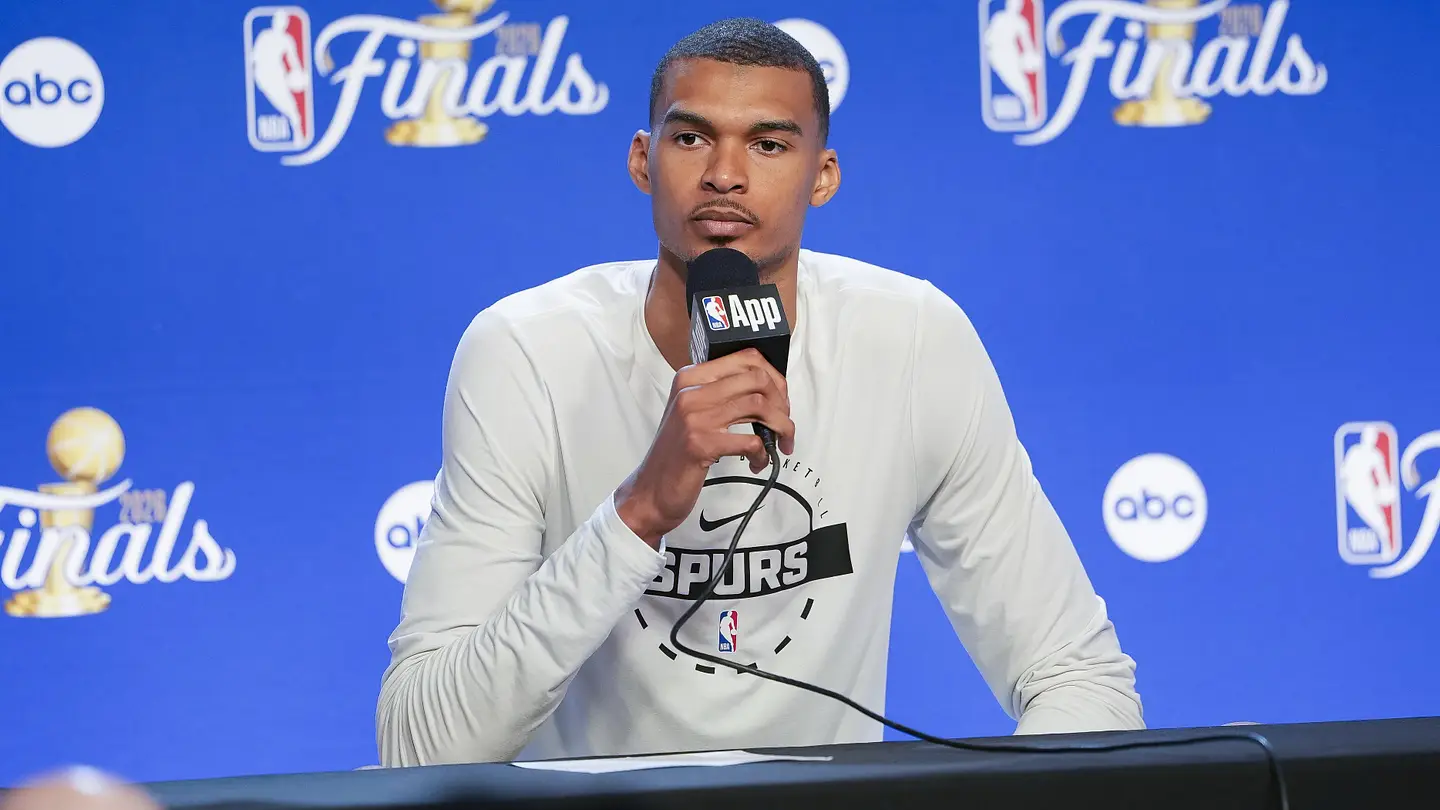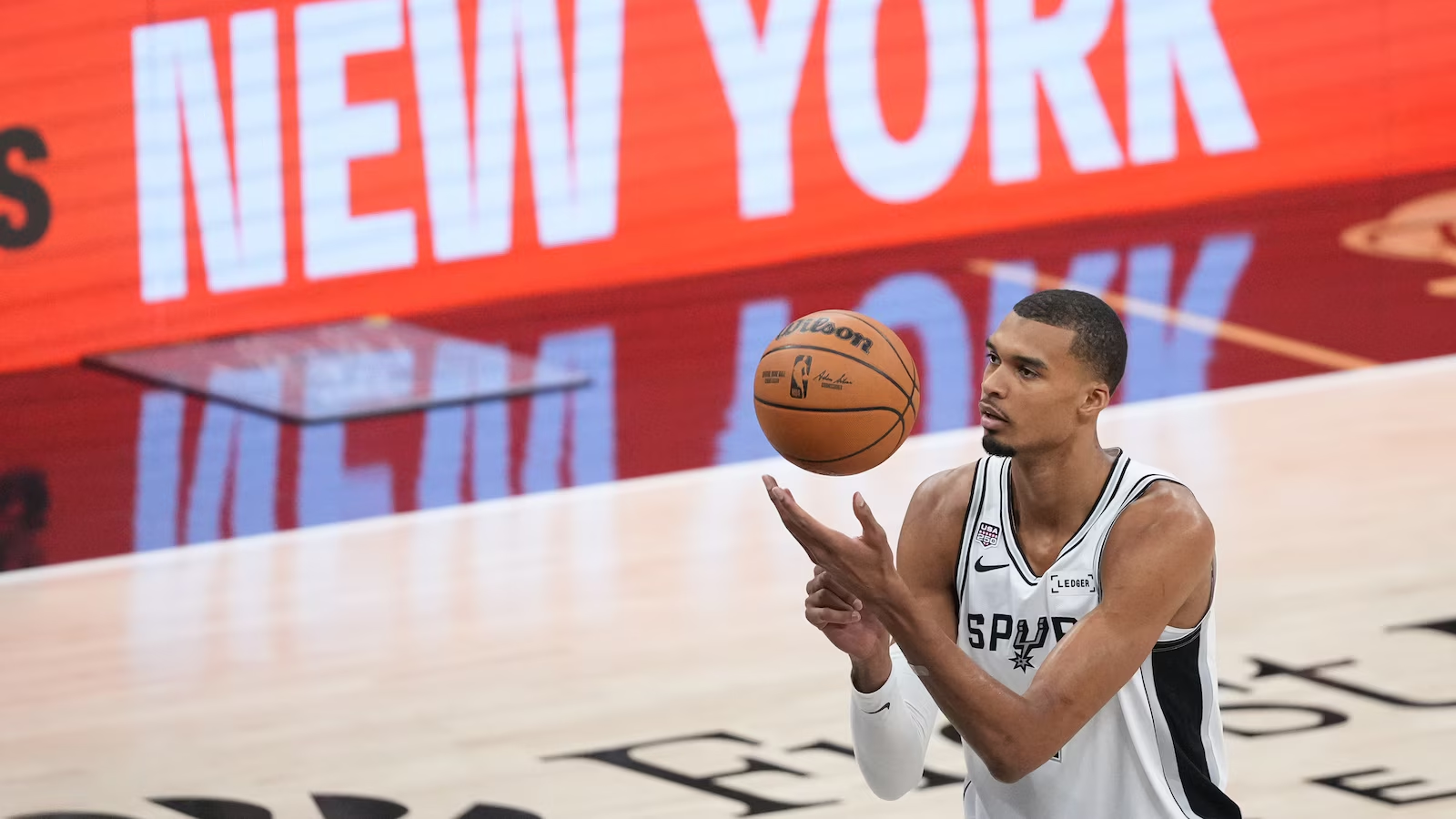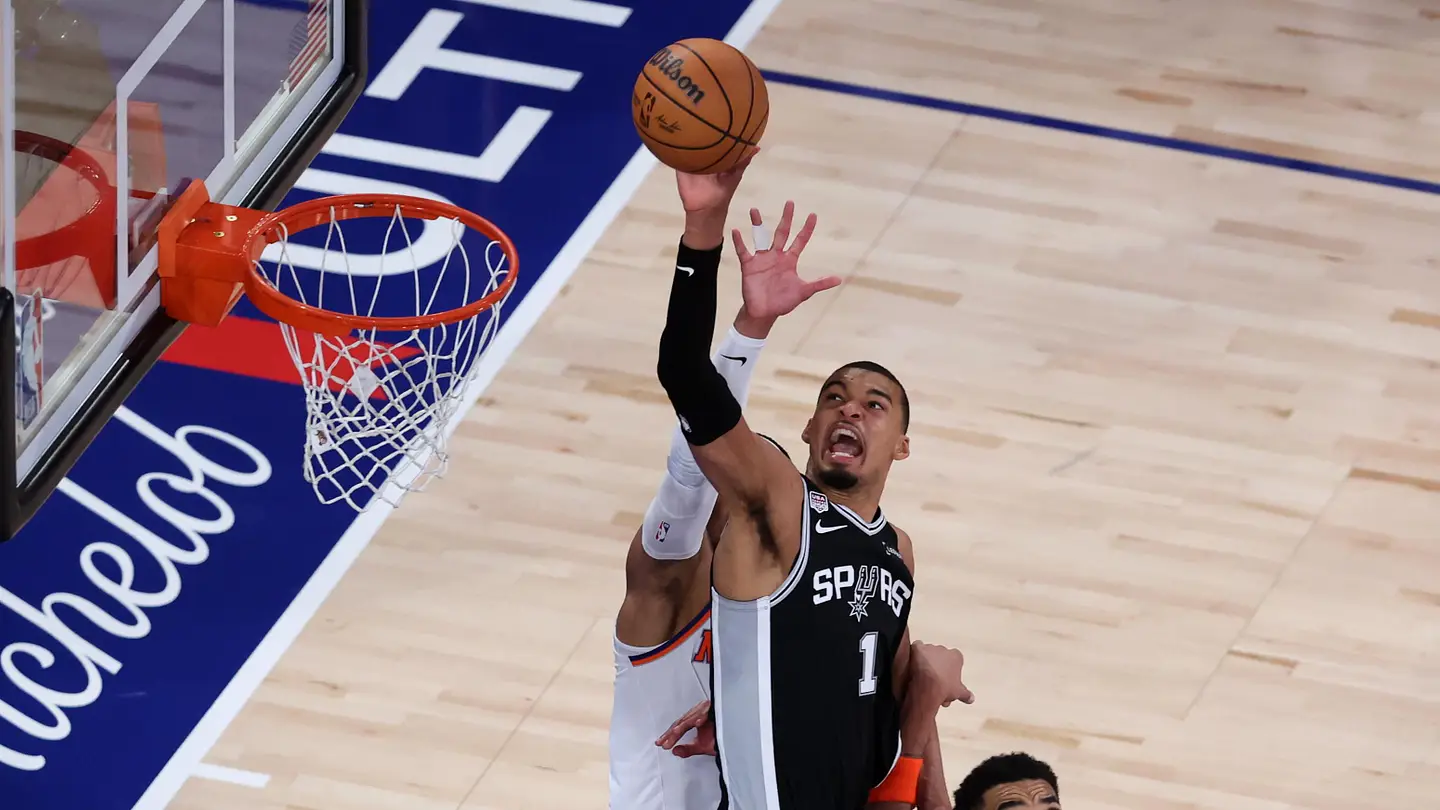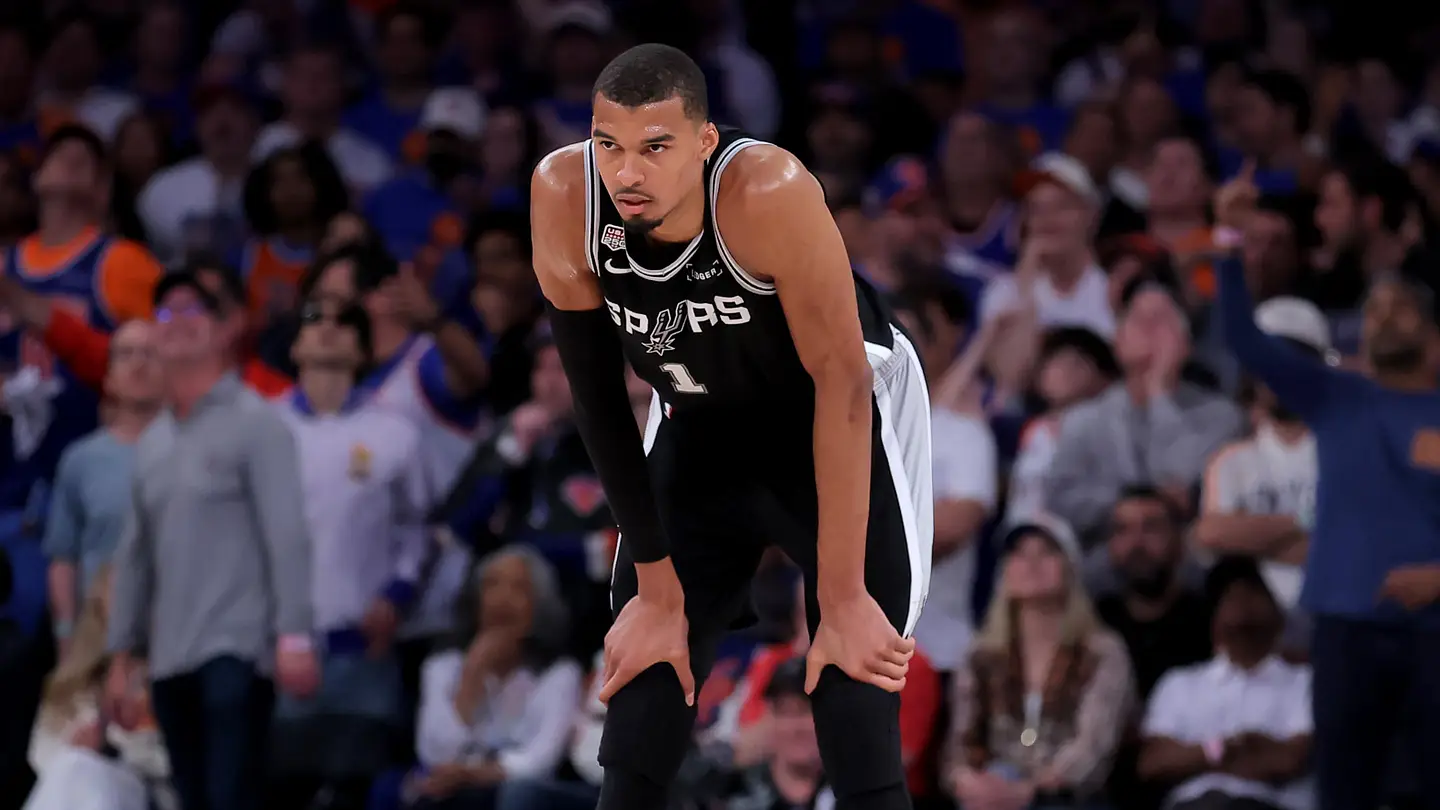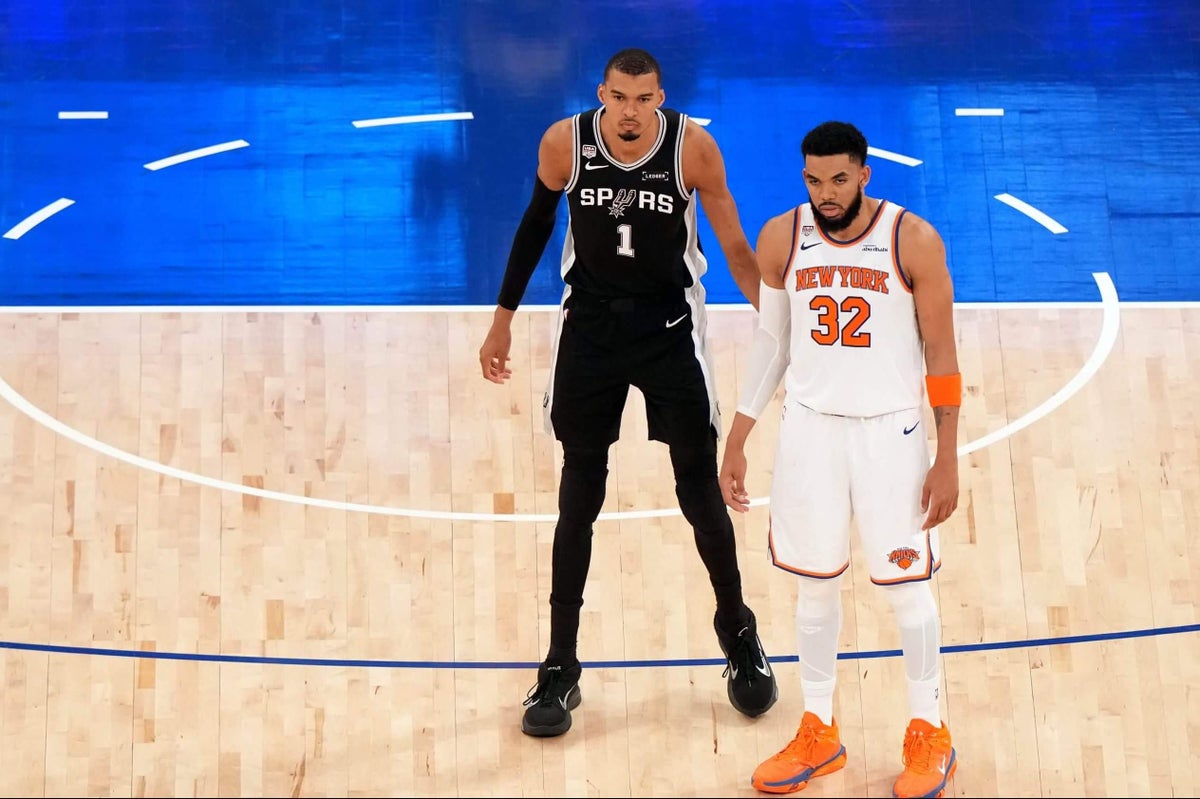
NEW YORK — What appears on Victor Wembanyama’s sketch pad is more than just a statue. It’s a manifestation of a body of work. A lifetime journey to get to this statue.There are not many places in New York for the NBA’s tallest player to hide. Amid the sea of bodies flowing through the streets of Manhattan, Victor Wembanyama’s head rises above the waves.So, on his off day in New York before Game 3 of the NBA Finals, he took a little trip to Gramercy Park. It’s a peaceful enclave in Lower Manhattan, requiring a key to enter. You have to live in a neighboring property, stay at the Gramercy Park Hotel or belong to a local cultural institution to get a hold of one. Or maybe he just stepped over the gate?You are not supposed to take photos inside the park, ride a bike, walk a dog, feed a bird or even play sports. It’s a place for peaceful reflection. To capture the moment, you need pen and paper.So, as a voyeuristic video from afar (in violation of park policy) showed before Game 3, the San Antonio Spurs star visited the park with his sister, Éve, and others to sketch the statue in the middle of the space.They were observing acclaimed 19th-century Shakespearean actor Edwin Booth dressed as Hamlet, his seminal role at the height of his acclaim. Booth co-founded the nearby social club known as The Players, founded in 1888 for local artists. Wembanyama, both a player and an artist, found himself in just the right place on a sunny New York afternoon.There was a joke going around before the NBA Finals from X user Brooks Otterlake about how Wembanyama could succumb to the temptations of New York and spend his time distracted by the Rose Reading Room at the public library or a conference on participatory futures at The New School. After the Spurs went down 0-2 to the Knicks, the joke turned out to be hilarious, absurd and 100 percent correct.But this was no distraction. This was a part of his process.Coming off a missed shot at the end of Game 2 to find his Spurs in an 0-2 hole heading back to New York, Wembanyama needed to decompress. Every player spends their downtime differently. De’Aaron Fox said he just does nothing. Wembanyama seeks a plethora of ways to stimulate his mind because he ties nearly every moment to some sense of growth.He’s tried his hand at pottery, sculpting and even painting, but drawing has been his artistic home. Wembanyama called it his second passion after basketball, the pursuit he’d chase if he weren’t so good at defense. He likes to draw medieval knights in his downtime, valiant warriors of the past who lived by a sense of honor. On this day, he observed a man dressed as Hamlet, a Danish prince whose mind was clouded by vengeance.Wembanyama said after his infamous turnover at the end of the Spurs’ Game 2 loss that his mind was cloudy. The heat of the moment was a blur and the sharpness of his mind had dulled just enough for him to make a grave mistake.So, when he got to New York, he needed to hone it again. That started with taking a step back from the chaos of the game and into something simple and tangible.“Really tried to relax. The Playoffs, it’s like a — I don’t know how to say that word — a whirlwind. It’s hard to put your head out of the water,” Wembanyama said after the Spurs’ Game 3 win. “Sometimes, I don’t even got to watch the game back right away. I need some time off, let my brain cool down, recover. Recover as much for the body as for the mind.”He found peace in the bronze face of Booth’s statue, a reminder of how the world is always watching and always will be with every shot he takes. Booth’s brother, John Wilkes, is known for a different kind of shot. Legacies, good or bad, live on forever.That is an incredible amount of pressure to hoist on a 22-year-old’s shoulders, even if you need a ladder to put it there. He has been in a battle with his ego, to both unleash it and tame it. He is the ultimate team player in that he relies upon his teammates to be himself. He typically functions as the center of gravity, not a planet in orbit. He’s had to find harmony between imposing himself and letting things come to him. He was too passive in the Game 2 loss, then he found his place in the Game 3 win.As this NBA Finals has carried on, Wembanyama has not exhibited much tension away from the floor. His shoulders appear relaxed. The sketching helps.As the video captured him perched on the park bench, he leaned closely into his sketchpad, engrossed in the moment. For someone who has to make decisions on the move in fractions of a second, there is something freeing about the stillness of this endeavor. It’s just him, the pen, the paper and time.While players are doing everything from cold tubs to Normatec boots to help their bodies recover, Wembanyama spends extra time rehabbing the mind. Drawing is his brain’s active recovery.Something focused, peaceful and touching the soul. When he sits with his sister and sketches the statue in the park, he balances capturing the scene and interpreting it. It asks him to consider how he sees the world, then gives him context when he looks to his left to see her interpretation as well. Just in how the world sees him. Every perspective on Wembanyama has a touch of projection. Perhaps his greatest feat this year has been to hold tight to the sense of self he’s been developing his whole life.Since he was young, Wembanyama has trained the bridge between his body and mind to maximize his potential to survive the audacity of his game. He is listed at 7-foot-4 but actually stands closer to 7-foot-6, and moves across the floor in a way that defies our understanding of humanity. That’s a gift that’s earned as much as it is bestowed.That’s where proprioception comes in. It’s the sixth sense of the body’s existence within space, the feeling of where you are and how you are. It’s how you touch your nose with your eyes closed, hopefully without a second thought. What Wembanyama does out there on the floor is at a billion on the proprioception scale. The feedback loop between his mind and body has to work at an exceptional rate to allow him not only to withstand the G forces he creates but to thrive on them.Drawing is part of an elaborate program to get every corner of his existence right. Wembanyama has always looked to cauterize weaknesses before accentuating strengths.“As a kid, whether you’re 10, 13, 16 years old, you’re working for the future,” Wembanyama said. “You’re trying to develop your range of skills. I would say, long story short, play on your weaknesses, not only your strengths.”But this moment has brought a shift for Wembanyama. His view of his career comes through a different lens in this moment. The success the future can bring is no longer in the distance. This is his moment. No matter how inevitable he may seem, the NBA does not yield the throne to a prince. There is no royal decree.“Right now, me, myself, I’m working for right now,” Wembanyama said. “I don’t even care about next season. We have to win Game 4.”So, as he sat there, sketching Hamlet, he saw his perspective on a tragic figure. If he looked to his left to see his sister’s rendition, he would’ve seen a slightly different image. A reminder that every problem has different solutions, that there are so many ways he can try to handle the dilemmas the Knicks present.External perspective on the same object provides a reminder that there are always different ways to solve a problem. He found them in Game 3, a sketch of the optimized Spurs in action. Swirling guards, arcing lobs and a defensive wall, with him all in the middle of it.In the end, it went just like he drew it up.
Wemby the Artist: How a trip to a New York park freed Victor Wembanyama’s mind and game
When Victor Wembanyama went to Gramercy Park to sketch a statue, it was more than just having fun in his free time. It was his process.
1,374 words~6 min read