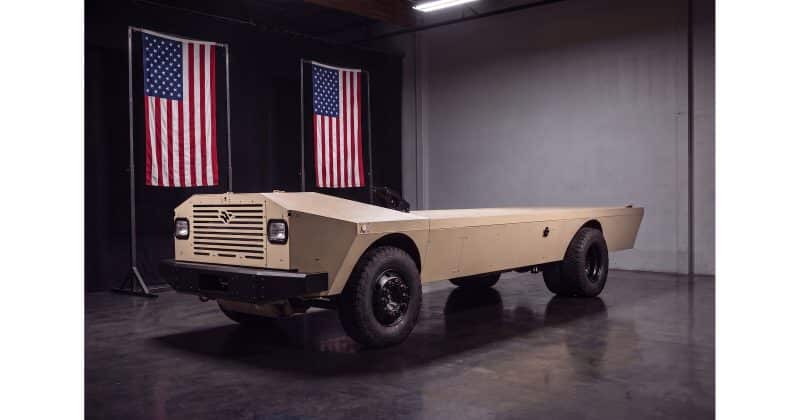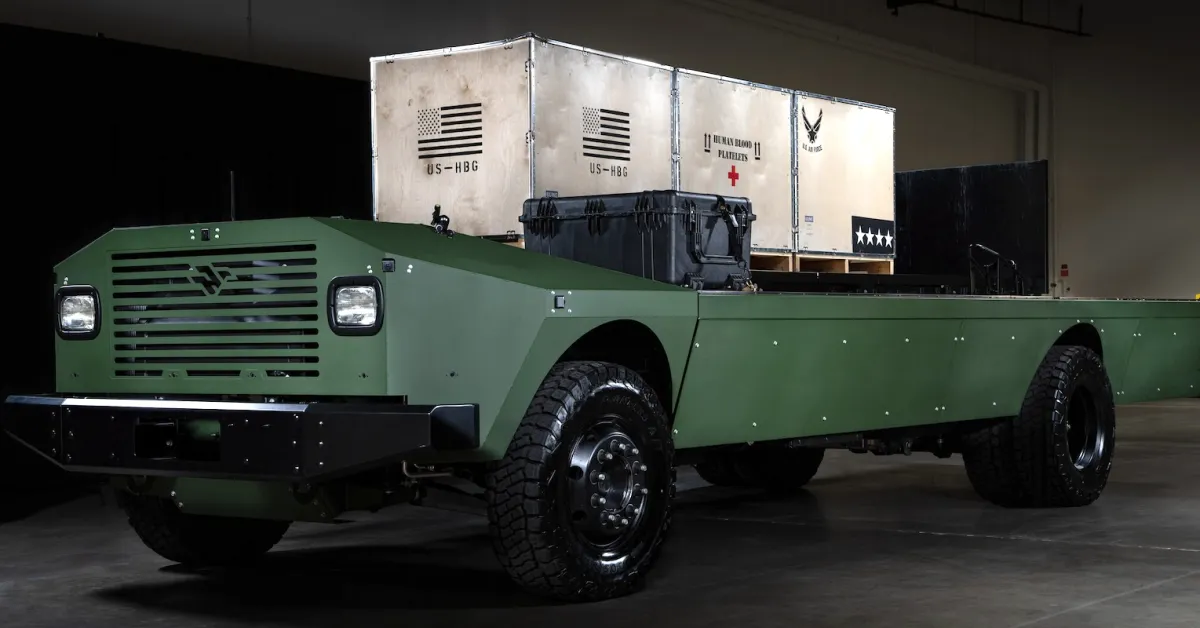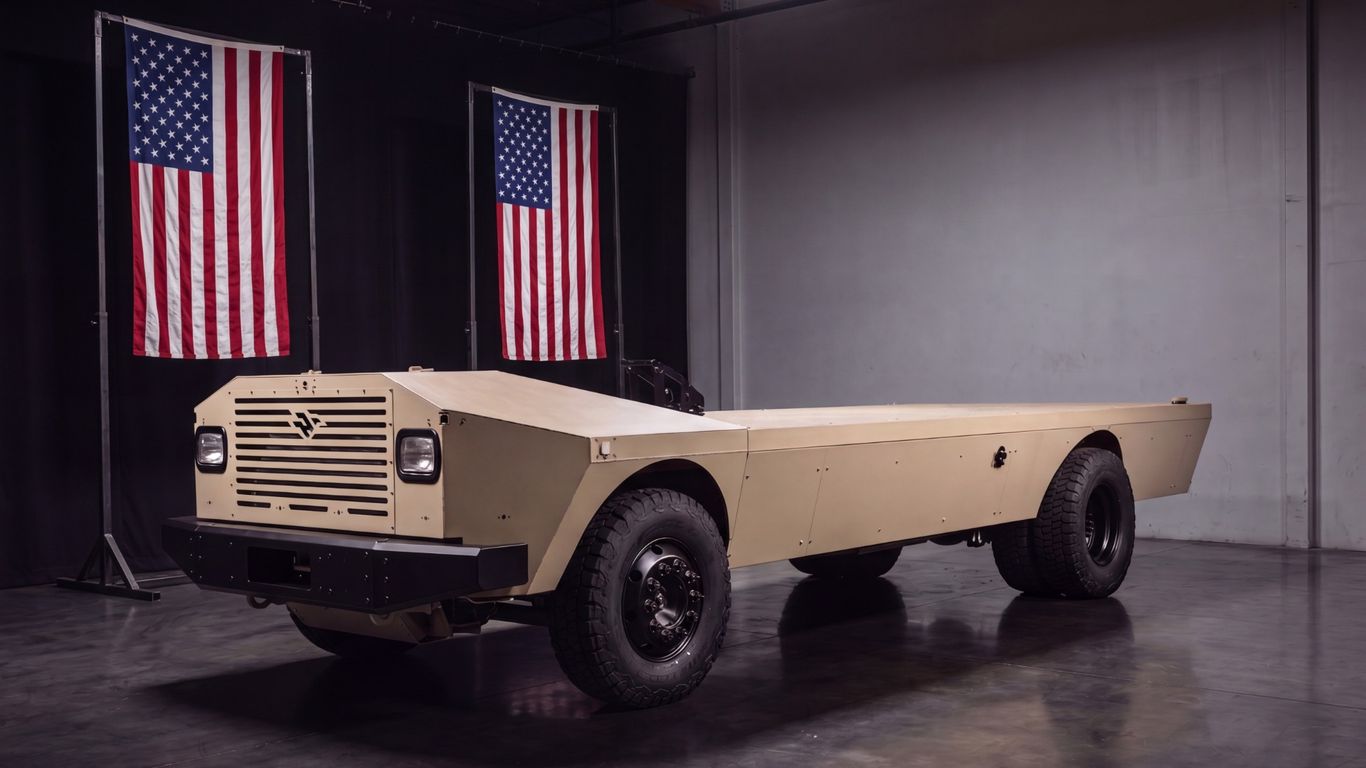
Harbinger's unmanned hybrid-electric vehicle. Photo: Courtesy of HarbingerHarbinger is ready to produce thousands of unmanned hybrid-electric vehicles a year for national-security customers, chief executive John Harris told Axios.The news follows the rollout of Harbinger Praesidia, the business' dedicated defense division.Why it matters: The vehicles are autonomy-ready, easily exportable and can be configured for a wide range of missions, including resupply, communications, troop transport, patrol and counter-drone, according to specs shared with Axios."We are selling what is still, fundamentally, a truck platform. The difference is we are now offering it in a way that is really well-suited to a lot of defense use cases," Harris said."The point is that our capacity is fully available for this," he added. "It's not a bespoke product."Zoom in: The vehicle, available in 158-, 178- and 208-inch wheelbases, combines an electric motor with a gasoline engine and a generator that can recharge batteries or pump out external power.It can hit speeds around 65 miles per hour and is designed to work in extreme temperature ranges."We can choose to run silently or not," said Harris, who previously worked on the Anduril Industries Sentry Tower. "There are so many advantages to a hybrid-electric architecture."The intrigue: In-Q-Tel now backs Harbinger. A dollar figure was not immediately available.In-Q-Tel's support is an "important conduit for us," Harris said. "They serve as a pipeline into the defense community."Harbinger also recently announced a partnership with American Rheinmetall."The contracting path to get one of our vehicles into the hands of" the Defense Department will "almost always run through a prime," Harris said.Catch up quick: Harbinger employs around 500 people, mostly in California. It raised $160 million in November, bringing its total to $358 million. Investors include FedEx.
Exclusive: Harbinger leaps into defense with In-Q-Tel backing
"The point is that our capacity is fully available for this," said CEO John Harris.
283 words~1 min read