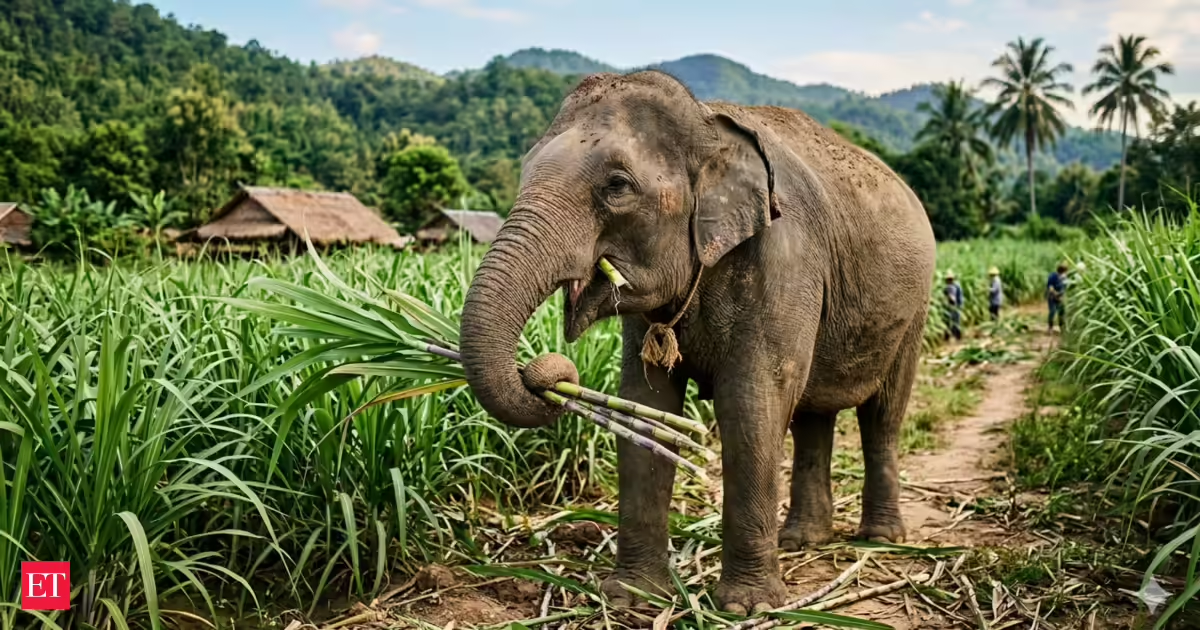
Thai proverbs often use simple rural imagery to explain human behaviour and how they react to certain situations. One such saying 'It’s hard to get the cane out of the elephant’s mouth' compares a sugarcane stick in an elephant’s mouth to situations in life that are difficult to reverse once they’ve begun.Original Thai Proverb: อ้อยเข้าปากช้าง (Oi khao pak chang)The Thai idiom “อ้อยเข้าปากช้าง” (Oi khao pak chang) literally translates to “sugarcane enters the elephant’s mouth.” In rural Thailand, sugarcane is a favorite treat for elephants. Once the elephant starts eating it, taking it back is almost impossible. The proverb is used to explain situations where something is already enjoyed, accepted, or gained—making it very hard to reverse or take away.ALSO READ: Quote of the Day by Sundar PichaiWhat does this proverb really mean?At a wider level, this proverb is not just about food or animals. It is about situations that become hard to undo once someone has benefited from them or become attached to them. At its core, the proverb suggests:Once someone gains something valuable or pleasurable, it is hard to remove itA situation becomes irreversible once benefits are enjoyedPeople rarely give up advantages willingly once they’ve “tasted” themSome decisions, once accepted, cannot realistically be reversedIt can also hint at power dynamics when someone strong or influential gains control or benefit, it becomes difficult to take it back.ALSO READ: Meet Zach Yadegari: US teen founder sold gaming app for $100K, then built $40M Cal AI and now he is going with the 'Flow'Everyday life examplesThis proverb is often used in situations like:A person receiving a high salary or benefit that cannot be easily reduced laterSomeone getting used to a comfortable lifestyle and refusing to downgradeA powerful individual gaining influence that others can no longer take awayA company offering perks that later become expected by employeesIn all these cases, once the “sugarcane” is in the mouth, reversing it is not simple.Why this proverb is still relevant todayEven outside traditional farming life, the meaning still fits modern situations—jobs, money, habits, and power structures. It reflects a simple truth: once comfort or advantage becomes part of life, letting go becomes difficult. The proverb is often misunderstood as only being about greed or selfishness. It also reflects:Human psychology – we adapt quickly to comfortHabit formation – what becomes routine feels necessaryDependency – once support or advantage exists, it becomes relied uponSocial reality – systems rarely roll back benefits once givenSo it’s less about blame, and more about how people naturally respond to gain and comfort.Real-life situations where it appliesThis saying can be used in many modern contexts:A company gives perks like remote work or bonuses, and employees expect them permanentlyA politician introduces benefits that later cannot be easily removedA person becomes financially dependent on a lifestyle or income sourceOnce trust or emotional attachment forms, it’s hard to “undo” it
Thai proverb of the Day: "It’s hard to get the cane out of the elephant’s mouth" Powerful life lessons on greed, human nature and attachment
The Thai proverb 'Oi khao pak chang' illustrates how difficult it is to reverse situations once someone has benefited or become accustomed to them. This saying, comparing a sugarcane stick in an elephant's mouth to irreversible gains, highlights human psychology's tendency to adapt to comfort and resist relinquishing advantages, applicable to modern contexts like jobs, money, and power.
474 words~2 min read