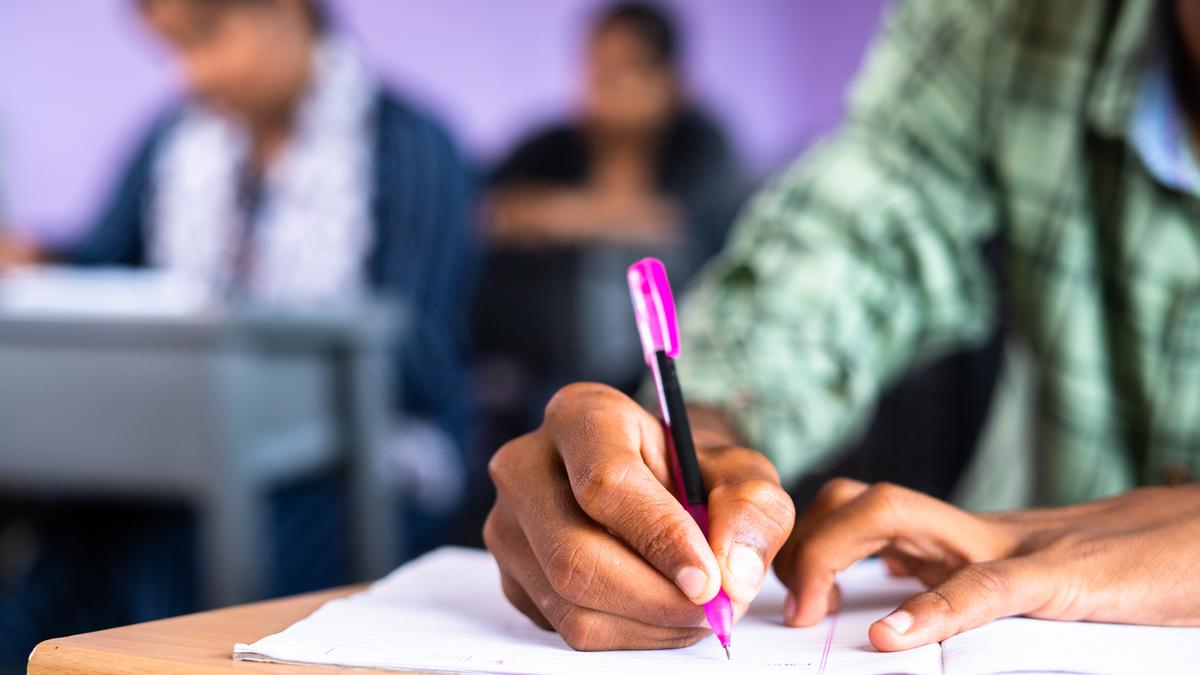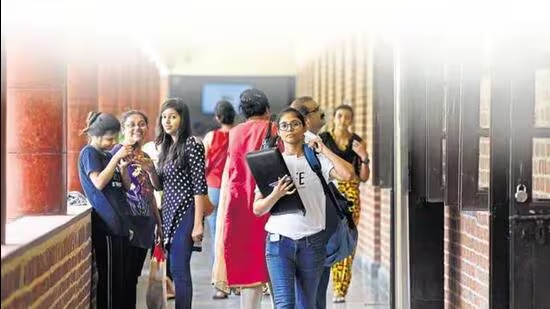
For the first time in India's history, more women are entering higher education than men. The Gross Enrollment Ratio for women has reached 30.2, surpassing men's 28.9. In any other country, this would be front-page news for a week. In India, it was reported as a data point in a government report and forgotten by the next news cycle.Gender equality (Pixabay)It should not be forgotten. It should be understood for what it is: The most consequential gender statistic India has produced in a decade.The MoSPI report Women and Men in India 2025, released on April 29, documents a transformation that has been building quietly across three institutional shifts. Gender parity has been achieved at every level of school education, from primary to higher secondary. Thirty of 36 states and Union Territories now have a Gender Parity Index of 1.00 or above. Dropout rates for girls have declined under the National Education Policy structure. The adolescent fertility rate, the single strongest predictor of women's educational attainment, has been falling steadily since 2021.These are not isolated data points. They are the output of a decade of institutional investment: Samagra Shiksha's focus on girls' retention, the expansion of Kasturba Gandhi Balika Vidyalayas, scholarship programmes targeting first-generation women learners, the construction of women's hostels at state universities, and the National Education Policy 2020's emphasis on flexible entry and exit that allows women to return to education after interruptions. The classroom revolution did not happen by accident. It was engineered.The question is what happens after the classroom.Women dominate enrollment in arts, sciences, social sciences, and medical sciences. Men dominate engineering, information technology, management, and law. The subjects women choose are not less rigorous. They are less remunerative. A woman who graduates in the sciences and a man who graduates in engineering enter a labour market that values them differently, not because of their competence but because of the market structure that assigns higher wages to the sectors men occupy.This is where the GER crossover meets its first structural limit. India's female labour force participation rate has risen from 23.3% to 37% in five years, the largest expansion in the country's history. Rural women's LFPR jumped from 37.5 to 45.9% between 2022 and 2025. Women in managerial positions grew by 102.54% between 2017 and 2025, outpacing men's 73.80%. These are genuine gains, driven by Mudra loans (70% disbursed to women), self-help group expansion (10 crore members), Stand-Up India, and the PM Employment Generation Programme.But the LFPR rise requires the same scrutiny the GER number does. The Centre for Economic Data and Analysis at Ashoka University has noted that the rural LFPR increase was not accompanied by higher earnings for women, a rise in women as employers, or growth in regular salaried employment. The increase is driven by more women entering farming and own-account work. When a woman who was previously classified as "not in the labour force" begins helping on the family farm because household income has fallen, she enters the LFPR statistics. She has been counted. She has not necessarily been empowered.The distinction between counting and empowering is the policy frontier that the GER crossover opens. India has solved the access problem. Women can enter classrooms, and they are entering in greater numbers than men. The next challenge is converting educational attainment into economic agency at the same scale.Three interventions would accelerate this conversion. First, incentivise women's enrollment in high-return disciplines, engineering, technology, and management, through targeted scholarships that go beyond fee waivers to include living stipends and placement guarantees. Second, mandate gender-disaggregated placement data from every university, making the post-classroom employment gap visible and measurable. Third, extend the institutional infrastructure that made the classroom accessible, hostels, safety protocols, mentorship, to the workplace: creches, safe transport, and re-entry pathways for women returning after career breaks.The classroom revolution is complete. The data confirms it. India's women are now more educated than its men. The question India must now answer is whether it will let them work.(The views expressed are personal)This article is authored by Bhavya Razshree, advocate, Delhi Courts and co-founder of LawSarathi.in. and Aditya Ashok, public policy consultant, Government Advisory.
India’s women are now more educated then men
Authored by - Bhavya Razshree, advocate, Delhi Courts and co-founder of LawSarathi.in. and Aditya Ashok, public policy consultant, Government Advisory.
685 words~3 min read