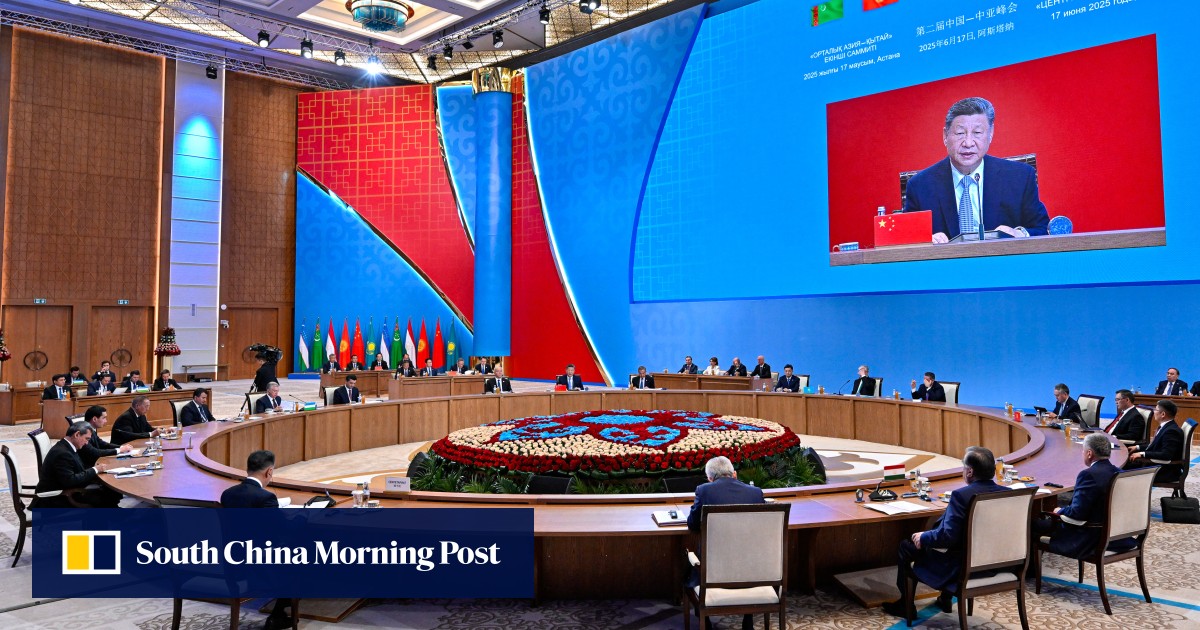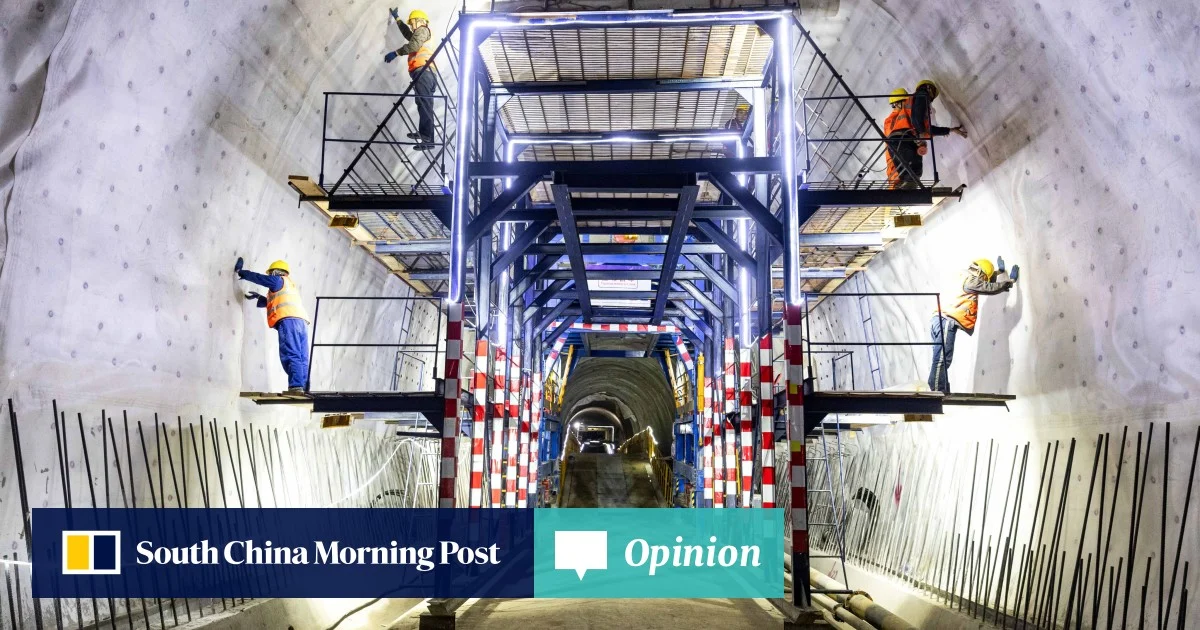
Something is shifting on the Eurasian steppe, and it is shifting away from Moscow. Since Russia’s full-scale invasion of Ukraine in 2022, the five Central Asian republics, Kazakhstan, Uzbekistan, Kyrgyzstan, Tajikistan and Turkmenistan have begun, carefully and without saying so too loudly, to loosen the ties that bound them to their old imperial centre. None has broken their partnership with the Kremlin, but all are hedging.GeopoliticsThe signs are not hard to read. Kazakhstan has refused to recognise Russia’s annexations in Ukraine and has publicly reaffirmed its own territorial integrity, a pointed gesture from a country that shares a 7,600-kilometre border with Russia and a Russian speaking north. Astana and Tashkent have spent the past two years deepening ties with the United States, the European Union and Turkey, signing defence-cooperation and drone-production agreements that would have been unthinkable a decade ago. Trade is rerouting: German car-part exports to Kyrgyzstan rose by a startling figure in 2023 as the region became a conduit around sanctions, but also, more durably, as a sign of Central Asia’s appetite for partners other than Russia. In March 2025, Tajikistan, Kyrgyzstan and Uzbekistan signed the Khujand Treaty resolving the Fergana Valley border disputes that had brought them to the brink of war, a quiet declaration that the region intends to manage its own affairs.Underlying all of this is a structural truth Moscow cannot easily fix. Russia’s economy is consumed by the war and constrained by sanctions; its capacity to bankroll cultural programmes, absorb migrant labour and underwrite security has thinned. The Central Asian states, watching a neighbour invade a fellow post-Soviet republic in the name of historical unity, have drawn the obvious lesson about the value of sovereignty and the danger of dependence. They are diversifying not out of ideology but out of self-preservation. This is what the regional scholarship calls “multi-vector” foreign policy, and the war has put it into overdrive.For India, this is the opening of a door it has been knocking on for three decades. Ever since the Narasimha Rao years, New Delhi has spoken of Central Asia as part of its “extended neighbourhood,” a region with which it shares civilisational memory, Sufi and Silk Route connections, and a common interest in checking radicalism spilling out of Afghanistan. The “Connect Central Asia” policy of 2012, the leaders’ summit launched in 2022, the foreign-ministers’ dialogue running since 2019, the billion-dollar line of credit, the architecture is quite impressive but not sufficient. The June 2025 India-Central Asia Dialogue in Delhi added critical minerals and rare earths to the agenda, a genuinely forward-looking move given the region’s lithium, uranium and rare-earth deposits and India’s anxiety about Chinese control of those supply chains.And yet, India is not one of the consequential big powers competing for Central Asia. The reason is brutally simple: Geography, and the fact that India cannot reach the region. Pakistan blocks the direct overland route. India’s workaround, the Chabahar port in Iran, feeding into the International North-South Transport Corridor has been the centre-piece of its connectivity strategy since the 1990s. It remains, three decades on, mostly potential. The corridor is real but underused; the port handles a fraction of its capacity. And the entire edifice rests on Iran, which means it is hostage to the sanctions regime that the US periodically tightens. Washington’s renewed “maximum pressure” on Tehran has cast fresh doubt over whether Indian investment in Chabahar can scale at all. This is the uncomfortable heart of the matter. The window is open, but India is not the only one looking through it, and its instrument for reaching the region is the weakest of the lot. China has already built what India only discusses: The China-Kyrgyzstan-Uzbekistan railway, stalled for a quarter-century, finally broke ground, giving Beijing a hard rail link into the region’s heart. The European Union has pledged billions through its Global Gateway. Turkey offers linguistic kinship and drones. Even Russia retains the migration, language and security ties of a century. India has so far only offered goodwill, scholarships, a digital-payments stack and a port that does not yet work at scale.So, what should India actually do, rather than what it should wish for?First, it should play to its strengths. The critical-minerals partnership announced in 2025 is the right instinct: Central Asian governments are actively seeking alternatives to Chinese buyers for their rare earths, and India is a credible, non-threatening, non-hegemonic customer. This deserves money and speed, not another working group.Second, India’s real comparative advantage is human, not physical. Tens of thousands of Central Asians have studied medicine and engineering in Indian universities and vice-versa; the ITEC training programme is genuinely valued; India Stack and digital public infrastructure are exactly what these states want and what neither Russia nor China offers on India’s terms. Soft power that translates into institutions, campuses, fintech, rails, e-governance systems have potential to outlast any single port.Third, India needs a parallel air-freight and digital-trade architecture that does not depend on a single fragile land route and it needs to press, quietly but persistently, for the US to treat Chabahar as a strategic asset against China rather than a sanctions target.Fourth, Central Asia’s rulers are consolidating power, not dispersing it, and they treat western democracy talk as an irritant. India’s pitch should be sovereignty-respecting partnership and tangible development precisely the language and policy in which these states want to be addressed.The deeper point is one of tempo. Windows in geopolitics do not stay open forever. The post-2022 moment of Central Asian hedging is real, but it will resolve into a new equilibrium in which the region’s external partnerships are set for a generation. India has perhaps a few years to convert 30 years of talk into something the people of Tashkent and Almaty can see and use. The civilisational rhetoric has been deployed often enough. What the steppe will remember is who showed up with the railway, the investment and the working port. The door is open. The question is whether Delhi will walk through it soon.This article is authored by Ranveer Singh Solanki, doctoral student, School of International Studies and Suresh Kumar, PhD, Centre for Russian and Central Asian Studies, SIS, Jawaharlal Nehru University, New Delhi.
India must move on its Central Asia policy
This article is authored by Ranveer Singh Solanki and Suresh Kumar.
1,028 words~5 min read