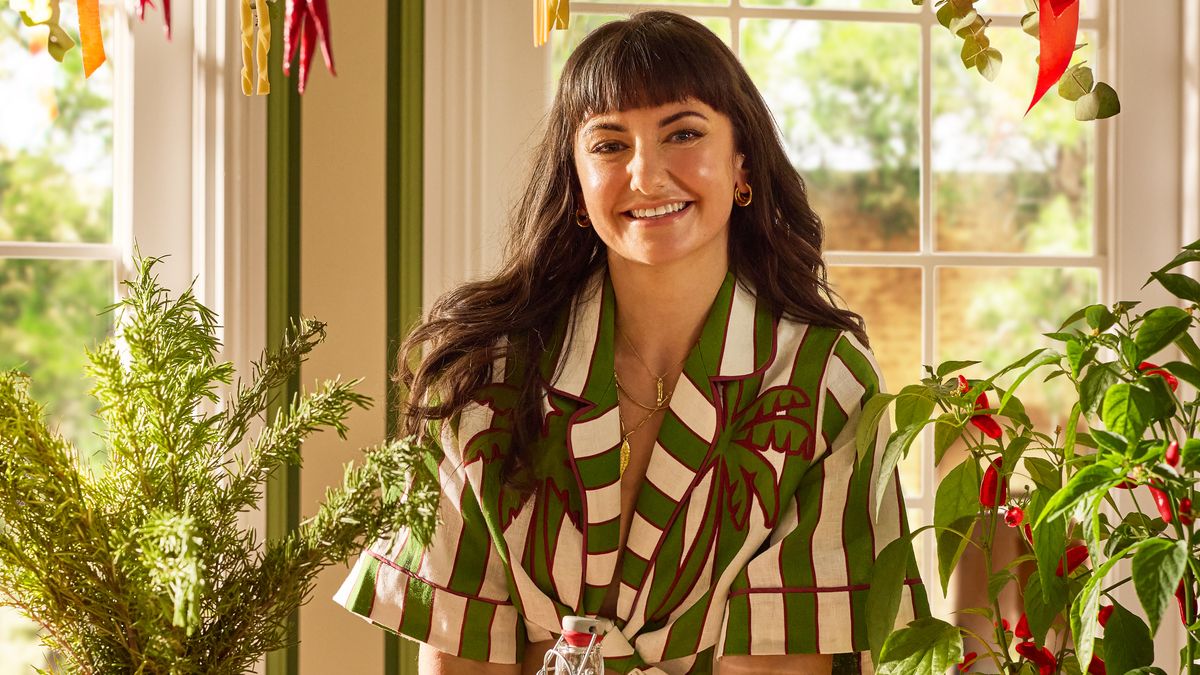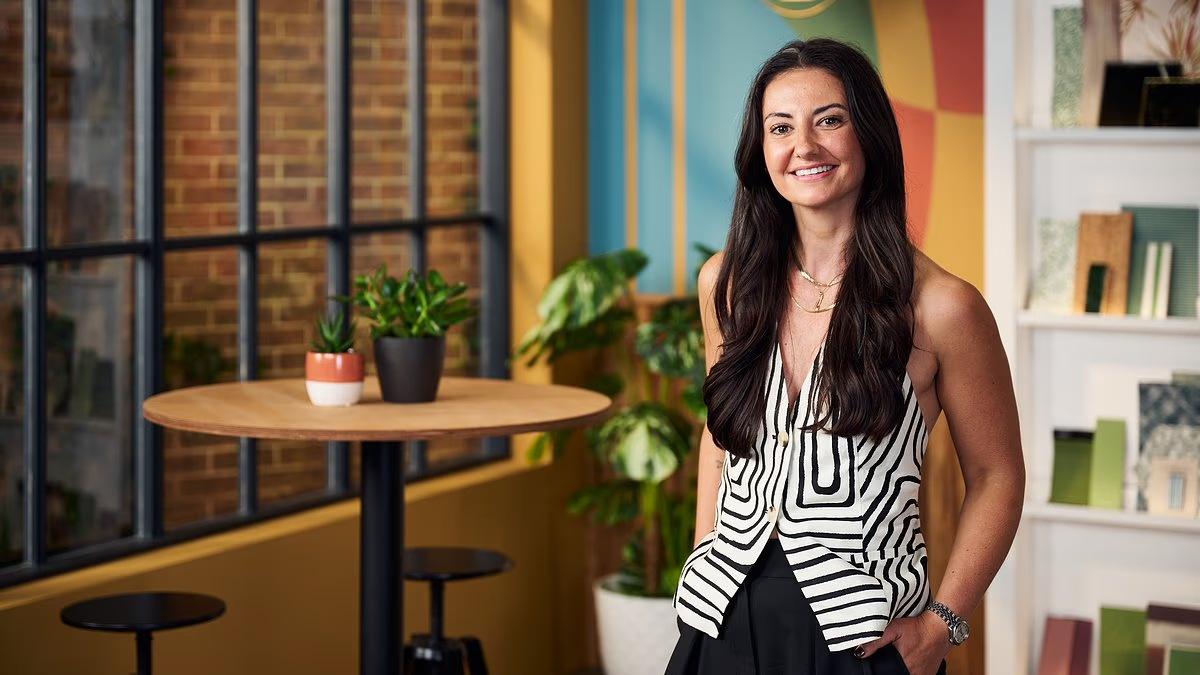
Winning BBC’s Interior Design Masters transformed Lia Gold’s career – but the biggest lesson she took from the competition had nothing to do with colour, wallpaper or styling.Fresh from creating a 26-piece homeware collection for Next as part of her winner’s prize, Gold has become known for her joyful, pattern-filled interiors. Yet she says the show taught her something far more important: how to step back, edit and put function first.‘It’s definitely taught me to take a massive step back first and think about the user and how they actually need to use the space before I get carried away with all the fun bits,’ she says.Lia Gold is the winner of Interior Design Masters 2026Here, the 2026 winner shares the design lessons that changed her approach – and the advice she’d give anyone renovating their own home.Trust your gut – not InstagramIn an age of Pinterest boards and perfectly curated social media feeds, Gold believes many homeowners are looking in the wrong place for inspiration.‘I think sometimes it actually causes confusion when people are trying to design spaces for themselves,’ she says. ’People look at what other people have designed, but those spaces are designed with what that person loves – it’s not necessarily what you love.’Instead of chasing trends, she encourages homeowners to think first about how they live. A family with young children will use a home differently from a couple who love entertaining, while someone who works from home may have completely different priorities again.For Gold, successful design begins with function rather than aesthetics.‘Ultimately, you need to decide how you’re using the space because that’s different for every single person.’It’s a lesson she credits directly to the competition, which encouraged her to think beyond the decorative details she naturally gravitated towards and focus first on how a room would actually work for the people living in it.The secret to knowing when to stopOne piece of feedback from judge Michelle Ogundehin proved transformative.Gold recalls being told that if her eye couldn’t settle when looking around a finished room, it was usually a sign there was simply too much in it.The advice fundamentally changed her approach.‘Every room after that, I’d kind of kick the cameraman out and say, “I need five minutes on my own”,’ she laughs. ‘I’d go through everything and ask myself, “Why is it there? Does it have a reason to be there?”’Throughout the series, she found herself removing artwork she had painstakingly hung and taking away accessories she had spent time styling, realising that not every corner needed filling. Maximalism doesn’t mean filling every available surfaceWhile she remains drawn to bold colours and layered interiors, she says the competition taught her that maximalism doesn’t mean filling every available surface.‘I definitely learned how to refine,’ she says. ‘At the beginning, I didn’t know how to refine.’It’s a lesson that has stayed with her beyond the show, helping her create spaces that feel considered rather than cluttered.Stop decorating and start thinking about layoutGold believes one of the biggest mistakes people make when renovating is focusing on soft furnishings before addressing the bones of a room.Looking back, she says she would once have concentrated on cushion colours, tablescapes and decorative details. The competition encouraged her to think much more deeply about architecture, zoning and how a space functions.‘I became much more aware of architectural decisions and things that I could build to really change the feel and actually the layout of a space.’That shift was perhaps most evident in the show’s finale, where she completely reimagined the layout of a holiday cottage. Rather than accepting the floorplan as it was, she swapped the living and dining spaces around and introduced an archway to improve the flow between rooms. In the final episode, Gold swapped the living and dining rooms of the holiday cottageThe idea came almost instantly.‘I remember looking at the floor plans and being like, “I’m going to have an arch here”,’ she says. ‘My husband was like, “You’ve literally just got the plan.” And I was like, “I know, but it just feels right.”’Today, she encourages homeowners to challenge conventional floorplans rather than accepting them at face value.‘I don’t think we should be restrained by what a floorplan says a room should be.’Sometimes that means major structural changes. Other times it can be as simple as moving furniture around to create a better flow through the home.‘Maybe it’s just swapping the dining table and the sofa,’ she says. ‘You don’t need to build an arch.’How to create spaces people naturally gravitate towardsThroughout the competition, Gold became known for designing rooms that brought people together.At the heart of her philosophy is the idea that homes should encourage connection rather than separation.‘I always think the rooms that bring people together need to be celebrated more,’ she says.Round dining tables are a favourite because they make conversation easier, while kitchen islands often become natural gathering spots.Lighting, too, plays a surprisingly important role. Pendant lights instantly draw the eye and create a welcoming focal point In Gold’s own home, three oversized pendant lights hang above the kitchen island, creating a focal point that instantly draws people in. Surrounded by dried flowers, it’s the place guests naturally gravitate towards whenever they visit.‘Everyone gravitates towards the kitchen island naturally,’ she says.For Gold, good design isn’t simply about how a room looks. It’s about how it makes people interact.Growing up in an Italian family, she says meals around the table were always central to family life, something that still informs the way she designs spaces today.How to make a small room feel biggerAs property sizes continue to shrink, particularly in cities, Gold believes homeowners often make the same mistake: trying to make a small room do too much.‘A lot of the time people think, “I need it to do a million things,” and then they cram it with furniture,’ she says. ‘Actually, it makes the space feel overcrowded and smaller.’Her first tip is to be ruthless about what a room really needs.In a bedroom, for example, wall lights and slim shelves may work better than bulky bedside tables. Elsewhere, she recommends focusing on vertical storage rather than taking up valuable floor space.‘I always kind of look up rather than down.’Shelving, tall storage and even striped wall coverings can help draw the eye upwards and create the illusion of height.‘Stripes will always draw your eye up and make the space feel a little bit bigger,’ she says.Stripes create the illusion of height, making the space feel bigger than it is Storage should work harder, too. Ottoman beds, banquette seating with hidden compartments and multifunctional furniture can all help reduce clutter while maximising usable space.Perhaps most surprisingly, Gold rejects the idea that small rooms should always be neutral.‘When people say, “Don’t go too crazy in a small space because it’s small,” I actually did the opposite.’Her own downstairs loo is proof. Rather than playing it safe, she covered the room in tree-print wallpaper, added bamboo cane panelling, installed a pink toilet and finished the space with floral tiles.The result is unapologetically bold, but Gold argues that compact rooms can actually offer more creative freedom than larger spaces.‘Small spaces give you creative freedom to do more rather than less.’Why colour should make you happyAs someone whose own kitchen is painted a vibrant Barbie pink, Gold was never likely to advocate for an all-neutral home.The cabinets are painted pink, while a botanical-tiled splashback adds another layer of colour and pattern. Her husband, she admits, thought he was agreeing to something far more subtle.‘I told him it would be blush pink,’ she laughs. ‘Then he went to work, and I painted it Barbie pink.’When he returned home, he was understandably surprised.‘He was like, “I don’t remember the sample looking that pink.”’Thankfully, he has since come around to the idea.For Gold, colour is less about following design rules and more about emotional connection.‘If a colour makes you happy, I think it’s really important to go with it.’She’s equally passionate about pattern and rejects the idea that certain colours are inherently bad.‘I don’t think there’s such a thing as a bad colour,’ she says. ‘People just don’t know how to pair colour correctly.’Asked why she’s so drawn to maximalism, her answer is simple.‘There’s too many amazing patterns and colours in the world.’While she still embraces bold interiors, she says the competition helped her refine her approach. Rather than becoming less colourful, her style became more sophisticated and considered.Today, she describes it in three words: ’sophisticated, joyful and botanical.’Don’t underestimate the power of lightingAnother lesson Gold feels strongly about is lighting.One of her biggest frustrations with modern homes is the overuse of spotlights, which she believes can leave spaces feeling flat and characterless.‘We’ve been really unlucky in our house where we have so many spotlights,’ she says. Layering floor lamps, wall lights and table lamps creates a warm, inviting atmosphereInstead, she recommends layering floor lamps, wall lights and table lamps to create atmosphere and change the mood throughout the day.‘It’s definitely one of my pet hates about new builds,’ she says. ‘I never turn the spotlights on.’Instead, she relies on softer pools of light throughout her home.‘Don’t turn the big light on,’ she laughs.Her one piece of advice for renovatorsAsk Gold for one piece of advice for anyone embarking on a renovation and her answer is refreshingly practical.Make a plan. Then add more time.‘Definitely add on a good month to the timeframe to be realistic,’ she says.Gold’s final piece of advice for renovators? ‘Be kind to yourself.’ Older homes, in particular, have a habit of revealing unexpected surprises once walls start coming down, while preserving original features often takes longer than expected.Gold is passionate about retaining period details wherever possible, even if it means a little more work along the way.Most importantly, she says, homeowners should remember that renovation projects are rarely as smooth as they appear online.‘Be kind to yourself.’
LIA GOLD shares her best clutter-clearing and small-space tips
Interior Design Masters winner Lia Gold shares her best interior design tips, including how to plan layouts, decorate small spaces, choose colour and create homes people love spending time in.
1,651 words~8 min read