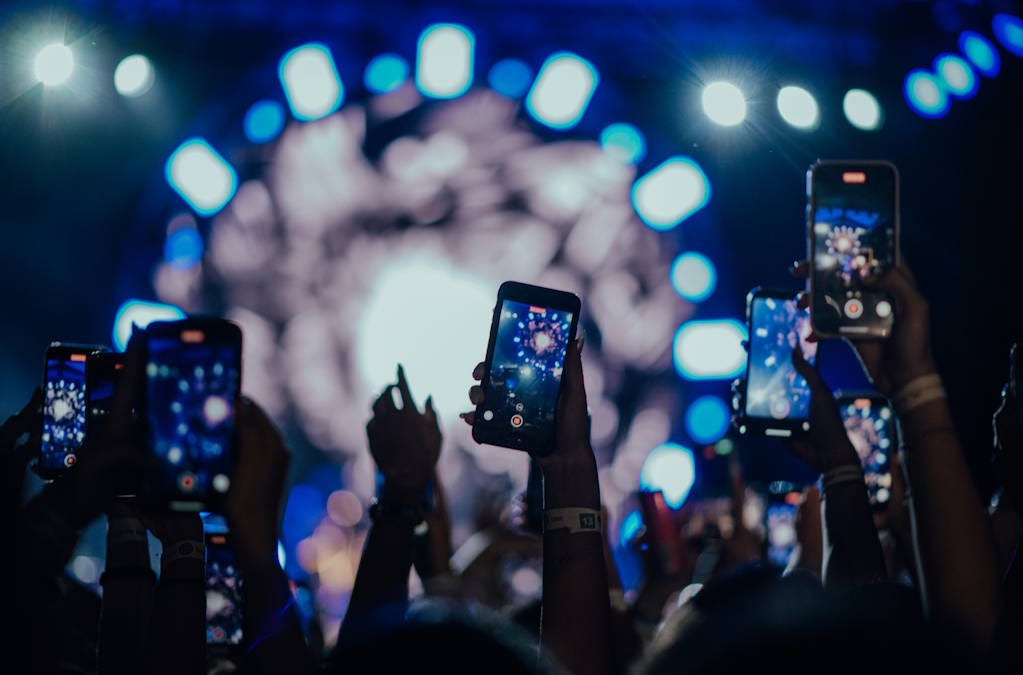
On a recent trip to Hay-on-Wye, a small market town in Wales, my phone suddenly becomes no more useful than a cracked glass brick. The town, which is thronged with visitors each summer for the Hay Festival, doesn’t really have the infrastructure to support the numbers milling around. Two hundred thousand tickets sold last year, mostly to literature enthusiasts who come to this beautifully verdant pocket of the country for the talks and panels. But there’s also the mystery and intrigue of potentially seeing Colm Tóibín buying skimmed milk in the town, or Malala Yousafzai necking a pint in the pub. It’s a window into another world. Another time too – apart from the 20 or so book shops this annual mass pilgrimage somehow manages to sustain within the small town, the place is also peppered with antique shops. Moneyed Boomers descend en masse, hoping to catch Malala splitting the G. They buy first editions and stop in to drop several thousand pounds on a storied old chair or Napoleon’s alleged melon ballers. As I pass one shop in the sweltering heat, which seems as unprecedented for Wales as it would be at home in Limerick, a slight-looking older man is straining to wrestle a tasteful armoire through the ancient doorway, which is itself from a time when nobody ate any protein and all doors had Napoleonic proportions.Now, all foods contain protein for some reason. Protein yoghurt. Protein water. Protein fudge. I stop into a cafe for a Welsh breakfast, which probably contains less protein than you’d think considering it’s mostly meat, and politely refrain from pointing out that it’s more or less a full Irish without the white pudding, which is one of the best bits anyway, provided you don’t think too deeply about what’s actually in it. Some people might worry about going into an establishment by themselves, ordering an enormous plate of meat and bread and eating it in solitude with feral intensity. This does not worry me at all, in part because I am instead focused on the war conducting itself within the confines of my brain. I came in here in search of processed meats, certainly, but also in search of wifi. The numbers of people in the town, and possibly something to do with the hilly terrain – as explained to me by an unconvincing local man who gestured a flaccid arm in the direction of the beautiful, if bumpy, vista beyond – make connecting to 4G functionally impossible a good deal of the time. Now happens to be such a time. For a few days each year in the town, visitors return to a former era – one in which you can’t just ask ChatGPT every idiotic question that slouches across your dumb brain (“How many chinchillas would it take to make up the weight of an Indian elephant?”; or “Is protein fudge healthy?”). Currently, I appear to be inhabiting a time when I can’t use my phone to find out where the bus stop is, or when said bus leaves, despite needing to get to the station, because the festival is now over, actually, and I’ve bought a train ticket.Something panicky rises in my chest, or it might be the bacon sitting poorly. I talk it down. The cafe wifi is equally oversubscribed and therefore theoretical (it’s a rural town, so they don’t lock doors or change wifi passwords daily). Within a dark corner of my brain, an appetitive, internet-addicted toddler is wailing that we’ll simply never get home; we’ll die here in this gorgeous, stiflingly hot, quaint little town. We will perish at the feet of independently wealthy literature enthusiasts and their antique armoires. While all of this is happening, and I am buttering another piece of toast, I’m struck by how deeply pathetic that reaction is. How juvenile and self-abnegating. How revealing.I consider that mine was the last generation born without the internet. I recall how things were – the fluid thrill of leaving the house and your parents not being able to track you like an airtagged suitcase lost at JFK. The complacent joy of them not being particularly bothered where you’d gone, because you were either over at somebody else’s house or within shrieking distance of the front door once dinner time rolled around. I recall the capacity to do nothing, and to problem-solve without instantly outsourcing every minor friction to technology before it could even be described as a problem. I recall that I am sitting at present in a rural market town, not a city, where initiating any conversation with strangers will elicit a fear that you are either begging or angling to extract their kidneys for sale on the black market.The waitress is friendly. She put fresh hot water in my teapot without my having to ask, which is a universal sign of impeccable character. I ask her where the bus stop is and she tells me in the way people used to give directions when my father stopped the car in the ’90s. The waitress begins with an elaborate description of which way I should not under any circumstances go, lest I end up taking the bus in the wrong direction, before segueing into an incomprehensibly overcomplicated description of the correct route. I do what my parents did back in the day, ignoring anything she tells me that isn’t either a landmark, a pub or the words “left”, or “right”. [ I am back in London after three years. It’s difficult to explain whyOpens in new window ]Twenty-five minutes later, I have successfully made the 10-minute walk to the bus stop. On my way, I see the town. I stop into a hardware shop to check that I’m going in the right direction. I say hello to strangers. I help a woman to cross the street with an antique rocking horse that is a gift for her grandson Barnaby, and I chortle at the name “Barnaby” only internally, so as not to be rude. I am off my phone and in the world, and all it took was for the internet to cease to exist for a while. Depressing stuff.
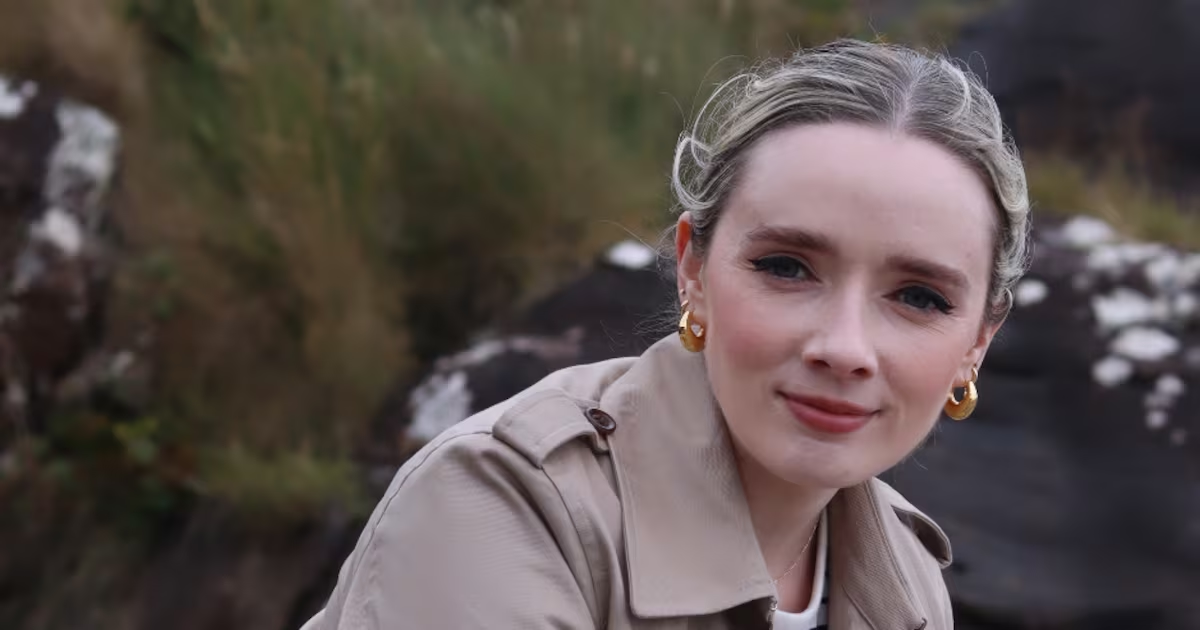
Laura Kennedy: Mine was the last generation born without the internet. I remember fluid thrills and complacent joys
I’ve learned you can’t expect to automatically ask ChatGPT every idiotic question that slouches across your brain
1,026 words~5 min read