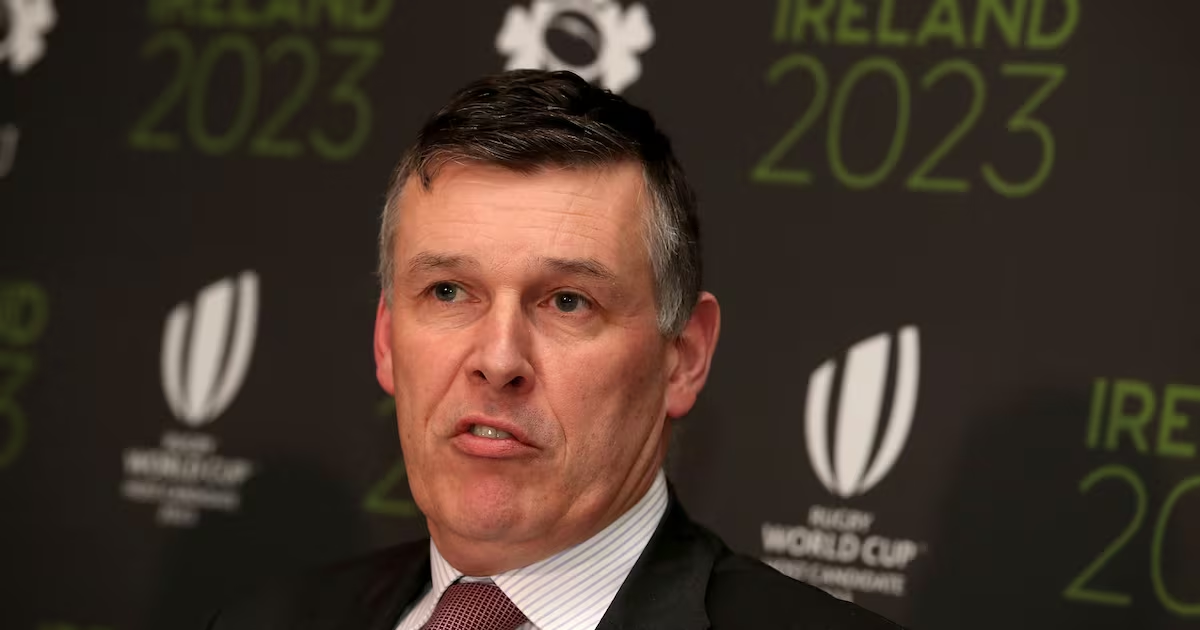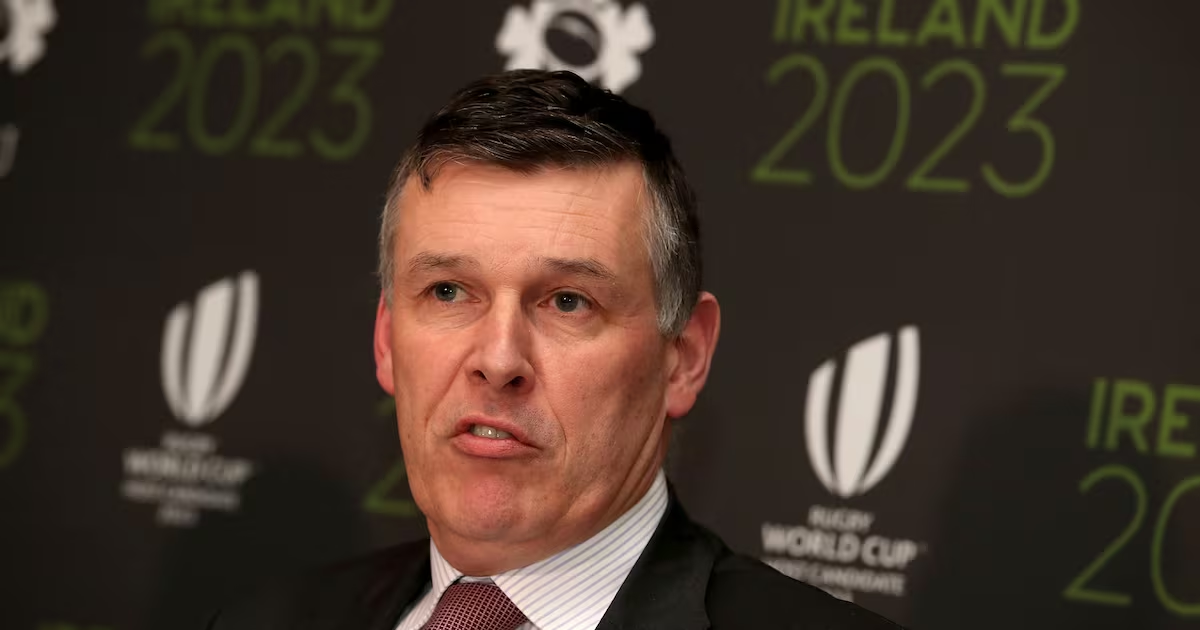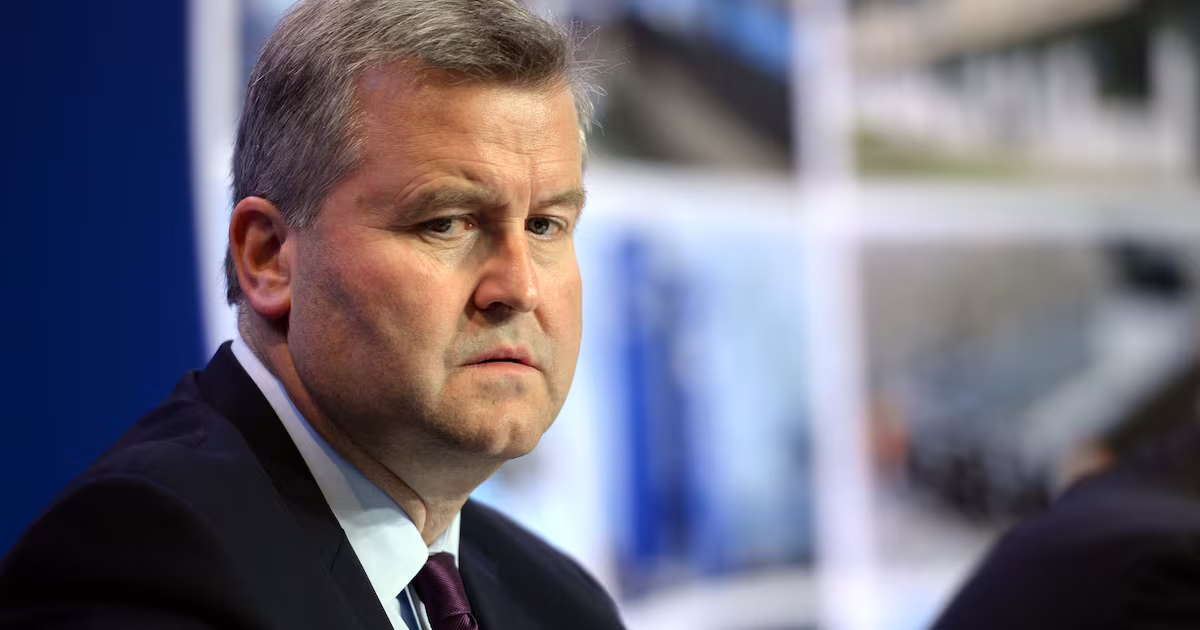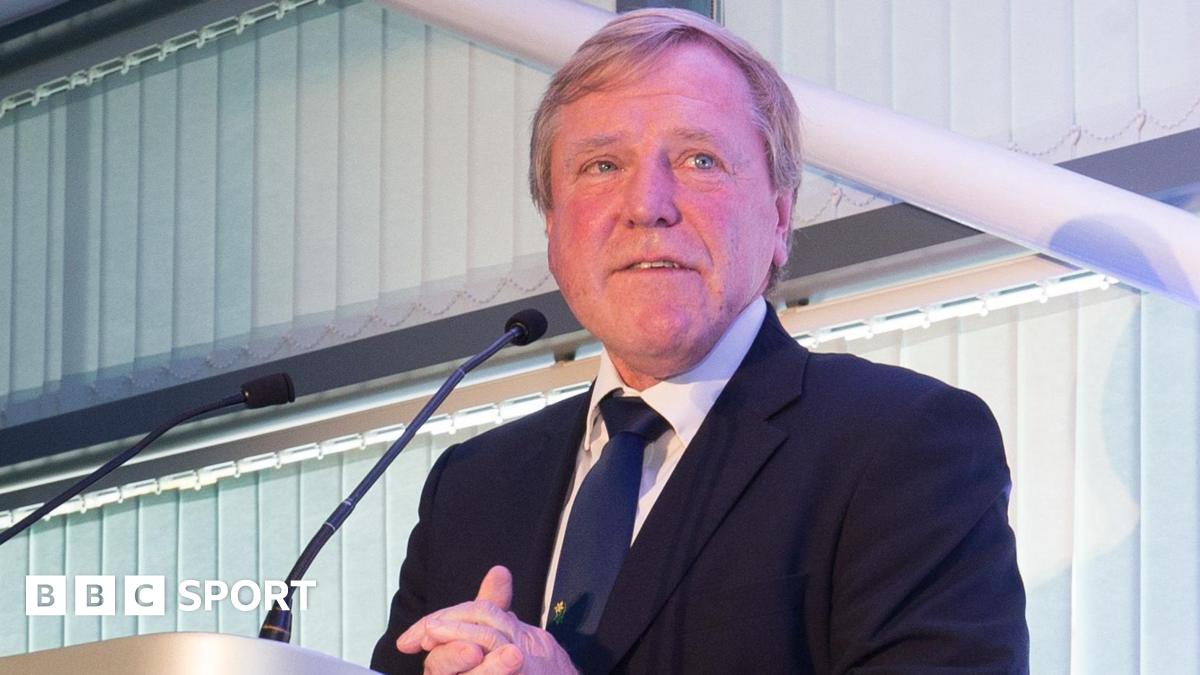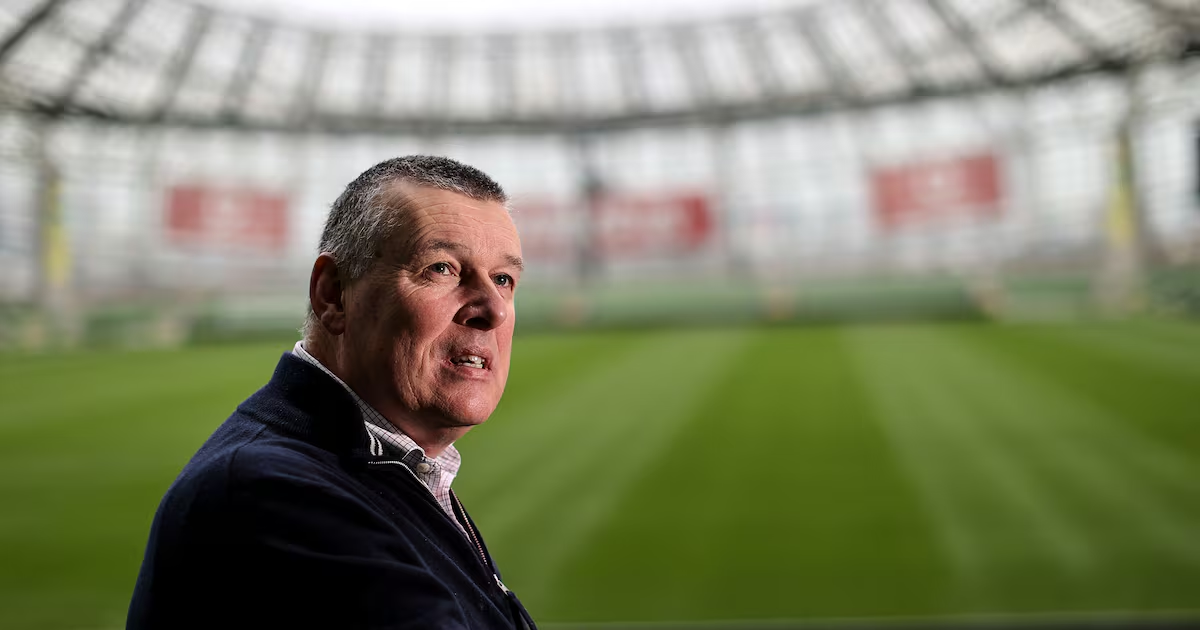
Philip Browne possessed many qualities as a person and an administrator, not least his capacity to remain stoic and unflustered no matter the circumstances. It served him well throughout his 29-year tenure at the IRFU until his retirement in 2021.He joined the union in 1992, would become company secretary initially and then its chief executive (1998). They were roles that he discharged with distinction. Browne was a measured and diligent administrator and presence, who helped the union navigate turbulent times at various stages of his career.His death, aged 64, following a short illness, is widely mourned and the tributes paid reflect the esteem in which he was held. His sporting background was rowing. He was an accomplished oarsman who competed for Ireland while representing Neptune rowing club at the 1985 World Championships.His tutors included former Ireland and Lions players Tom Kiernan and Syd Millar. Kiernan became an innovator and visionary as an administrator, while Millar was another widely respected figure in global rugby terms. Browne blossomed from a background presence to a highly regarded and respected chief executive, domestically and internationally.He was a central figure as Irish rugby negotiated the transition from amateur sport to professionalism in 1995. Among his involvements was bringing in Dr Mary Redmond, one of the foremost employment lawyers in the country, who spent six months drawing up a prototype player contract.He wrote a paper in which he advocated for a HR manager, commercial manager and a head of legal affairs at a time when the IRFU had committees for everything. He argued that you couldn’t operate an organisation overseeing a professional sport based on a committee-only structure. The pro and amateur wings of Irish rugby came under the auspices of one committee.Progress was glacial at times, something that he found very frustrating, although he never betrayed it publicly. A professional game board was established. Plan Ireland, a strategic initiative focused on elevating the performance of the national team and ensuring the long-term health of Irish rugby, was launched in 2013.(From left) Dick Spring, Philip Browne and Brian O’Driscoll fronted Ireland's bid to host the 2023 Rugby World Cup. Photograph: Billy Stickland/Inpho He signed off on the union’s broader five-year strategic plan (2013-2017), aimed to achieve consistent top-tier rankings for the Ireland team while also supporting the success of provincial teams.There were missteps too by the union, notably the threat to disband Connacht in 2003. That was averted in the wake of a protest that made front-page news. Browne had to deal with the fallout and oversee a resolution. Despite being occasionally cast in the role of the bad guy, depending on perspective, even those that adopted an opposing view or stance acknowledged his integrity.He negotiated player contracts, television rights in the early days, sat on the IRB, later World Rugby, also on committees governing the Six Nations championship, EPCR and URC tournaments. From 2005 to 2021 he was a member of the Irish Sport anti-doping disciplinary panel. He helped to establish strong provincial structures and high-performance player and coaching pathways that underpinned provincial and international success. He had an excellent rapport with his GAA counterpart Páraic Duffy that enabled Ireland to play Test matches at Croke Park while Lansdowne Road was being redeveloped into the Aviva Stadium. He played a pivotal role in trying to persuade World Rugby and its constituents to award the 2023 World Cup to Ireland. France won the bid. A key adviser on the Irish bid, Pádraig Slattery, was effusive about Browne’s role, recounting that his passion when addressing the committee at the formal presentation of the bid was striking.“He (Browne) said: ‘You know me, I have worked in rugby for 22 years, I have been dealing with most of you in the IRB for the last 18 years. If I say Ireland will deliver this, I am telling you everything that we had said this morning. Ireland will deliver, including money, infrastructure, stadiums; you can sleep easily in your bed’.”He worked alongside David Nucifora, whom he admired greatly and supported even if some of the measures were unpopular. Browne remained in situ during the coronavirus pandemic before handing over to Kevin Potts. He made a huge contribution and that legacy will endure.On a personal level and in a professional context, I found him very accommodating, or at least as much as he could be and willing, where possible, to provide background information or to offer context on and off the record. Away from formality he was very personable, had a dry sense of humour, was easy company and a good conversationalist on topics beyond rugby.To his wife AnneMarie, children Jack and SallyAnn, extended family and his wide circle of friends, we extend our sincere condolences. Ar dheis Dé go raibh a anam.
Philip Browne: Former IRFU chief executive guided Irish rugby into bright new era
Browne, who spent 29 years at the IRFU, has died aged 64
792 words~4 min read