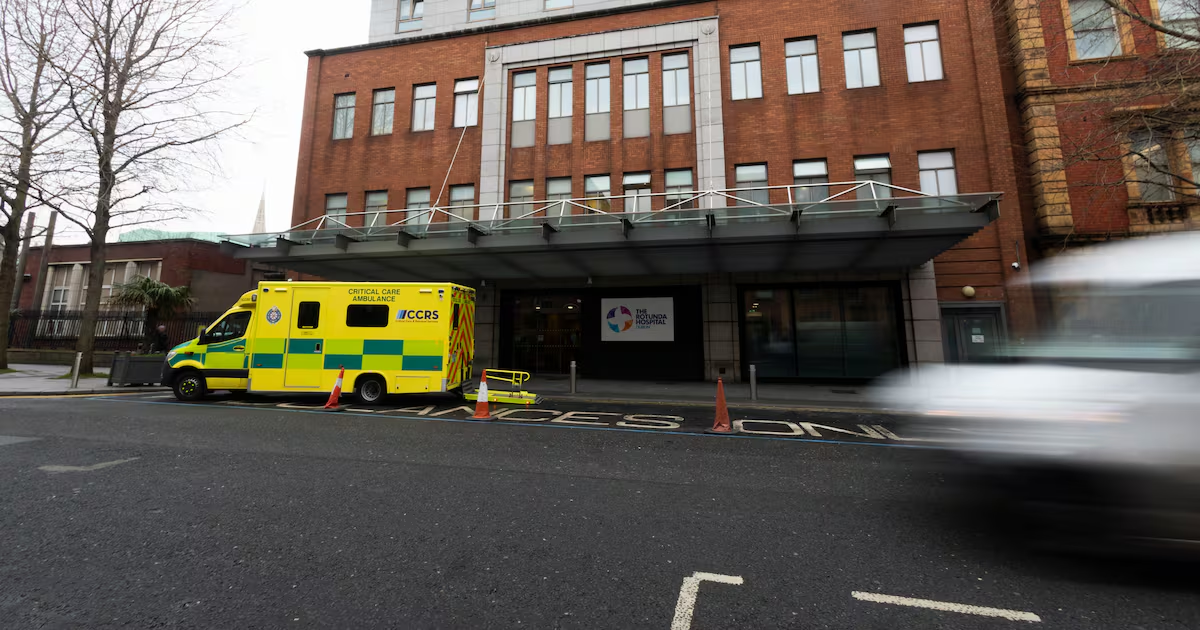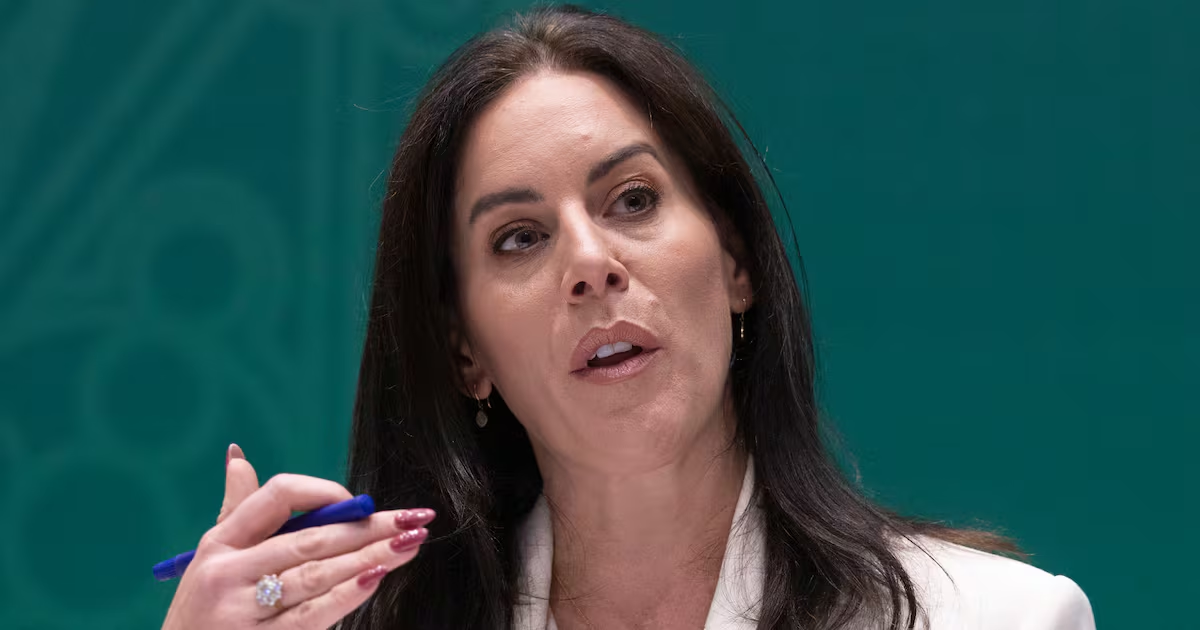
At its heart the row about public-only consultants doing private work at the Rotunda Hospital was about who controls the State’s 16 voluntary hospitals. Is it the taxpayer who funds these institutions to the tune of €5 billion a year or their self-perpetuating boards of directors? It’s a real issue. The Rotunda obviously knew that public-only consultants could not do private work at the hospital – the clue is in the name – but decided to let them do it anyway. Their explanation? We know best. In this instance, knowing best seems to be a rather convoluted and self-defeating argument about choice and patient safety – the biggest hole in that argument being that over half of the Rotunda consultants are on legacy contracts which allow them to do a mixture of public and private work anyway. There is no shortage of choice for expectant mothers provided they can afford insurance and the State continues to subsidise private medicine. The Rotunda’s thumbing its nose at Minister for Health Jennifer Carroll MacNeill is of a piece with a much bigger and more important row that has been simmering away over the years about whether the HSE should be allowed day-to-day financial oversight of the voluntary hospitals. They include the Rotunda and most of the big hospitals, such as Vincent’s, James’s and the Mater in Dublin as well as Crumlin and the other children’s hospitals.You would have assumed financial oversight was non-negotiable given the hospitals are funded directly by the exchequer. But the voluntary hospitals have for years resisted pressure to integrate their accounting systems with the HSE’s integrated financial management system (IFMS).Their reason? We know best. In so far as they bother to publicly articulate their reasons for not wanting the taxpayer to have details of where one of every five euro spent on health is going, the voluntary hospitals claim that they can operate more efficiently without the dead hand of the State resting on their shoulder. They are happy to take its money, though. There is something more than a little patrician if not outrightly condescending about this. But it’s not surprising. Voluntary hospital boards tend to be dominated by the great and good of the corporate world who seem to have little time for the HSE. Consultants tend not to be over-represented on the boards, but they are influential and swim in the same social sea. It’s a sort of a works council in loafers. The boards tend to be structured as trusts, charities or other ownership arrangements. There are no beneficial shareholders in the traditional sense to hold them to account. There is little hard evidence to support the argument that fiscal independence produces better clinical outcomes, In any case, the simple reality is that he or she who pays the piper calls the tune or, at a minimum, gets to see where the cash is going. The Rotunda brouhaha hints at another argument for forcing the voluntary hospitals to comply with their obligation to allow the HSE greater access to their finances. Who knows what else might tumble out if the HSE had detailed, timely and accurate information?The issue around public-only consultants doing private work at the Rotunda only crystallised when Sean Daly, the master of the Rotunda was asked directly about it at the Oireachtas Committee on Health last month and confirmed that it was taking place. It had been hiding in plain sight since 2025 when the deadline for the phasing-out of the practice passed. There were reports that the Rotunda and other maternity hospitals were looking for “workarounds”. Daly is on record as having briefed Carroll MacNeill about the issue last year and he noted that she was not too pleased. It is an open question as to whether the HSE would have had a better idea of what was going on with public-only consultants if it had greater access to the Rotunda’s financial information. Either way, the argument for the taxpayer having much greater clarity about where the €5 billion funding to voluntary hospitals is going has been eloquently made for it by the Rotunda. To date only two voluntary hospitals – St James’s and Tallaght – have started to integrate with the IFMS. The other voluntary hospitals are providing monthly updates to the HSE. They had to be dragged kicking and screaming by the HSE, which linked its implementation directly to funding this year. The Health Information Bill 2024, which was enacted in the Dáil on April 30th, will also give the HSE the power to seek detailed information. In the longer term, the governance of the voluntary hospitals must be reviewed. Despite the loyalty and public affection these hospitals tend to enjoy, their governance structures have their roots in 19th-century civic charity and 1930s Catholic corporatism – both of which concentrated power in the hands of few individuals and vested, if not necessarily malign, interests. It is a triumph of hope over experience to argue that they are in some way appropriate in the age of multibillion-euro State health budgets.
Rotunda consultant row is just the tip of the iceberg
Majority of voluntary hospitals still restricting state access to their financial information
840 words~4 min read