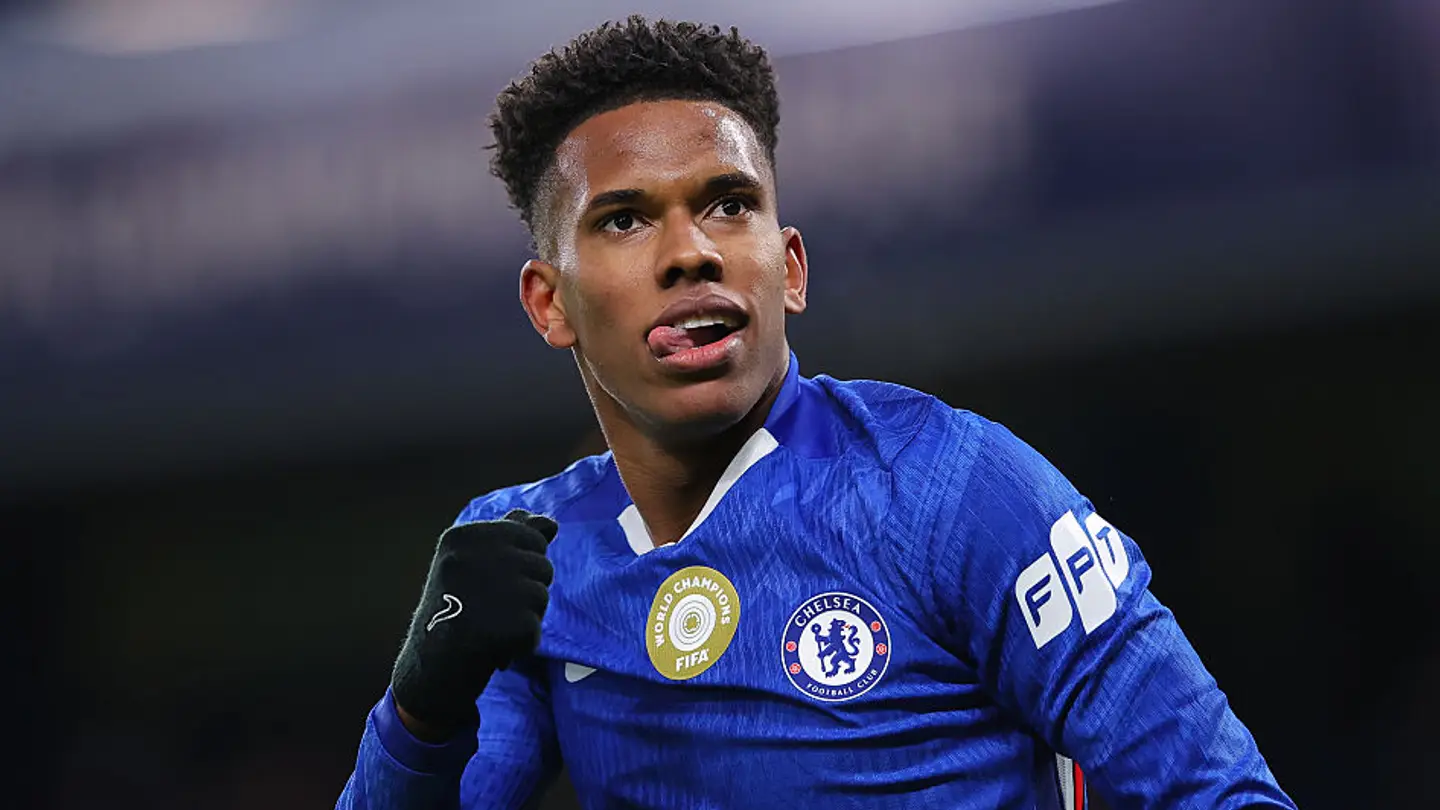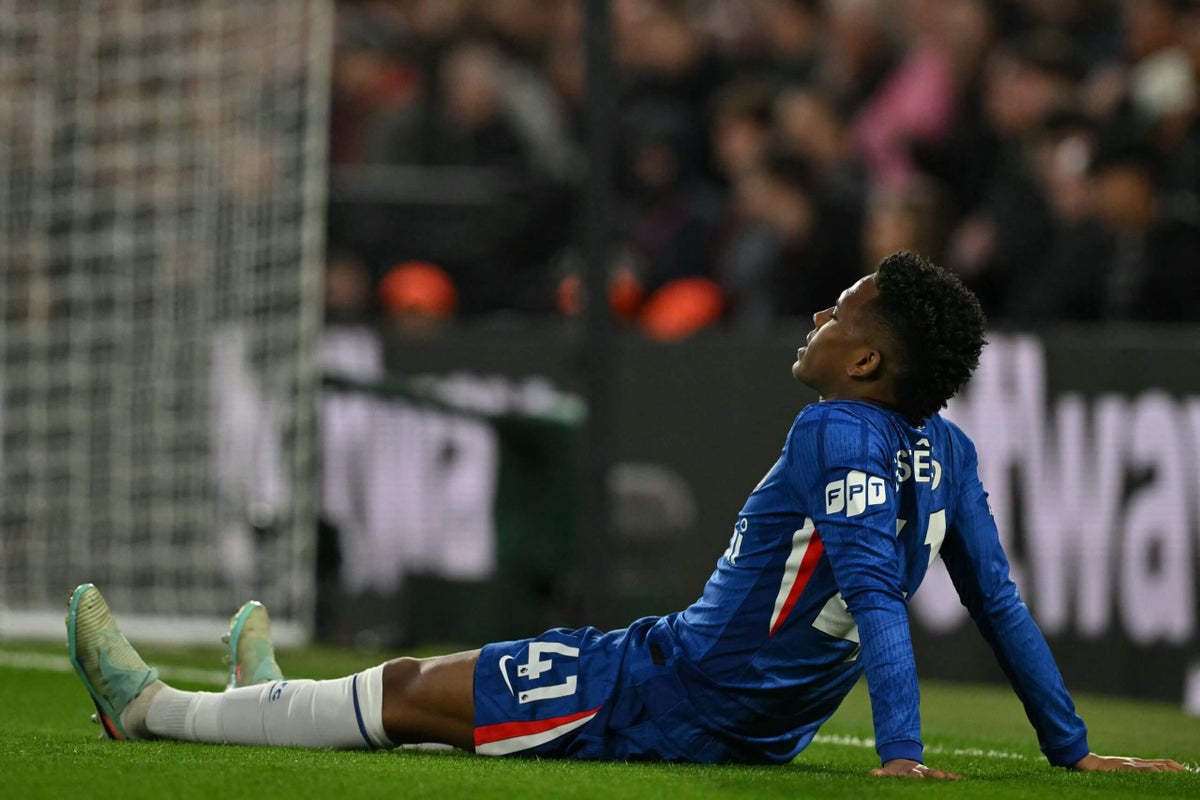
After weeks of noise around the status of his recovery from a serious hamstring injury, Chelsea winger Estevao has finally shared his thoughts and feelings publicly in recent days.First, a clip circulated on social media on Thursday of the 19-year-old Brazilian speaking, to soft piano backing, in Igreja Evangelica Pentecostal Visao do Evangelho, a church in his hometown of Franca, bringing his fellow worshippers up to speed with the events of the past few weeks.
Testemunho do Estêvão, atacante do Chelsea, na Igreja Visão do Evangelho, sobre sua lesão e a sua recuperação.
“Tive uma lesão que rompi 80% do bíceps da coxa e os médicos do Chelsea queriam que eu operasse, inclusive o dono do Chelsea disse que queria que eu operasse. Duas… pic.twitter.com/cA0YKzZp6N
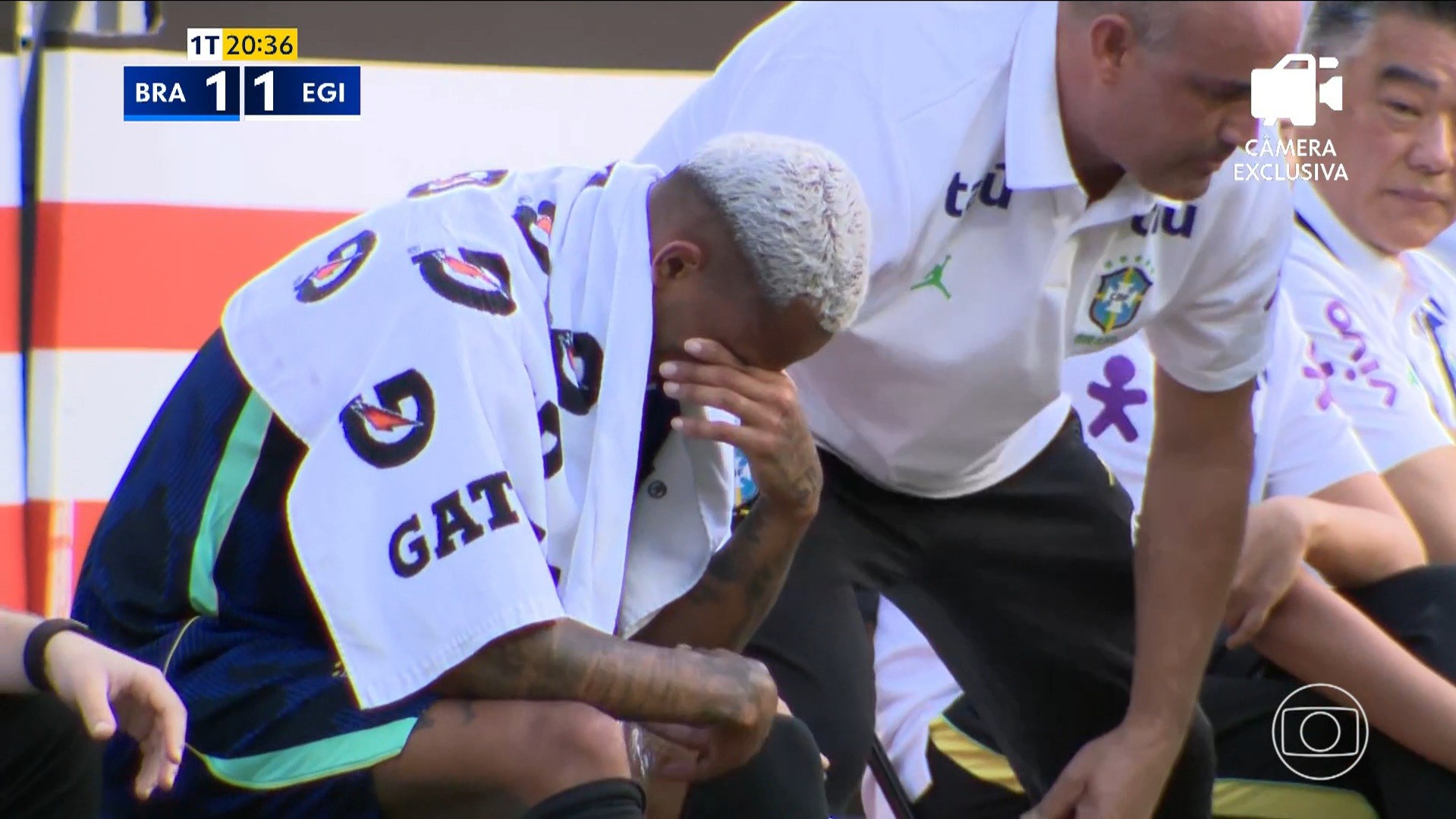
— LIBERTA DEPRE (@liberta___depre) June 4, 2026Then on Saturday, he appeared on ESPN Brasil show Bola da Vez, where he detailed the moment he found out the severity of the hamstring tear he had suffered when running in behind the Manchester United defence during a Premier League game at Stamford Bridge on April 18.“When I woke up, I went to take a shower,” Estevao said. “The doctor called me three times. This was the day he said he was going to give me the results. I called him, and he said, ‘Bring your parents here, we want to talk to them, too’. We already knew that if they were going to give us any other news, they would say it right then and there, to my face. When they told me to bring my parents there, I already had a feeling that something bigger was coming.“I think the hardest moment was when I found out the news — that it was grade four (hamstring injuries are rated in severity, usually from grade one for the least damage up to three). I didn’t even know there was such a thing as grade four. I didn’t even know it existed. But unfortunately, it happened. But life goes on. Now it’s about recovering well and getting treatment so I can get back as soon as possible.”A distraught Estevao leaves the pitch on April 18, fearing the worst (Glyn Kirk/AFP via Getty Images)Many football supporters would be forgiven for not knowing what a grade four hamstring injury is.The most high-profile example of one in recent years is 2025 men’s Ballon d’Or winner Ousmane Dembele, who required an operation that sidelined the now Paris Saint-Germain forward for six months after suffering a complete tear in his right hamstring while a Barcelona player in 2019.Such a lengthy timeframe will increase the anxiety of Chelsea fans and understandably raise questions about why Estevao did not have surgery immediately. But hamstring injuries are notoriously complex, and the internal conversations to determine the best course of recovery are often much more nuanced than they may appear from the outside.Professor Ernest Schilders is an orthopaedic surgeon with specialist expertise in the management and surgical treatment of hip, groin, adductor, hamstring and quadriceps injuries. Professor Rowena Johnson is a consultant musculoskeletal radiologist specialising in advanced diagnostic imaging and image-guided interventional procedures.Together, they lead The Combo Clinic at the Mayo Clinic Healthcare London, where they work with elite athletes from a wide range of sports. The bulk of their clients are professional footballers in the Premier League, the Football League and leagues across Europe.“They are unfortunately common — it’s raining grade fours,” says Johnson.But what exactly is a grade four?“Generally speaking, a grade four injury is a full-thickness tear of a tendon, so it’s completely torn all the way through,” she explains. “But not all grade fours behave the same way.“A grade four tear towards the top of the tendon, what we call the free tendon, is a very significant injury. But you can have a grade four tear towards the bottom of the tendon, where it’s fading out and it’s intramuscular, so it’s sitting within the muscle. That is still significant, but a less severe injury. In those cases, you can have a grade four at the bottom of a tendon which is actually less severe than a grade three at the top of a tendon.”The position of the tear is key.“You have a very different return to play, depending on where the injury takes place,” Schilders says. “If you have a complete avulsion at the sitting bone, that gives you a long recovery and that usually always needs surgical repair. But if it’s in the intramuscular portion, or between two muscles, that usually responds well to non-surgical treatment. The exact anatomical location is very important as a starting point.”The most common type of hamstring tear in football that is surgically repaired, viewed from the front (Professor Ernest Schilders)A complete rupture of the proximal free tendon or conjoint tendon (which was Dembele’s injury), where the hamstrings attach to the ischial tuberosity (commonly called the sitting bone, at the bottom of the pelvis), represents one of the most severe hamstring injury patterns and typically requires surgery, followed by a recovery period of around six months.By contrast, tears involving the distal free tendon at the musculotendinous junction, where the tendon meets the muscle, are among the most commonly repaired biceps femoris injuries in professional football. These injuries generally require a minimum recovery period of approximately 14 weeks following surgery.When the injury occurs lower down the hamstring, at the so-called “T-junction”, where the long and short heads of the biceps femoris converge, recovery may be shorter, with some players returning in as little as 12 weeks, depending on the severity of the tear and individual rehabilitation progress.The most common type of hamstring tear in football that is surgically repaired, viewed from the rear (Professor Ernest Schilders)The above scenarios are all post-operative timelines, but not all hamstring injuries are treated surgically.“You need to look at the individual case,” Schilders says. “In professional football, what’s important is to get your player back as soon as possible, with the lowest risk of recurrence. If you decide to go for conservative management, but your recurrence risk is quite high with that particular injury, then you might reduce the availability of that player quite significantly because he might fall into a pattern where he still needs surgery.“Our role is providing probabilities: ‘This is your injury. If we go down this route, then your probability for injury is X amount; if we do surgery, then your probability for recurrence is that amount’. Sometimes that might mean you opt for a longer recovery, but with a very low probability of recurrence, rather than going for something where that risk is much higher.”There are potential risks in having surgery, too — infection, a re-rupture or even nerve damage.“The main nerve that runs down your leg is your sciatic nerve,” Johnson says. “It runs down next to the long head biceps and has lots of transverse branches, like side branches. We unfortunately see cases all the time where those side branches have been cut or injured.“So what we do, particularly with players who have a lot of scar tissue from recurrent tears, is the intra-operative scanning. As you find these branches buried in scar tissue, you can use a nerve stimulator to get them to twitch, and then you can dissect around them. It’s very meticulous, and it takes time, but it helps to preserve the network of the nerves that are supplying it.“It’s hard for a player to get back to the same level if they can’t engage and contract the muscle in the same way (due to nerve damage).”Estevao was one of Chelsea’s more consistent performers last season until suffering his hamstring tear (Ben Stansall/AFP via Getty Images)Whether managed surgically or conservatively, regular scans play a critical role in monitoring recovery. Tendons must be progressively loaded to restore strength, elasticity and function, while avoiding excessive stress that may increase the risk of re-injury. At The Combo Clinic, advanced ultrasound-MRI fusion imaging is used to guide rehabilitation and return-to-play decisions.“We superimpose the ultrasound on top of the MRI scan and it maps on perfectly, so you can move it dynamically,” Johnson says.“Professional footballers get scanned a lot more than the average person,” Schilders adds. “Six or seven weeks post-op, you can do an MRI scan. You see a lot of bright signal around the tendon area, but you don’t know if this is fluid or granulation tissue, which is healing tissue. With fusion scanning, you’re able to tell that straight away.“That’s important, because if there’s a serious amount of fluid around the tendons, then you know you have to slow down the rehab a bit and reduce the loading. But on the other hand, if it’s healing tissue, you can progress as normal.”A player’s position on the pitch can also affect the course and timeframe of their recovery from a hamstring issue.“A centre-back might have a much quicker return to play than somebody who is a winger and has to rely on a lot of sprinting,” Schilders says. “Your position is important.“We have had grade four injuries of the long head of the biceps in the intramuscular portion between the two muscles, and we’ve had Premier League players playing seven weeks post-injury with non-surgical management. Typically in that area, we would treat it non-surgically.“Seven weeks is not the average time. Seven weeks is somebody who has good healing potential and somebody who plays in a position where he can adapt, where he can actually choose the amount that he runs. So that would be typical for a centre-back, let’s say. But that might not apply to a winger.”It has been seven weeks and four days since Estevao tore his hamstring. Despite his understandable devastation at missing out on a World Cup place, the fact that he will get a full off-season to focus on his recovery can only be a positive for Chelsea and incoming manager Xabi Alonso.Whether he is in Brazil or at the club’s training complex in Cobham, Estevao will have access to the facilities and medical guidance he needs.He had already flashed enough in his 2025-26 debut season in England to indicate that he can be a key player for Chelsea in the years to come, and his prominence was notable in the pictures that accompanied the launch of their new home kit earlier this month.Dembele’s subsequent success is an encouraging reminder that, if handled correctly, even the most severe hamstring injury need not have a lasting negative impact on a footballer’s career.Estevao is far too talented, and too important to Chelsea, not to get this recovery right.