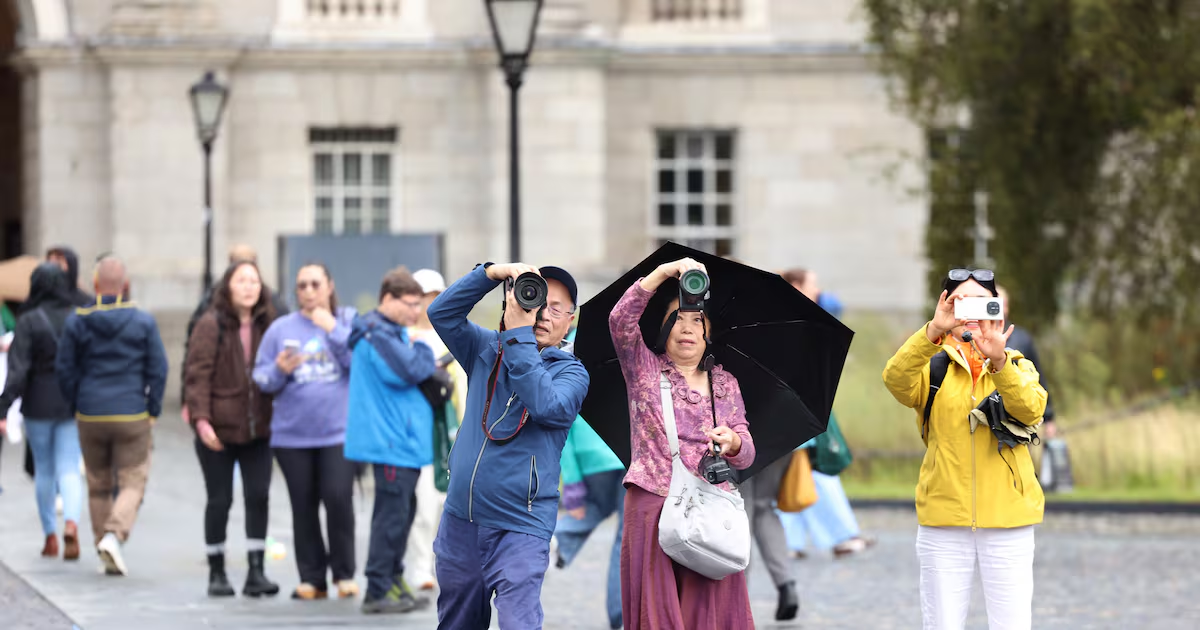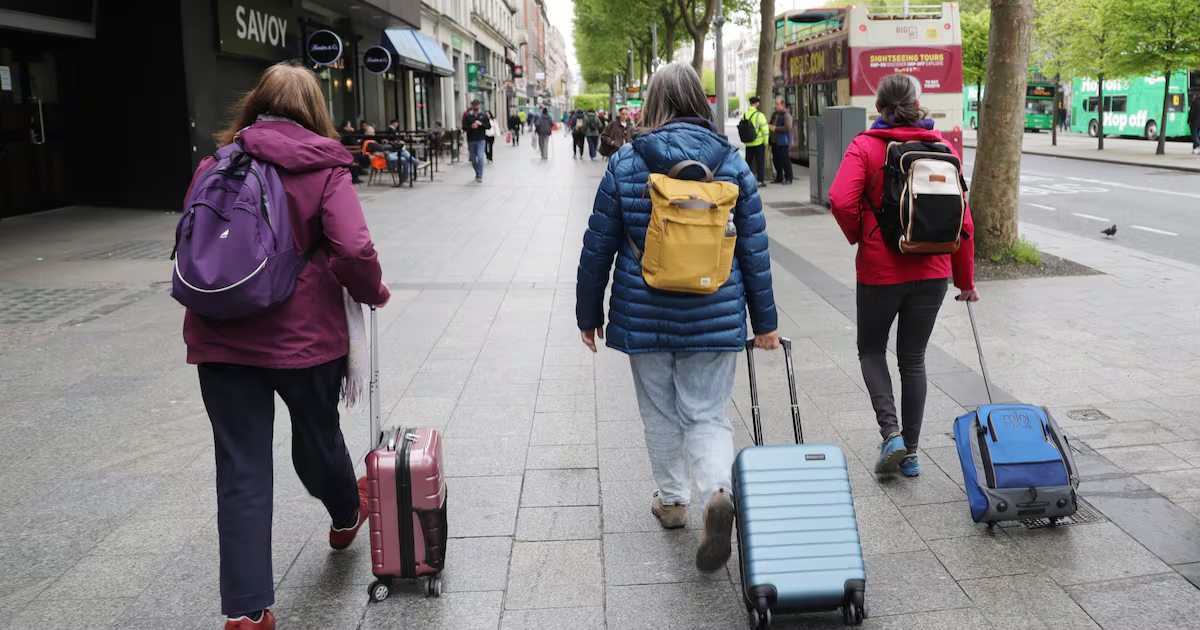
Nights spent in tourist accommodation in Ireland jumped dramatically more than in any other EU state in the first three months of the year, according to data published by Eurostat. A 35.3 per cent increase in tourism nights in Ireland compared to the same time last year dwarfed the next best performer, Malta, which saw an 11.1 per cent increase. Hotels and other accommodation saw a 43.3 per cent increase in the number of nights foreign visitors stayed in Ireland from 2025, while there was a more modest but still very strong 25.1 per cent increase in the number of “staycation” nights recorded for Irish residents. Across the EU, 471.1 million overnight stays in tourist accommodation were recorded in the first quarter, up 3.4 per cent from last year. Seven million of these were in Ireland, where the numbers slowly trended upward from January to March. One in four nights spent by foreign visitors in the EU were in Spain, making it the most popular EU destination so far this year. It provided 54.1 million nights of accommodation for tourists from January to March.Overall, two-thirds of EU countries saw an increase in tourism year-on-year. This represented a general shift from the more negative patterns observed in 2025, when a slump in tourism across the Continent was attributed to US president Donald Trump’s tariff policies. However, nine countries did see tourist accommodation nights fall, with Lithuania leading the way with a 12.9 per cent dip. They were followed by Romania (-6.7 per cent) and Luxembourg (-3.8 per cent).The Eurostat numbers follow recent data from the Central Statistics Office that saw steady growth in Ireland’s tourism sector compared to 2025. The Eurostat figures were disputed by Paul Gallagher, chief executive of the Irish Hotel Federation (IHF), who said: “There’s obviously something here that’s not aligning in terms of our data.“A lot of us thought in the first quarter and second quarter of last year that there was something wrong.”[ Photo essay: Skellig Michael reopens for summer visitors to sun, swells and puffinsOpens in new window ]Gallagher was referring to a high-profile discrepancy last year between the statistics recorded by the CSO and industry numbers gathered by the IHF. Hoteliers challenged CSO data showing a 15 per cent drop in tourists coming to Ireland in March last year compared with 2024, saying it had not noted the same downturn in tourism numbers.The CSO numbers are used to inform the Eurostat data. The CSO bases its inbound tourism figures on monthly surveys of 13,000 visitors whose country of residence is checked. Eurostat has advised caution in reading to much into the Irish figures for this year, noting the CSO had yet to report some data and on account of the base effect given the notable dip in Irish inbound tourism last year.Gallagher concurred, saying “this year is a correction for last year”, and adding that “hotels have not observed a massive increase in overseas visitors into hotels each month”.
Dramatic jump in visitor nights spent in Ireland, according to EU figures
Surge in Ireland dwarfed experience in other EU states but may be distorted by reported slump in numbers last year
495 words~2 min read