Story audio is generated using AI
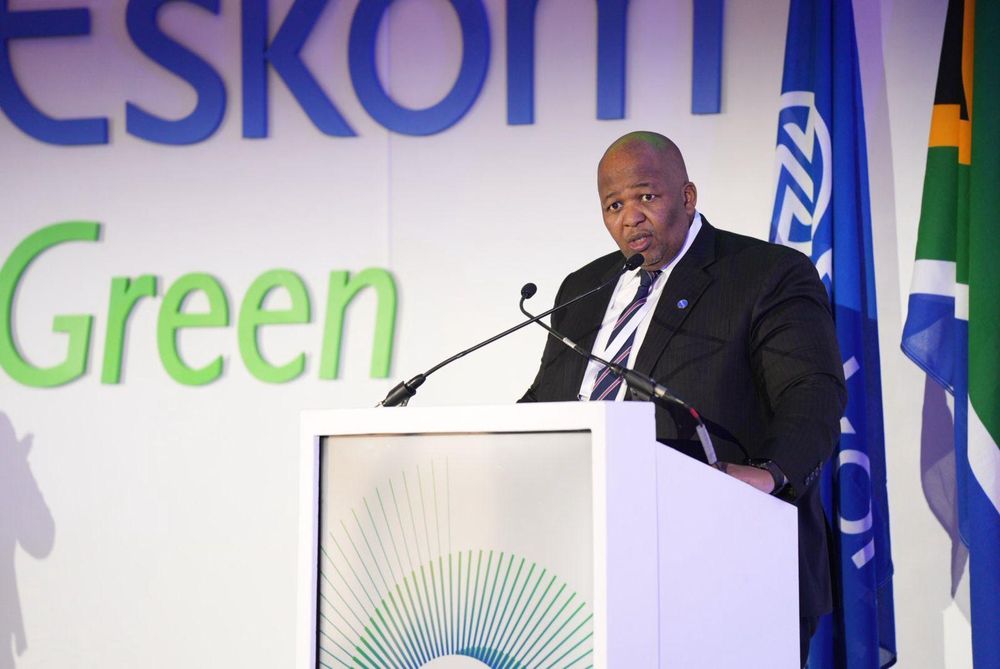
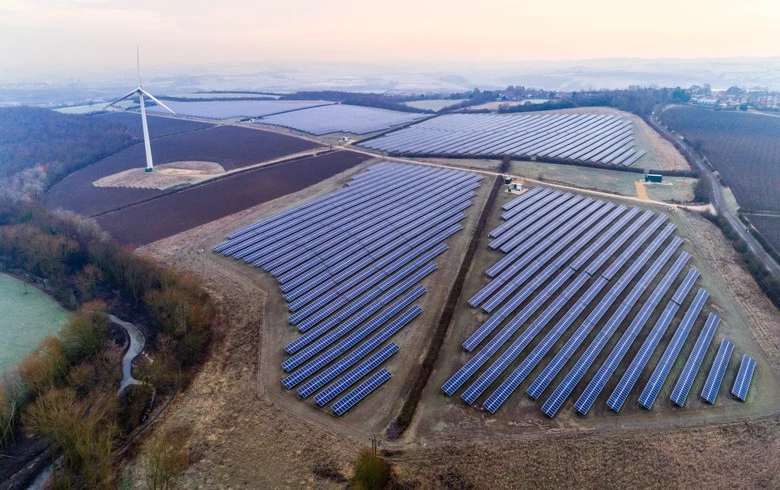
Eskom is eyeing the mining and manufacturing sectors as launchpads for its renewable Eskom Green energy proposition as the group reveals the building blocks of its future.South Africa’s biggest emitter due to its coal power station fleet, which has powered the economy for the past 100 years, launched Eskom Green on Tuesday to make amends.Group CEO Dan Marokane said the establishment of Eskom Green is not a thumb-sucking exercise but follows an international benchmarking exercise stretching across 20 utilities.“This new entity is built on the decades of power generation skills and expertise the nation has invested in, and Eskom Green reflects successful adaptation to new technologies in Eskom,” Marokane said.“We have been playing in this space for some time, and we are now putting a stake in the ground — this is a development that South Africa can be proud of.”The first stop for Eskom Green, which will have its own governance structures, is to support larger power-user customers via long-term power purchase agreements.The mining and manufacturing industries, indispensable to South Africa’s economy, will benefit from the initiative.Emissions from South Africa’s mining sector are largely linked to electricity use. Decarbonisation of the mining sector will be driven by a cleaner electricity supply, eliminating about 75% of scope 1 and 2 emissions. Some of the country’s mining majors have begun building their own renewable energy capabilities.Eskom Green will operate in Eskom as a separate renewable energy platform focused on developing and supplying large-scale renewable energy projects. It is expected to be separated into a wholly owned subsidiary in future, subject to regulatory and shareholder approvals, the utility said.“Eskom Green is, in essence, a response to what we know our customers need and what South Africans have told us they need,” said group executive for Eskom Renewables, Rivoningo Mnisi.Eskom said delays in South Africa’s renewable energy rollout also informed the decision, saying that a big share of awarded projects with grid allocation and offtake agreements has yet to reach completion, despite growing demand for new capacity from industry.“The challenge is not lack of technology. The challenge is execution, infrastructure and the integration of renewable energy into a reliable and resilient power system,” Mnisi said, adding that variability in renewable generation introduces system risks that must be actively managed.The platform will initially focus on utility-scale solar PV generation, battery energy storage systems, wind and pumped storage. The early pipeline includes about 2GW of projects, forming part of a broader development pathway of about 5.6GW by 2030, 21GW by 2035 and up to 32GW by 2040.Projects will be structured on long-term supply agreements with large users, including take-or-pay contracts designed to provide revenue certainty for financing. Eskom said this approach will support the use of special-purpose vehicles for individual projects, combining its balance sheet in the early phase with private-sector capital over time.Some of the planned capacity will be developed at existing Eskom power station sites, where land and transmission infrastructure are already in place. The utility said this is intended to reduce grid connection delays, which remain a key constraint on new generation projects. Eskom chair Mteto Nyati said the decision to enter the renewable energy space was taken by the board several years ago as part of efforts to secure the utility’s long-term relevance as older-generation assets are retired.He added that the platform is not intended to replace independent power producers but to operate alongside them by leveraging Eskom’s grid access, land portfolio and system integration capabilities. “We see Eskom Green as a direct response to those needs,” Nyati said, referring to growing demand from customers for price certainty, reliability and access to low-carbon electricity. “Our role is to help derisk the transition and accelerate delivery where it matters most,” he said.While acknowledging concerns that Eskom’s entry into the sector could crowd out private developers, the utility maintained that the platform is designed to complement rather than displace existing market participants. “Eskom is not entering this space alone … we believe we bring capabilities that complement, rather than compete with, the private sector,” Nyati said.Minister of electricity & energy Kgosientsho Ramokgopa framed the initiative as part of a broader effort to address infrastructure delivery constraints and accelerate industrial development.He said South Africa’s experience shows that procurement alone has been insufficient to bring new generation capacity online at the required pace due to delays and grid constraints as key challenges. “The challenge is not the production of clean electrons only … the challenge is consistency,” he said.