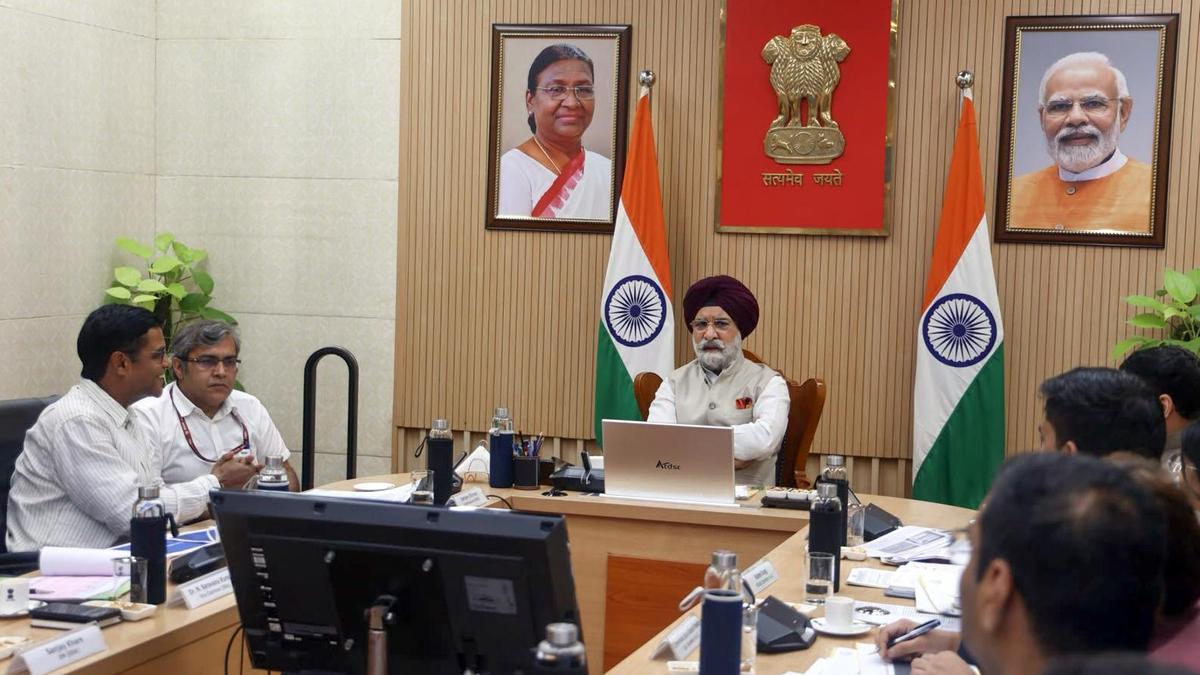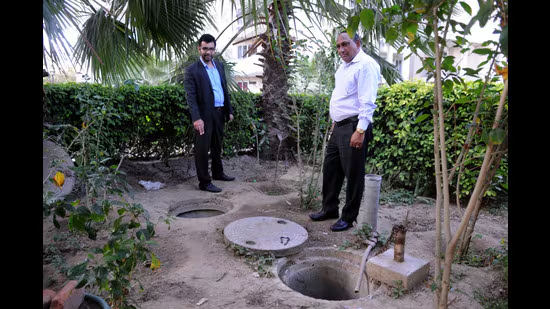
The Gurugram Metropolitan Development Authority (GMDA) on Tuesday directed residents’ welfare associations (RWAs) of gated residential societies and high-rise complexes to ensure working rainwater harvesting systems in their societies to contain rainwater in monsoon and curb overflow onto roads.Officials said rooftop runoff should be diverted into recharge structures to improve groundwater recharge and reduce overflow. (HT Archive)GMDA said representatives from over 30 RWAs of societies participated in the latest meeting, the third such meeting over the past few weeks chaired by DS Dhesi, principal advisor (urban development) of Haryana. A GMDA spokesperson said Dhesi directed the authority and residents to test the structures, as well as divert water from rooftops into these pits.RS Bhath, district town planner, GMDA, said that for the past six months, they have been working on improving RWH systems across the city and it is expected that system will perform better this year. “It has been decided that a joint mock drill will be organised by GMDA and the irrigation department, along with a hydrologist, in one group housing society. This exercise will serve as a demonstration to establish a standard operating practice that can subsequently be replicated by all RWAs,” he said.Waterlogging in residential areas has been a major problem for those living in societies along the Golf Course Extension Road, Sohna Road and on both sides of the MG Road.Bhath said the RWA representatives who took part in the meeting said that they had met the depth norms, cleared the structures and even constructed new pits to harvest water.Haryana irrigation department hydrologist, Dalvir Singh Rana, who attended the meeting, said that a properly maintained rainwater harvesting system had the potential to facilitate percolation of approximately 25 litres of water per second.Last year, a study conducted by a consultant on behalf of the GMDA, revealed that nearly 85% of individual houses and almost half of the residential societies in Gurugram lacked functional rainwater harvesting systems.The draft study highlighted that “existing recharge wells constructed by individuals in respective plots, by RWAs in common areas, and in public buildings and group housing societies need to be made functional with proper storage capacities for at least one hour and desilting chambers.”According to officials, current government norms require rainwater harvesting systems in houses built on plots over 100 square yards. Before possession certificates are issued by HSVP or the DTP office, compliance reports on rainwater system installations must be submitted.A DTCP official said that earlier this year, the government amended the Haryana Building Code to empower officials to check the functioning of rainwater harvesting structures, and take action in case of non-compliance.
GMDA asks RWAs to test rainwater harvesting systems before monsoon
A joint mock drill with irrigation experts and a hydrologist will demonstrate standard operating practices for residential complexes.
433 words~2 min read