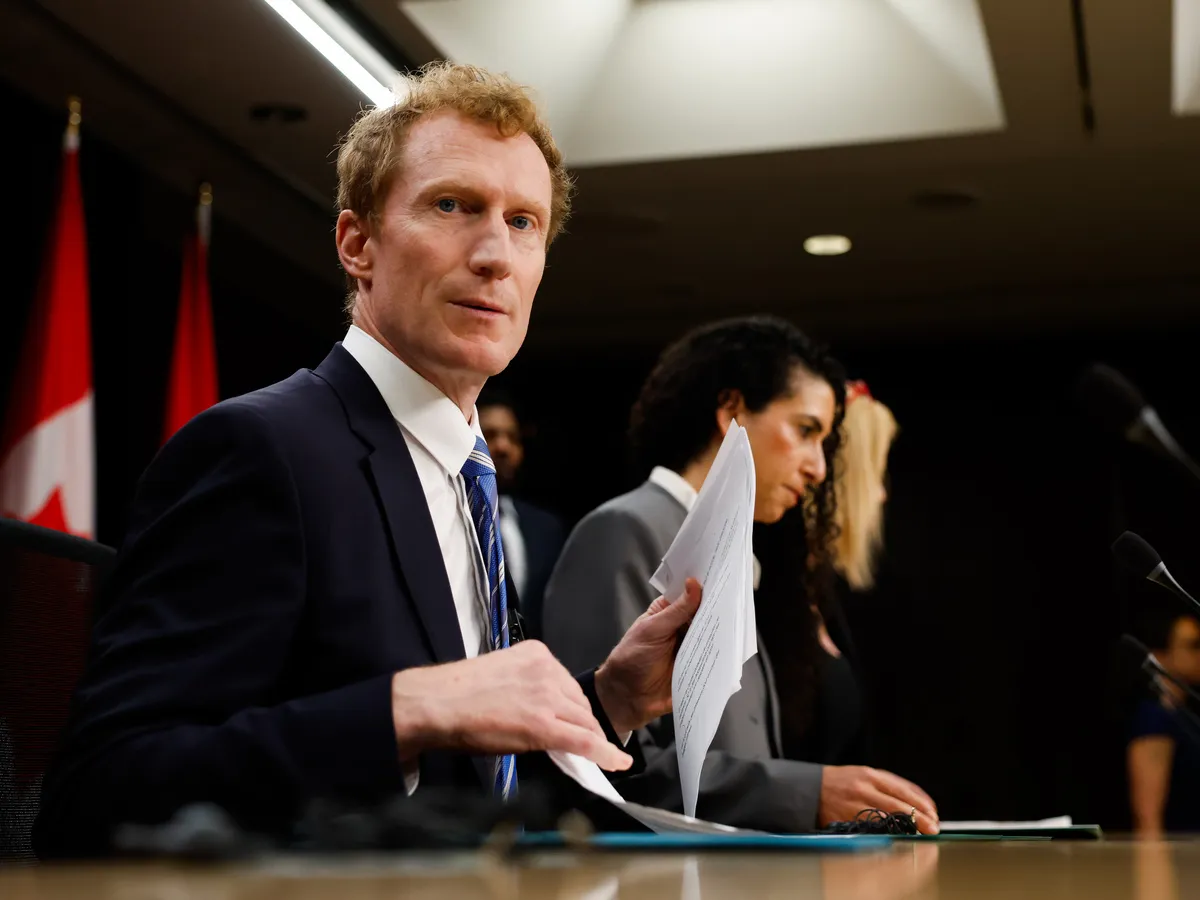
Skip to Content Subscribe Our Offers My Account Manage My Subscriptions FAQ Newsletters Canada Canadian True Crime Canadian Politics Health World Israel & Middle East Financial Post NP Comment Longreads Puzzmo Diversions Comics NP News Quiz New York Times Crossword Horoscopes Life Eating & Drinking Style Sponsored Play for Ontario Travel Travel Canada Travel USA Travel International Cruises Travel Essentials Culture Books Celebrity Movies Music Theatre Television Business Essentials Advice Lives Told Tails Told Shopping Buy Canadian Home Living Outdoor Living Kitchen & Dining Tech Style & Beauty Personal Care Entertainment & Hobbies Gift Guide Travel Guide Amazon Prime Day Deals Savings National Post Store More Sports Hockey Baseball Basketball Football Soccer Golf Tennis Driving Vehicle Research Reviews News Gear Guide Obituaries Place an Obituary Place an In Memoriam Classifieds Place an Ad Celebrations Working Business Ads Archives Healthing Epaper Manage Print Subscription Profile Settings My Subscriptions Saved Articles My Offers Newsletters Customer Service FAQ Newsletters Canada World Financial Post NP Comment Longreads Puzzmo Diversions Life Shopping Epaper Manage Print Subscription HomeNP CommentJesse Kline: Mark Carney wants to raise your kidsSocial media causes serious harms in youth, but the proposed online harms bill will be worseLast updated 6 minutes ago You can save this article by registering for free here. Or sign-in if you have an account.Prime Minister Mark Carney Photo by Peter Power/PostMedia NewsLike the turn of the century’s indoor smoking bans, prohibitions against youth social media use seem almost inevitable, with many countries, including Canada, looking to follow the example set by Australia last year. But in many ways, having boomer and gen X politicians regulating the online behaviour of a generation that’s grown up in the digital era feels like dinosaurs trying to control the climate.Enjoy the latest local, national and international news.Exclusive articles by Conrad Black, Barbara Kay and others. Plus, special edition NP Platformed and First Reading newsletters and virtual events.Unlimited online access to National Post.National Post ePaper, an electronic replica of the print edition to view on any device, share and comment on.Daily puzzles including the New York Times Crossword.Support local journalism.Enjoy the latest local, national and international news.Exclusive articles by Conrad Black, Barbara Kay and others. Plus, special edition NP Platformed and First Reading newsletters and virtual events.Unlimited online access to National Post.National Post ePaper, an electronic replica of the print edition to view on any device, share and comment on.Daily puzzles including the New York Times Crossword.Support local journalism.Create an account or sign in to continue with your reading experience.Access articles from across Canada with one account.Share your thoughts and join the conversation in the comments.Enjoy additional articles per month.Get email updates from your favourite authors.Create an account or sign in to continue with your reading experience.Access articles from across Canada with one accountShare your thoughts and join the conversation in the commentsEnjoy additional articles per monthGet email updates from your favourite authorsSign In or Create an AccountorOn Wednesday, Prime Minister Mark Carney’s Liberals are widely expected to introduce a new version of their online harms bill that will attempt to regulate the social media use of Canadians under 16 years of age.This newsletter from NP Comment tackles the topics you care about. (Subscriber-exclusive edition on Fridays)By signing up you consent to receive the above newsletter from Postmedia Network Inc.We encountered an issue signing you up. Please try againIt’s an idea that sounds good in theory, and generally has high levels of support. As a semi-reformed techno-optimist, I’ll be the first to admit that the internet has not lived up to its potential.Rather than vibrant forums for public debate, social media is dominated by shouting matches and flame wars. Rather than informing the masses, it’s spreading conspiracy theories and radicalizing youth. Rather than bringing people together, it encourages social isolation and antisocial behaviour.Youth, in particular, can find these platforms highly addictive, and they have been shown to contribute to higher rates of anxiety and depression. Bullying no longer ends in the schoolyard, it follows kids wherever they go.Predators exploit online platforms to prey on naive youngsters. Self-harming behaviours can spread like a virus. And large tech companies hoover up massive amounts of sensitive information about people who aren’t even old enough to vote.Nevertheless, as much as governments would like to pretend otherwise, the internet, by its very nature, encourages pseudo-anonymity and competition.Authoritarian regimes like China get around this by installing highly sophisticated content-blocking and surveillance systems. Governments like Iran’s have given themselves the ability to cut entire populations off from the rest of the world at will.And in recent years, western democracies like the United Kingdom have used child safety to impose their own Orwellian surveillance and censorship regimes. Numerous U.S. states, along with Brazil, are trying to require computers to store age information at the operating system level.Australians are forced to submit to facial-recognition scans or send copies of their driver’s licenses if they want to gain uncensored access to search results or stay in touch with their loved ones on Facebook.For parents who are concerned about their kids’ data being hoarded by big tech companies, governments and potentially malicious actors, Australia’s social media ban has sent the problem into overdrive. And it doesn’t appear to have been all that successful at preventing young people from using social media.According to a recent survey from the polling firm Pureprofile, nearly eight in 10 Australian kids under the age of 16 are still accessing banned social media sites, despite the restrictions, and 94 per cent continue to use some form of social media, having in many cases switched to platforms that “aren’t necessarily safer.”Australia, you see, was very selective in terms of which sites would be declared off-limits. Facebook, Instagram, YouTube, X, TikTok, Reddit, Snapchat and Twitch are treated like purveyors of porno mags and cigarettes, while Facebook Messenger, Discord, WhatsApp and Steam are completely kosher.Some may suggest the answer is to ban youth from using all these sites. But it’s simply not possible to block an entire generation from using modern communications tools, unless they’re prevented from using internet-connected devices entirely.If kids are cut off from the platforms offered by big tech, they’ll simply switch to smaller, offshore sites that can’t easily be controlled by governments, or move to the dark web where child predation is even more rampant.Based on recent reporting, it would appear as though Ottawa’s solution is not to try to ban social media for people under 16, but to use the threat of doing so to force companies to comply with whatever regulatory regime bureaucrats dream up.As the Post reported earlier this week, the government plans to “include provisions that allow platforms to seek exemptions should they demonstrate an ability to keep the youngest Canadians safe while using their products online.”Many parents support a government-imposed social media ban because they see it as a zero-sum game: preventing some kids from using the platforms turns them into social outcasts, but a blanket ban ensures none of them can use the services. Yet that doesn’t appear to be what the Canadian government is proposing.The risk is that the legislation will create a costly new censorship bureaucracy whose mandate will eventually expand beyond the protection of children, and that in its effort to keep kids safe, the government will end up trampling on the free speech and privacy rights of law-abiding adults.In Britain, for example, similar legislation allows the government regulator to block entire websites, impose fines on foreign companies that fail to implement the U.K.’s failed age-verification regimen, which prevents people without personal devices or IDs from accessing large swaths of the internet, places undue hardship on non-profits and community projects, and causes risk-averse platforms to take down or restrict more content than they should.And that’s ultimately the point: governments have been trying for years to bring cyberspace under their boots and regulate all aspects of our digital existence, as they do in the physical world. Protecting children is the perfect excuse to do just that.As the Australian experience shows, however, keeping kids safe is — and always will be — their parents’ responsibility. (Pureprofile found that 40 per cent of Australian parents say they’re having trouble enforcing the rules, showing that there is only so much the state can do.)As both the Canadian and American psychological associations admit, social media use in adolescence can have both positive and negative side effects, and there isn’t a one-size-fits-all solution to mitigate them.Neither organization recommends banning electronic devices or social media entirely, but instead advocate for parents to watch for problematic or excessive use, limit what times of day such services can be used and ensure kids aren’t being exposed to harmful content.This is a task that may seem daunting, but just as kids have used technology to get around government bans, so too can parents utilize technological solutions that allow them to police what their children are doing online.Free software such as Pi-hole allows parents to block entire websites at the network level, and can be used to prevent kids from accessing certain services or using them during specific times of day. Apps like KidSafe give caregivers the ability to monitor what children are doing on their phones.There is a case to be made for social media companies to implement better parental controls, and perhaps the government has a role to play in this. But creating a new censorship bureaucracy and using it as a blunt instrument to force the hand of private companies is not the way to go about it.National Post jkline@postmedia.comTwitter.com/accessd Get the latest from Jesse Kline straight to your inbox Join the Conversation This website uses cookies to personalize your content (including ads), and allows us to analyze our traffic. Read more about cookies here. By continuing to use our site, you agree to our Terms of Use and Privacy Policy.
Jesse Kline: Mark Carney wants to raise your kids
Social media causes serious harms in youth, but the proposed online harms bill will be worse
1,634 words~7 min read