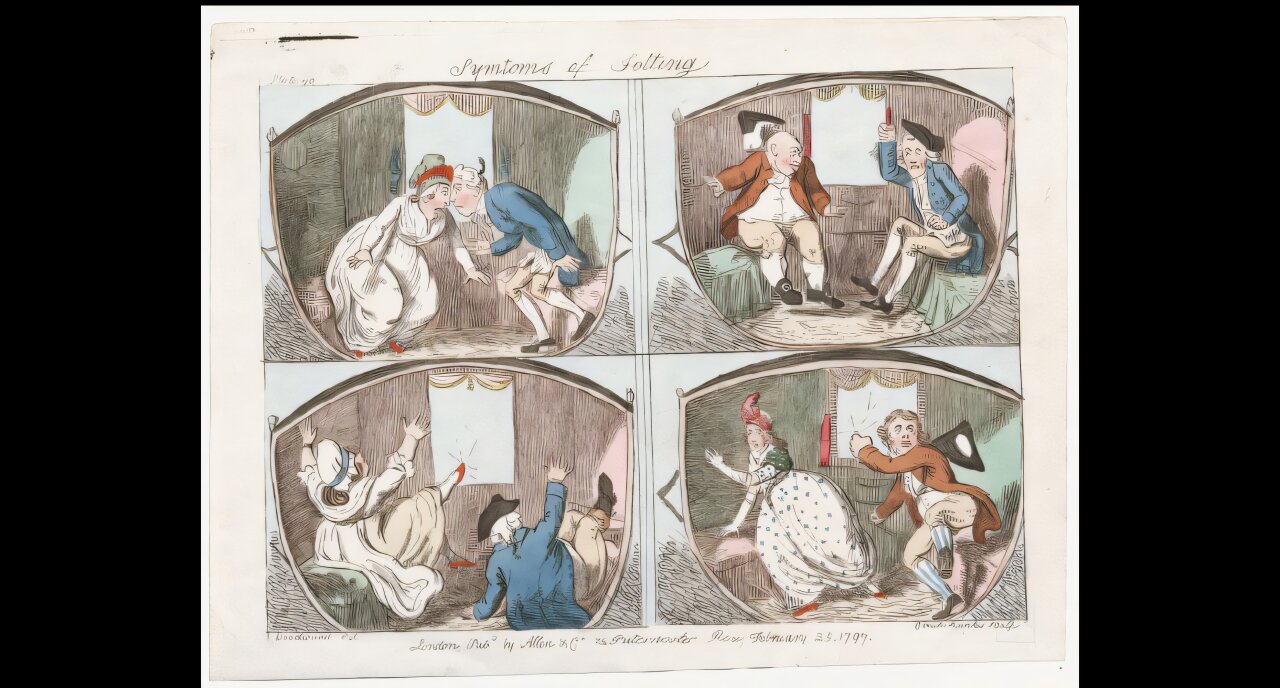
Symptoms of jolting, George Woodward, Eccentric Excursions or Literary and Pictorial Sketches of Countenance, Character and Country in Different Parts of England and South Wales (London: Allen and Co., 1796), 164. Credit: Lewis Walpole Library, Yale University.
New historical research has found that early stagecoach passengers were as concerned with motion sickness as they were with the risk of being robbed by highwaymen.
Letters, diaries, and medical texts from the 17th and 18th centuries reveal that, far from being a "modern complaint," motion sickness was being talked about as a hazard of travel more than 200 years ago.
Having one's personal space invaded by loud or smelly strangers and being forced to sit close to members of the opposite sex or those from lower classes also struck fear and loathing into the hearts of early commuters.
The research, conducted by historian Dr. Alun Withey of the University of Exeter, challenges the romanticized "merrie olde England" view of the growth of stagecoaches and travel more broadly. It's been published in the journal Social History of Medicine.