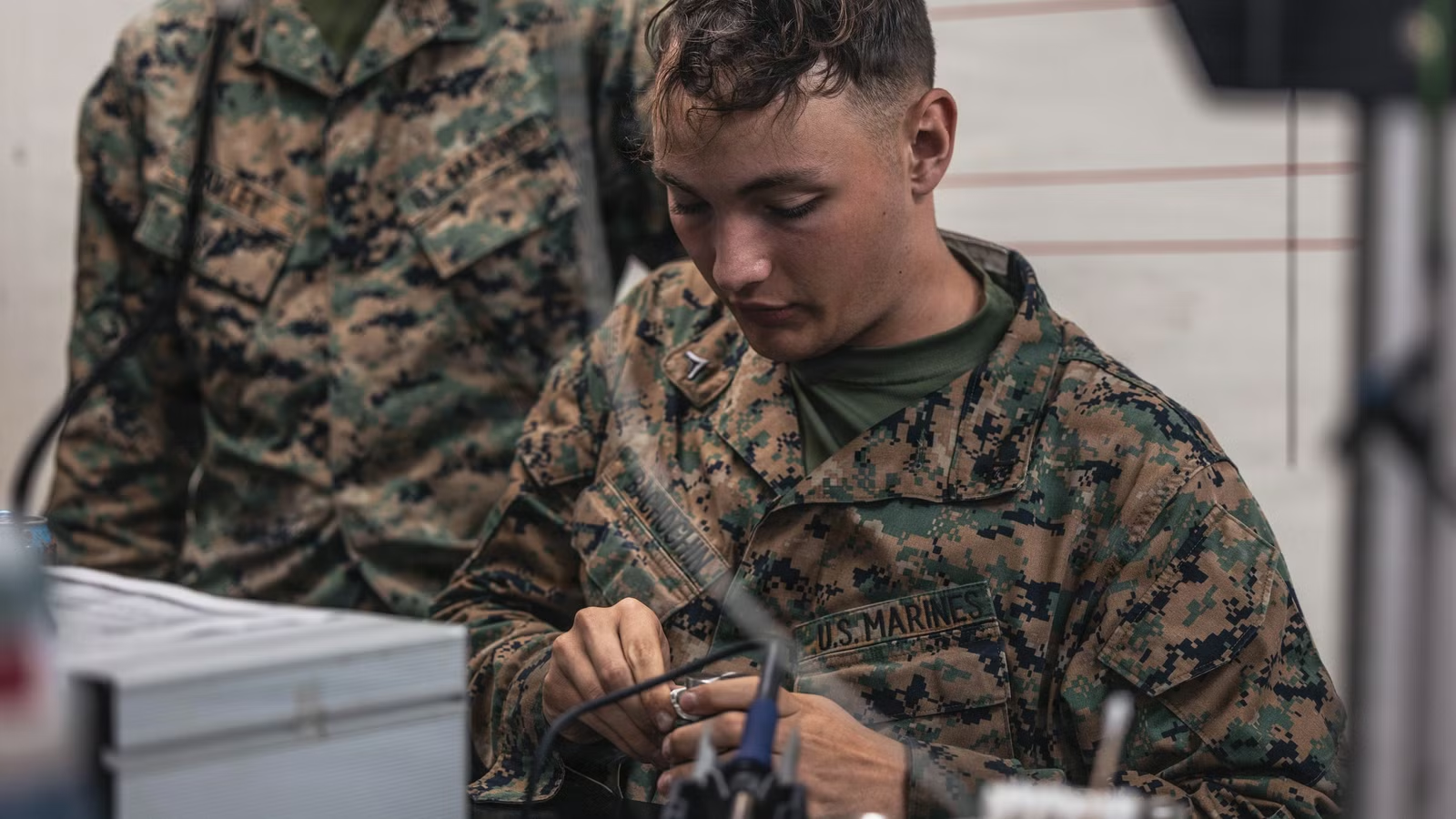
Right-to-repair proponents remain cautiously optimistic that the final version of the 2027 National Defense Authorization Act (NDAA) will allow military service members to have more control, therefore improving national security while simultaneously saving American taxpayers a lot of money. This year's major defense legislation is still in the drafting stages, though right-to-repair provisions were included Thursday as part of a bipartisan amendment approved by the House Armed Services Committee (HASC). However, those who want right-to-repair included in the final version are pushing hard considering that similar actions occurred as part of the Fiscal Year 2026 NDAA negotiation process but were ultimately stripped when the final bill was adopted. Current law allows for contracts that often force the military’s highly capable service members to rely on contracting personnel to repair equipment, which critics claim bloat costs, cause major product delays, give a financial advantage to defense contractors, and puts the financial onus on U.S. taxpayers who collectively subsidize national defense. "It was great to see right-to-repair provisions be included as an amendment during the House Armed Services Committee's markup," Virginia Burger, senior defense policy analyst at the government watchdog POGO, told Military.com. "Allowing the military the right to repair its own equipment is common sense: it benefits taxpayers, service members, and the country’s national security as a whole." Army Secretary Daniel Driscoll, while testifying before the Senate Armed Services Committee in May 2026, called right-to-repair “one of the most important things, and I don’t say this to be over the top.” He said during the same hearing that its inclusion “could be the decisive point between us being successful somewhere 6,000 miles away in the Indo-Pacific or failing our mission.” Defense Secretary Pete Hegseth endorsed that trajectory. Nearly a year before that, in June 2025, then-Navy Secretary John Phelan said he was a “huge supporter of the right to repair.” Phelan was removed from his position in April 2026, becoming the first top military official to depart during President Trump's second term. Burger cited the "intense" debate surrounding its inclusion, believing that support expressed by Rep. Adam Smith (D-Wash.), the Democratic ranking member of the HASC, helped push it across the line. It remains to be seen whether it will last in the long term.
F-35 Program's $2T Bill Fuels New Push for Right-to-Repair in 2027 NDAA
Proponents argue that the next defense bill's inclusion of right-to-repair will save the U.S. money, improve national security.
1,536 words~7 min read