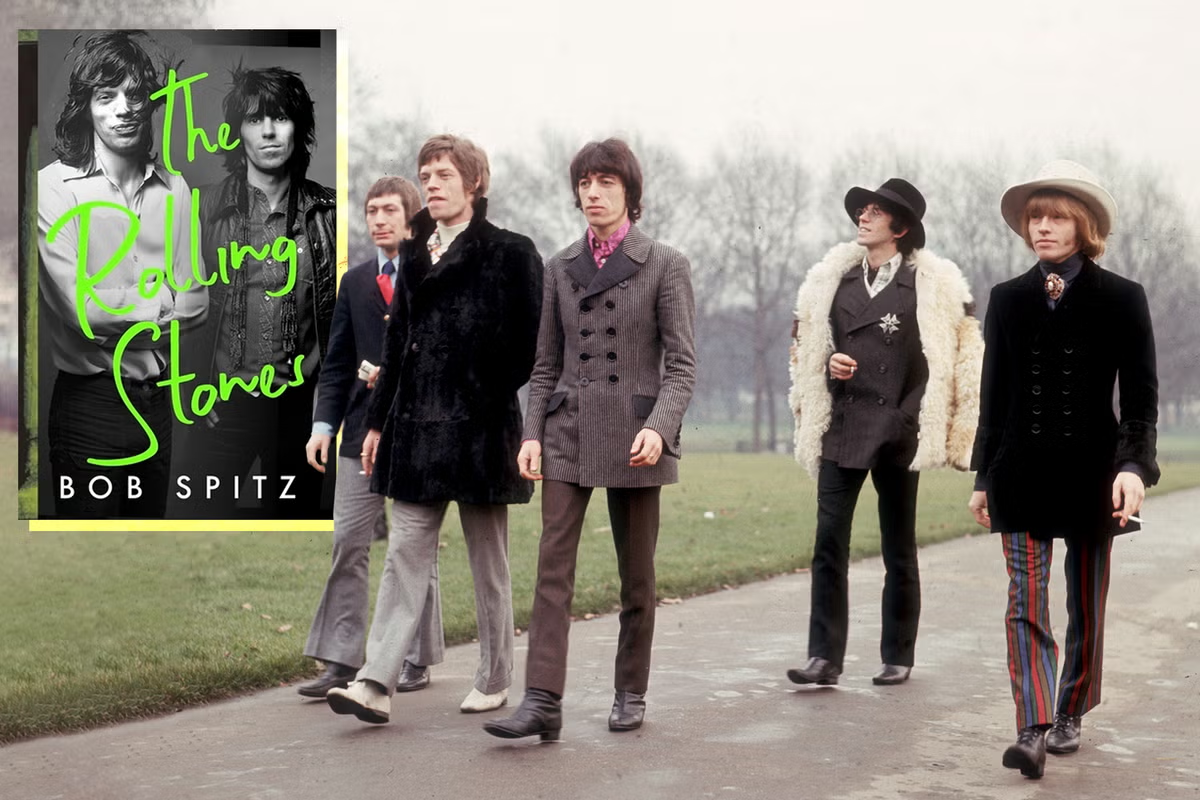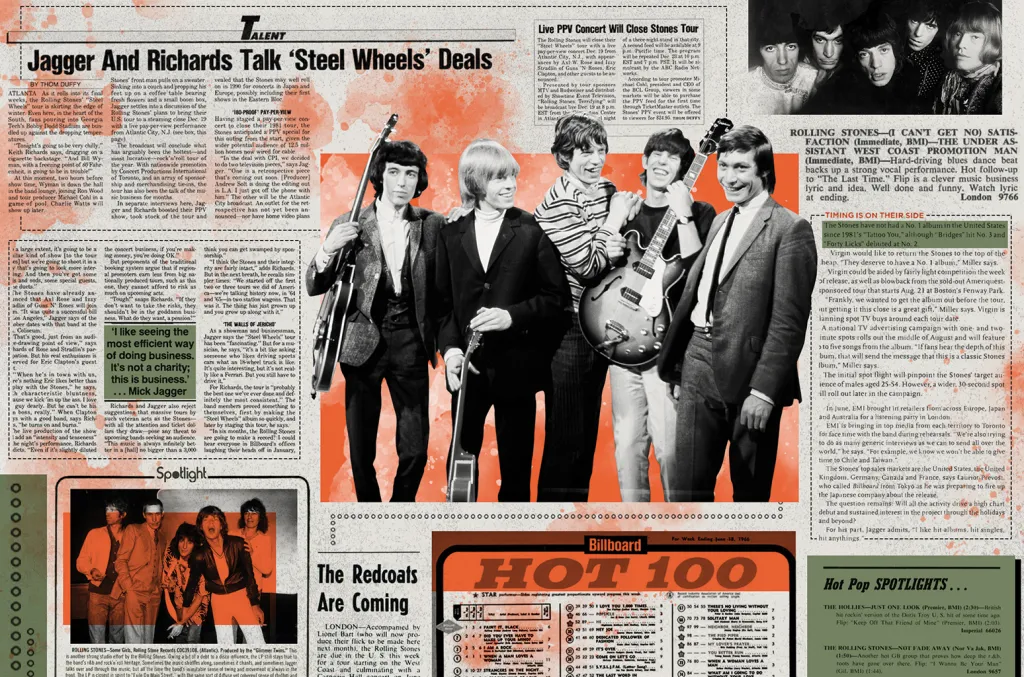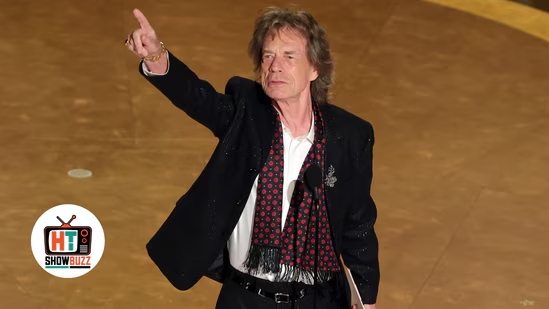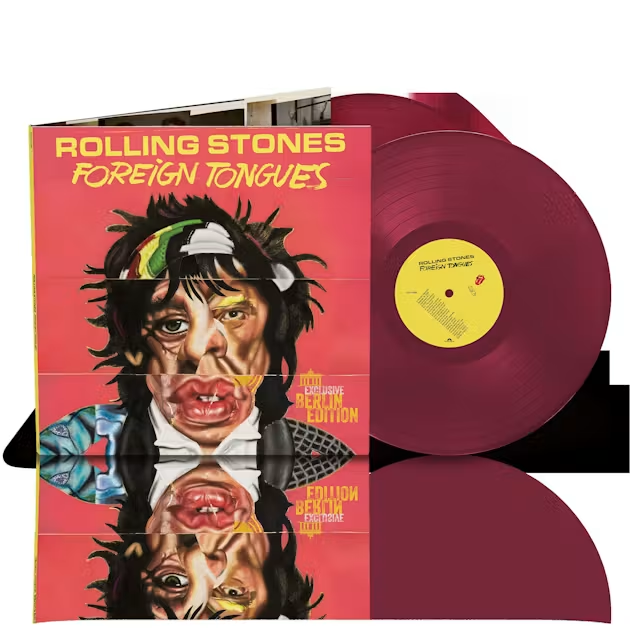
David FreeJune 10, 2026 — 5:18amThere has been much advance hype about Bob Spitz’s new biography of the Rolling Stones. It’s been called an “epic” and the “definitive” history of the band.The latter claim sounded improbable. The story of the Stones has been told so often before, at so many different stages of their sprawling 64-year career, that the prospect of a truly definitive book about them was starting to seem, at this late hour, fairly remote.But Spitz — who has previously written biographies of the Beatles and Led Zeppelin — has come as close to achieving that feat as anyone ever. He tells the band’s story with a masterly sense of pace and drive, throwing in deep-cut details that may surprise even the most jaded Stones scholars. Until now, the best book about the Stones has been Life, Keith Richards’ hilariously frank autobiography. Spitz’s book gives Keith’s a serious run for its money.The Rolling Stones – from left, Bill Wyman, Mick Jagger, Keith Richards, Brian Jones and Charlie Watts – in 1968.RedfernsFor Spitz the Stones saga is, at its heart, the story of the relationship between two men: Mick and Keith. Other Stones have come and gone but Mick and Keith are, and always have been, the band’s only indispensable members. They’re both 82 now. As long as they both endure, so will the Stones.The first original Stone to fall by the wayside was Brian Jones, the group’s founder. When their manager urged the band to start writing original songs, it turned out that Mick and Keith could write stuff like Satisfaction, whereas Jones couldn’t write at all.His drift to the band’s periphery was accelerated by drugs. While Keith could take industrial quantities of them and still function, Jones couldn’t. He became a bloated liability, barely able to play when he reported for duty at all. By the time Mick and Keith sacked him, he’d practically sacked himself. A month later he was found dead in a swimming pool.Mick Jagger, Keith Richards and Ronnie Wood this year at the announcement of their upcoming Rolling Stones album, Foreign Tongues.Kevin Mazur/Getty Images for UMGFrom the beginning, the Stones branded themselves as an outlaw band, the anti-Beatles. Jones’ death was an early sign that the image wasn’t just an image. The Stones were authentically dangerous. Bad things had a way of happening around them.In December 1969, they hired the Hell’s Angels to provide security at a massive free concert in Altamont, California. Paid in beer instead of money, the Angels secured the venue by savagely beating anyone who looked at them the wrong way. When one fan pulled a gun in self-defence, they stabbed him to death in front of the stage. Photo: “The Rolling Stones,” Keith once said, “destroy people at an alarming rate.” As Spitz reminds us, there were times when Mick and Keith almost fell under the wheels themselves. In 1967, both were convicted of drug possession and barely escaped imprisonment. In 1976, Mick nearly died from a heroin overdose.Keith’s career of cheating death began in 1965, when he received a near-fatal electric shock on stage. In the 70s, his idea of healthy living was to inject heroin into his muscles instead of his veins. When Canadian police found enough product in his hotel room to charge him with trafficking, he could have been imprisoned for life. Somehow he walked away without serving a day.Other Stones were less bulletproof. The brilliant guitarist Mick Taylor, who replaced Jones in the band, lasted only five years before quitting as an act of self-preservation. By then he was hooked on heroin and sick of being treated as a second-class sideman. “Mick and Keith,” he ruefully said, “are the Rolling Stones.”Bill Wyman, the band’s long-time bassist, wound up feeling similarly alienated. When he complained about the Stones’ refusal to record any of his compositions, Keith had a typically tactful reply: “Haven’t you sussed that they’re useless songs?”It was nothing personal. Keith has a long history of badmouthing his fellow Stones. In his autobiography, he likened Mick’s first solo album to Mein Kampf: “Everybody had a copy, but nobody listened to it.” Elsewhere in his book he alleged that Jagger has a “tiny” penis.Was that true? The answer remains elusive, like everything about Jagger. Mick is the enigma at the heart of Spitz’s book. Who is he? Spitz’s best guess is that he’s a chameleon, a lifelong wearer of masks — a man who’s spent his career “playing the role of Mick Jagger”.There are some trivial errors in Spitz’s book, as there are bound to be in any text of this length — although Australian readers may not lightly forgive him for identifying the Easybeats as an English band.My only serious gripe about the book is that its treatment of the Stones’ recent work is relatively sketchy. Compared with his richly detailed evocation of their salad days, Spitz’s account of their later years feels a bit rushed.More:ReviewMick JaggerPop cultureLiteratureNobel PrizeFrom our partners
This music biography is 600 pages long – and still I wanted more
Bob Spitz’s deep-cut history proves that even after 64 years of chaos, you can never have too much of the Rolling Stones.
828 words~4 min read