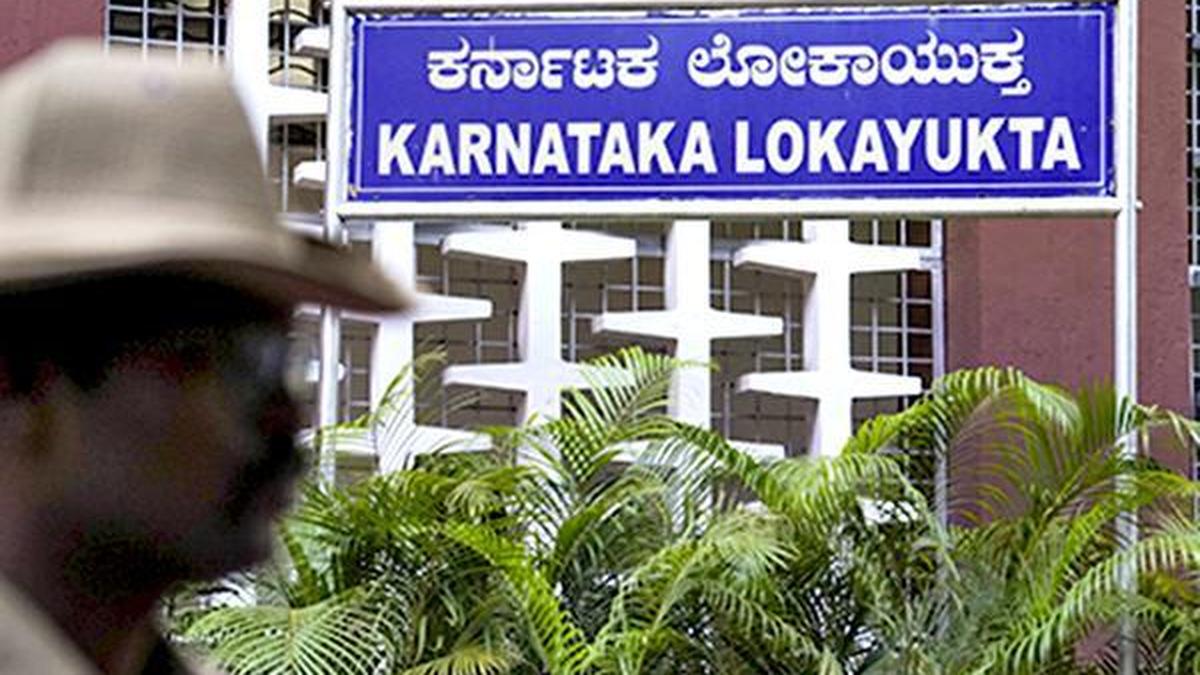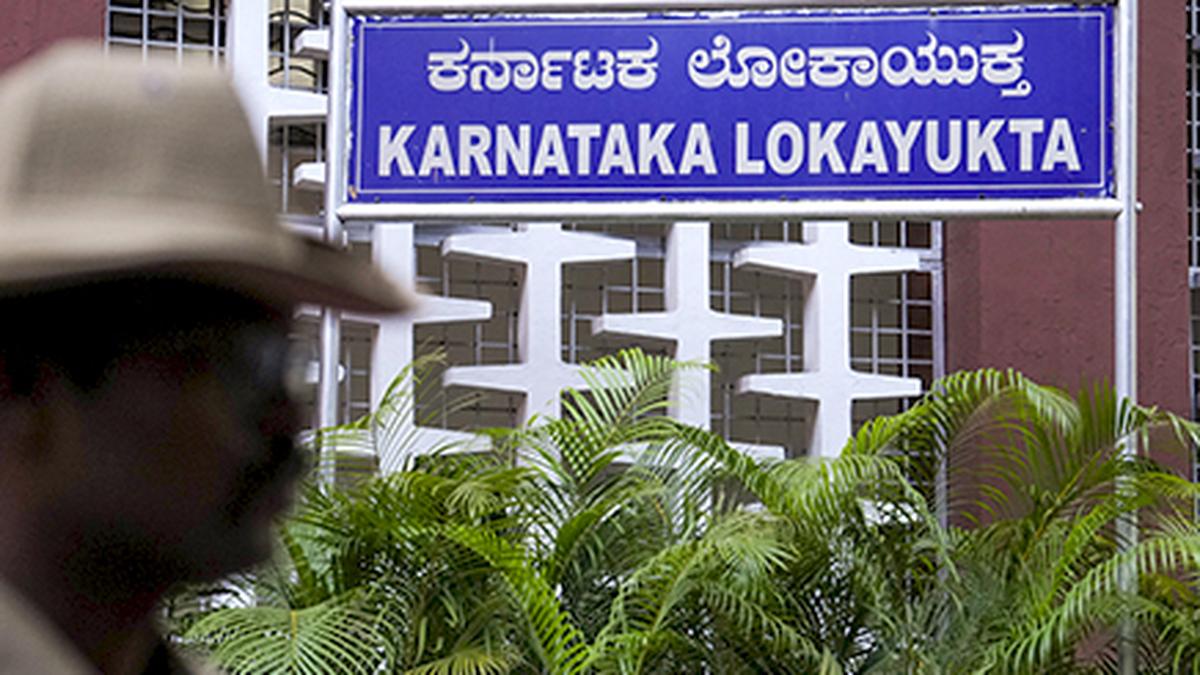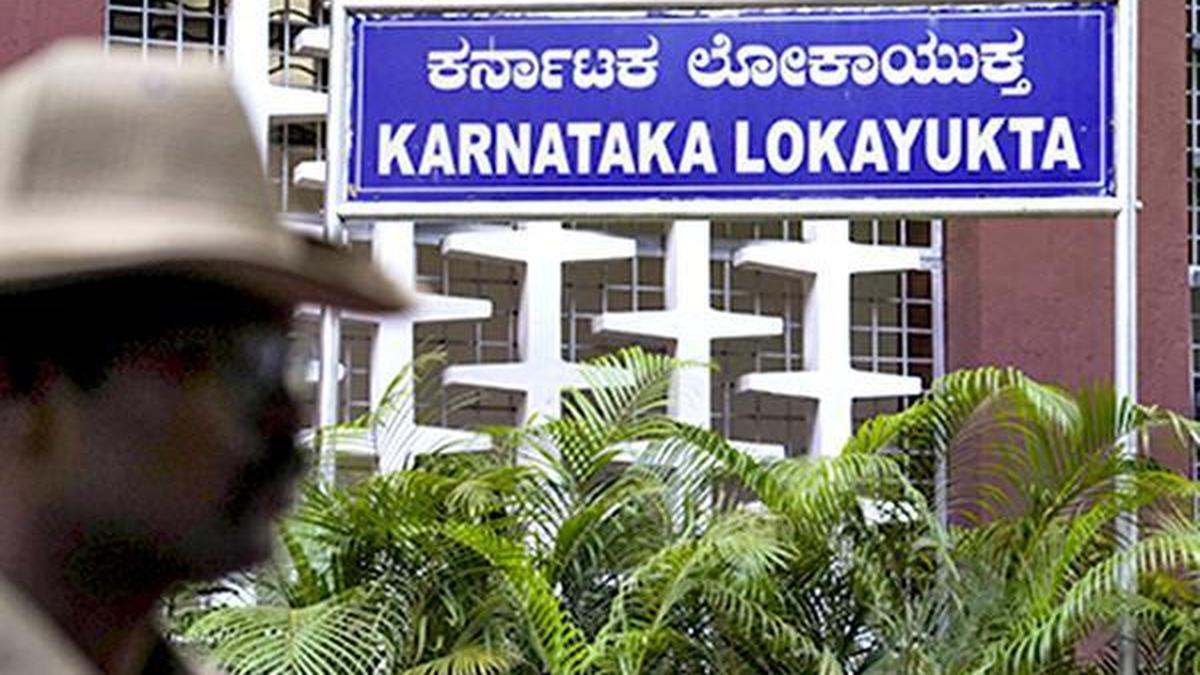
Bengaluru: A policeman stands guard at the Lokayukta office, in Bengaluru, Karnataka, Sept. 27, 2024.
| Photo Credit: SHAILENDRA BHOJAK
In what was supposed to be an inquiry into the ownership of government land, a Revenue Officer entrusted with examining the dispute allegedly became part of the very chain of events that enabled private parties to secure government land valued at more than ₹800 crore.The Police Wing of the Karnataka Lokayukta said the officer’s duty was to verify the legality of competing claims and protect government property where required. Instead, he allegedly relied on disputed revenue records and actions that strengthened private claims over the land, ultimately facilitating its conversion into saleable property.The case involves more than 35 acres of government Kharab land and lake area in Yelahanka, where a revenue inspector and four other officers allegedly enabled the transfer of public land into private hands through a series of administrative actions and record alterations.Pending since 2021Although the Police Wing sought sanctions for prosecution in 2021 through a proposal sent to the State government under Section 17A of the Prevention of Corruption Act, the government has neither approved nor rejected the request. The proposal has remained pending for more than five years.How government land became privateThe case concerns 35 acres spread across Survey Nos. 9, 10 and 11 of Singhahalli village in Yelahanka Hobli. The land was originally part of Singhahalli Lake and classified as Kharab land, making it ineligible for private ownership.Over the years, RTCs (Record of Rights, Tenancy, and Crops), mutation entries, Index of Land Records Register (ILRR) records and survey sketches were created in the names of private individuals and subsequently treated as genuine revenue documents. Once these entries became part of the official revenue system, they formed the basis for ownership of claims over land originally recorded as government property.The claims gained momentum when the Karnataka Industrial Areas Development Board (KIADB) initiated acquisition proceedings in the area. Private individuals asserted ownership over portions of the land and challenged the acquisition before the Karnataka High Court. According to the proposal, the disputed revenue records continued to be relied upon during these proceedings, allowing the ownership claims to persist and gain administrative legitimacy.When revenue authorities revisited the matter in 2024, they encountered a clear contradiction: original survey and archival records continued to describe the land as lake and government property, while later revenue entries reflected private possession and ownership. The proposal argues that, instead of resolving this contradiction through verification of primary records, officials relied on the later entries and proceeded with further administrative actions that strengthened the private claims.The paper trail eventually translated into physical transactions. In 2024, multiple sale deeds were executed through the Byatarayanapura Sub-Registrar’s Office, with portions of the land changing hands between private parties, sources said. Published - June 10, 2026 12:31 am IST