Brightness
More brightness means better visibility in a wider variety of lighting conditions, and the closest apples-to-apples comparison between various models from different brands is lumens, measured according to ANSI or ISO standards — two slightly different methodologies that yield roughly comparable results. A decent home-theater projector mounted to a ceiling or wall bracket will have no fewer than 2,000 lumens, but even the brightest portable projectors max out around 1,000 lumens. This is bright enough to provide a usable image in the presence of ambient-light sources, such as a table lamp or the afternoon sun filtering through drawn curtains or shades. Projectors in the 400 to 600 lumen range will look fine with a lamp on in the next room over but will struggle against a lamp in the same room. Projectors with fewer than 400 lumens look good only in a completely darkened environment. Even though the vast majority of portable projectors falls under this latter category, I do not recommend them because you will inevitably be disappointed.
Streaming OS
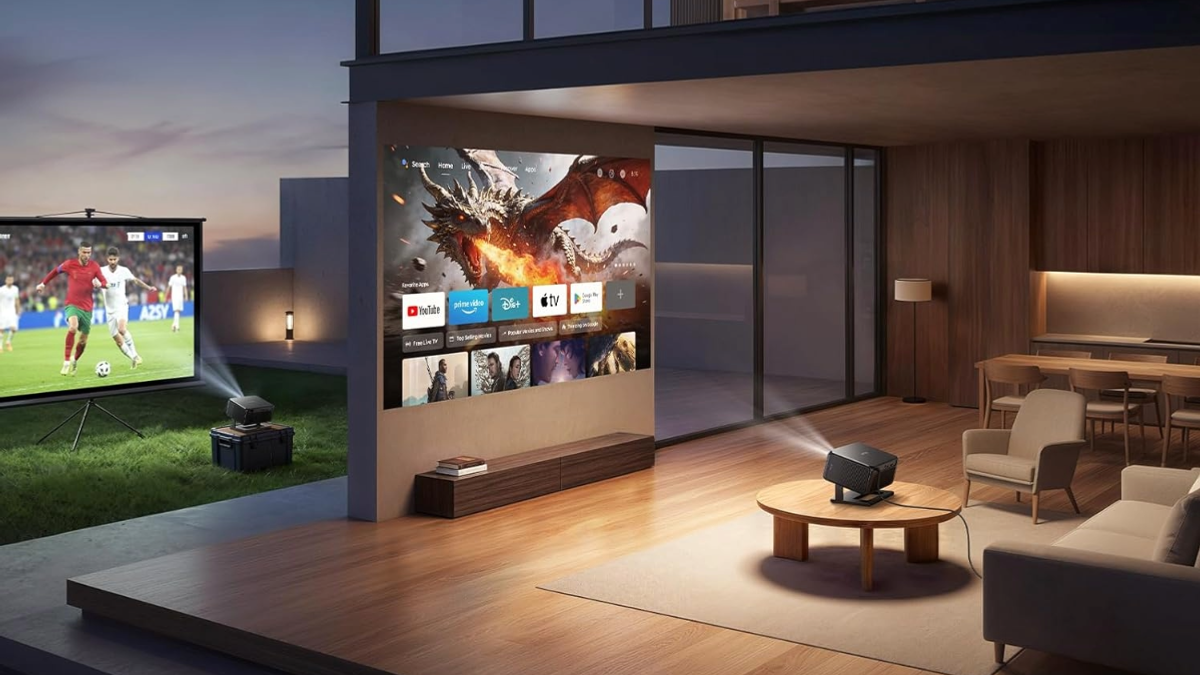
Most projectors come with software that allows you to download and use streaming apps without needing to plug in an additional streaming device (like a Roku Stick or Google TV dongle). The best ones use Google TV, which supports all the major services and is easy to set up using any kind of smartphone. However, most rely on Android TV. This looks and feels a lot like Google TV but does not support the Netflix app and has a more onerous setup process if you don’t have an Android phone.