SQL is arguably the most widely used language in software engineering, yet it is often the least carefully written. Most teams enforce strict linting on their application code but leave SQL queries as a free-for-all. This guide covers the formatting rules that separate maintainable, team-friendly SQL from query spaghetti that haunts on-call rotations.
Why Poorly Written SQL Is a Real Engineering Problem
Unformatted SQL is not just an aesthetic issue - it is a correctness risk. Dense, run-on queries make it nearly impossible to spot accidental Cartesian products, missing GROUP BY clauses, or WHERE conditions that silently bypass indexes. By the time a performance problem surfaces in production, tracing it back to the root cause becomes a painful exercise in reading someone else's stream of consciousness.
Rule 1: Keyword Capitalization
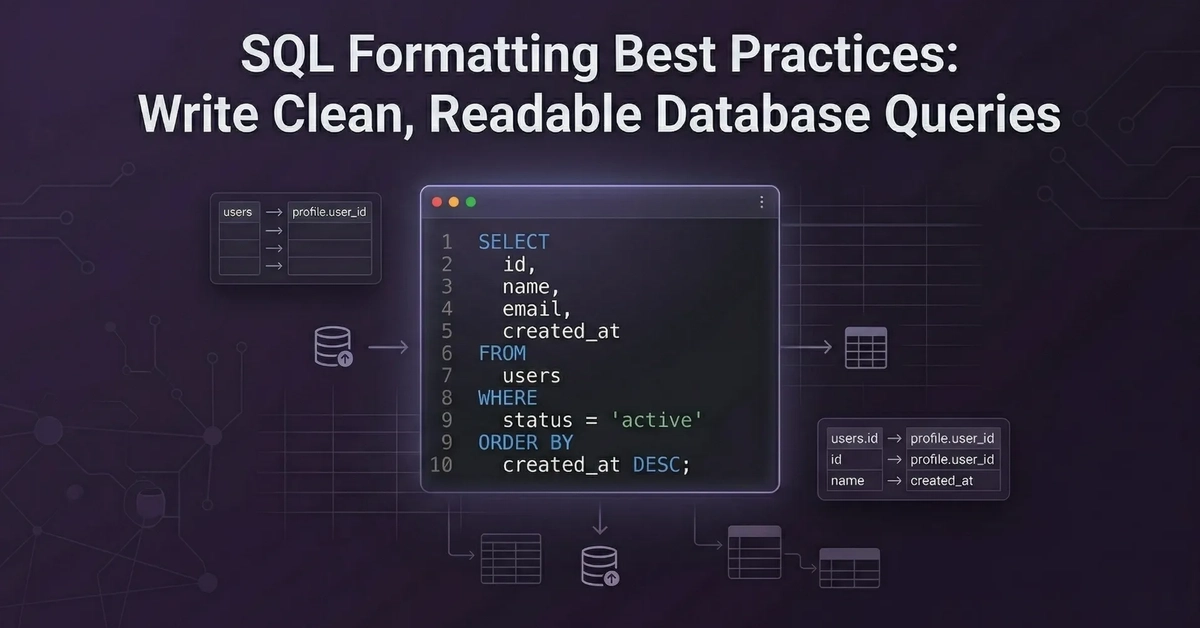
SQL engines treat select and SELECT identically, but human readers do not. Always uppercase reserved keywords such as SELECT, FROM, WHERE, JOIN, GROUP BY, and ORDER BY. Keep table names, column names, and aliases lowercase. This single habit immediately creates a visual boundary between the logic structure of the query and the underlying data it operates on.