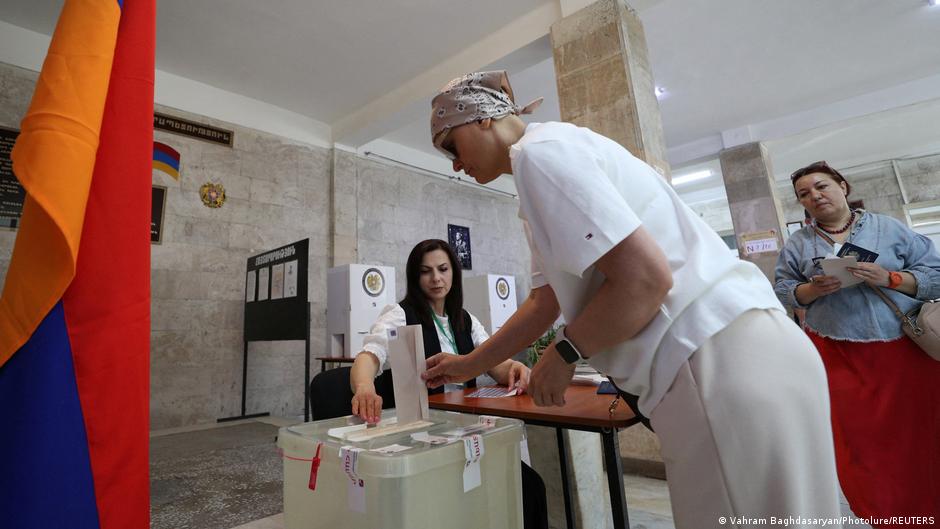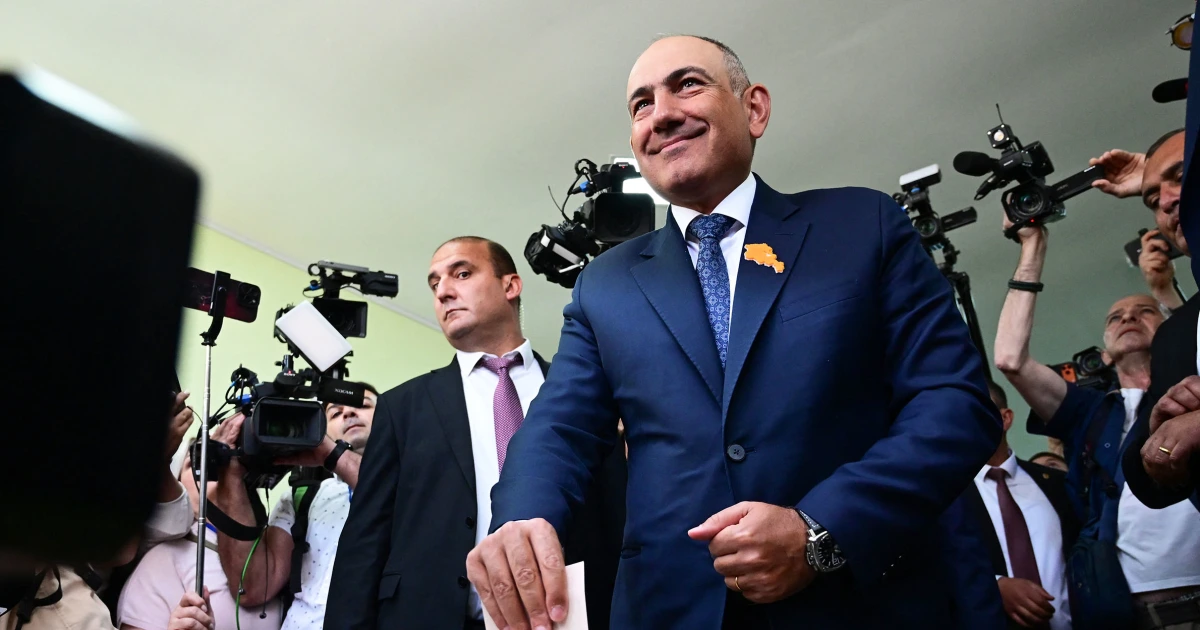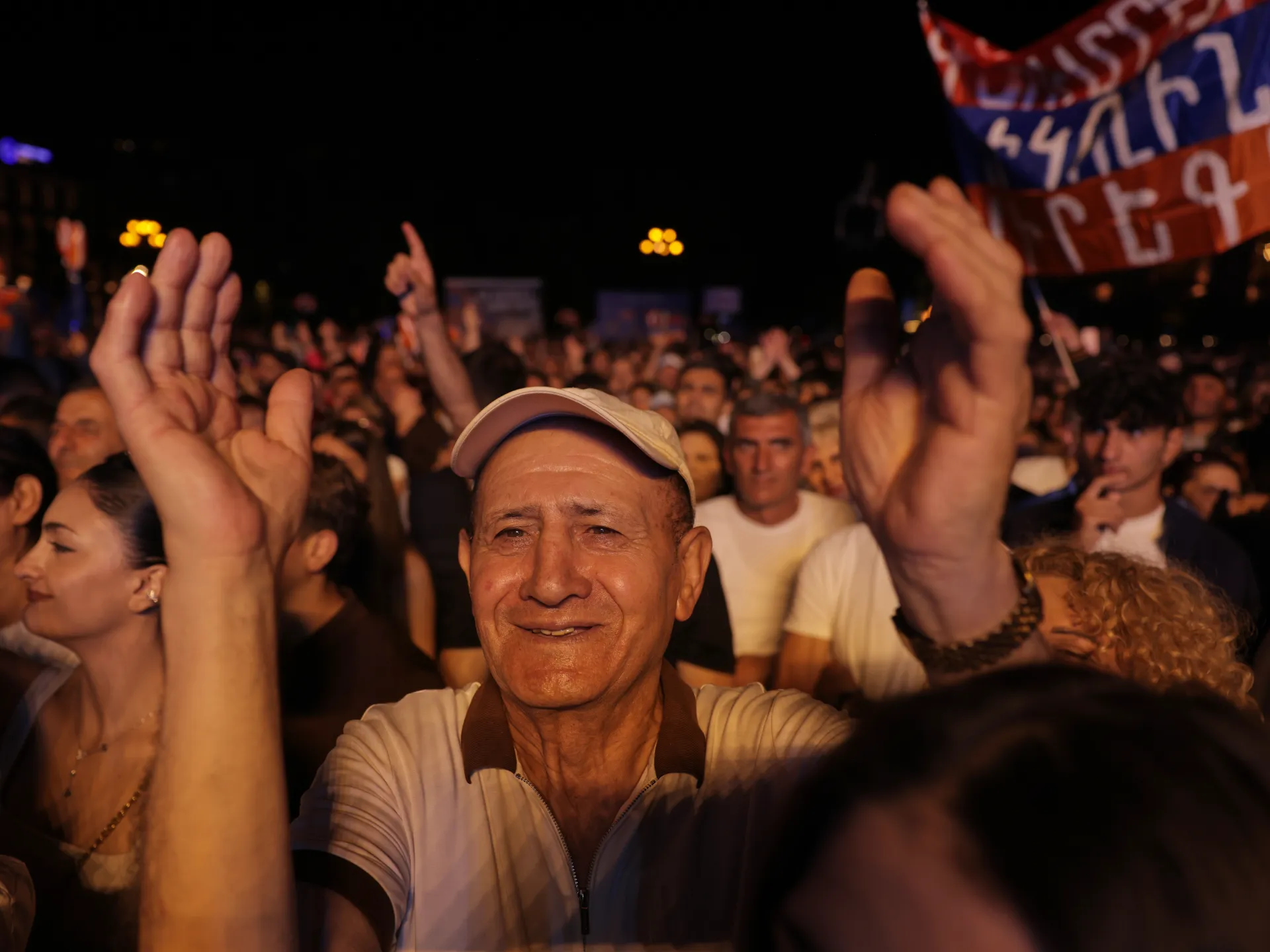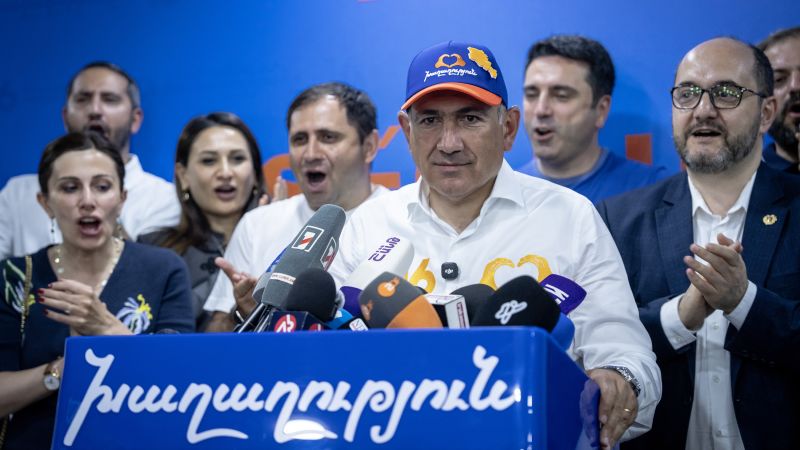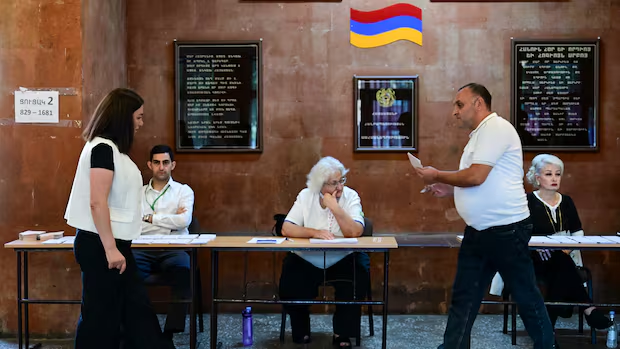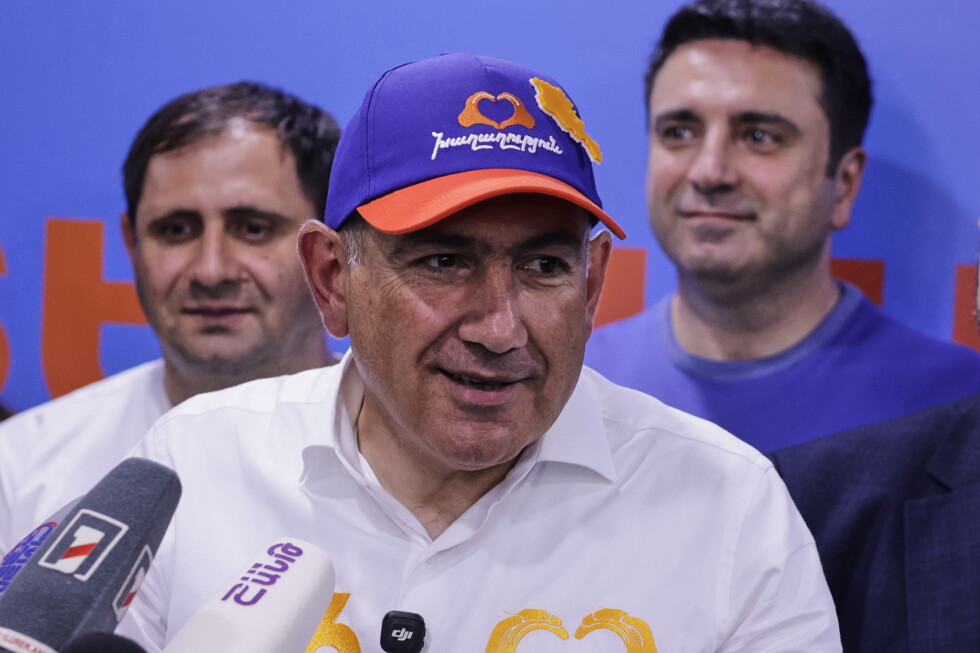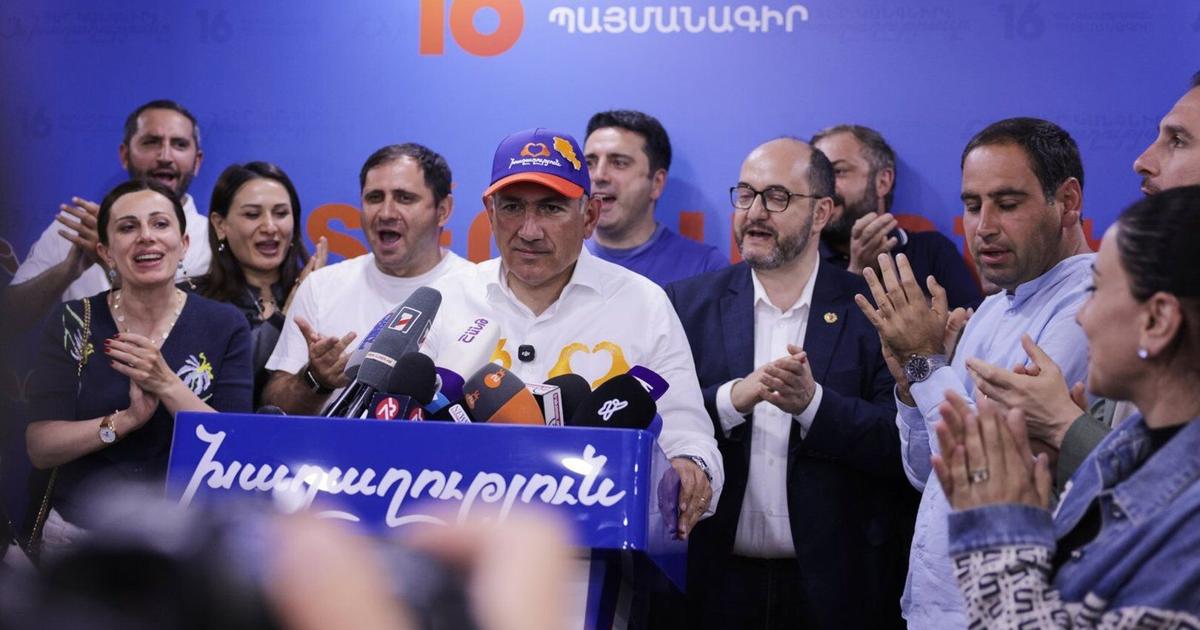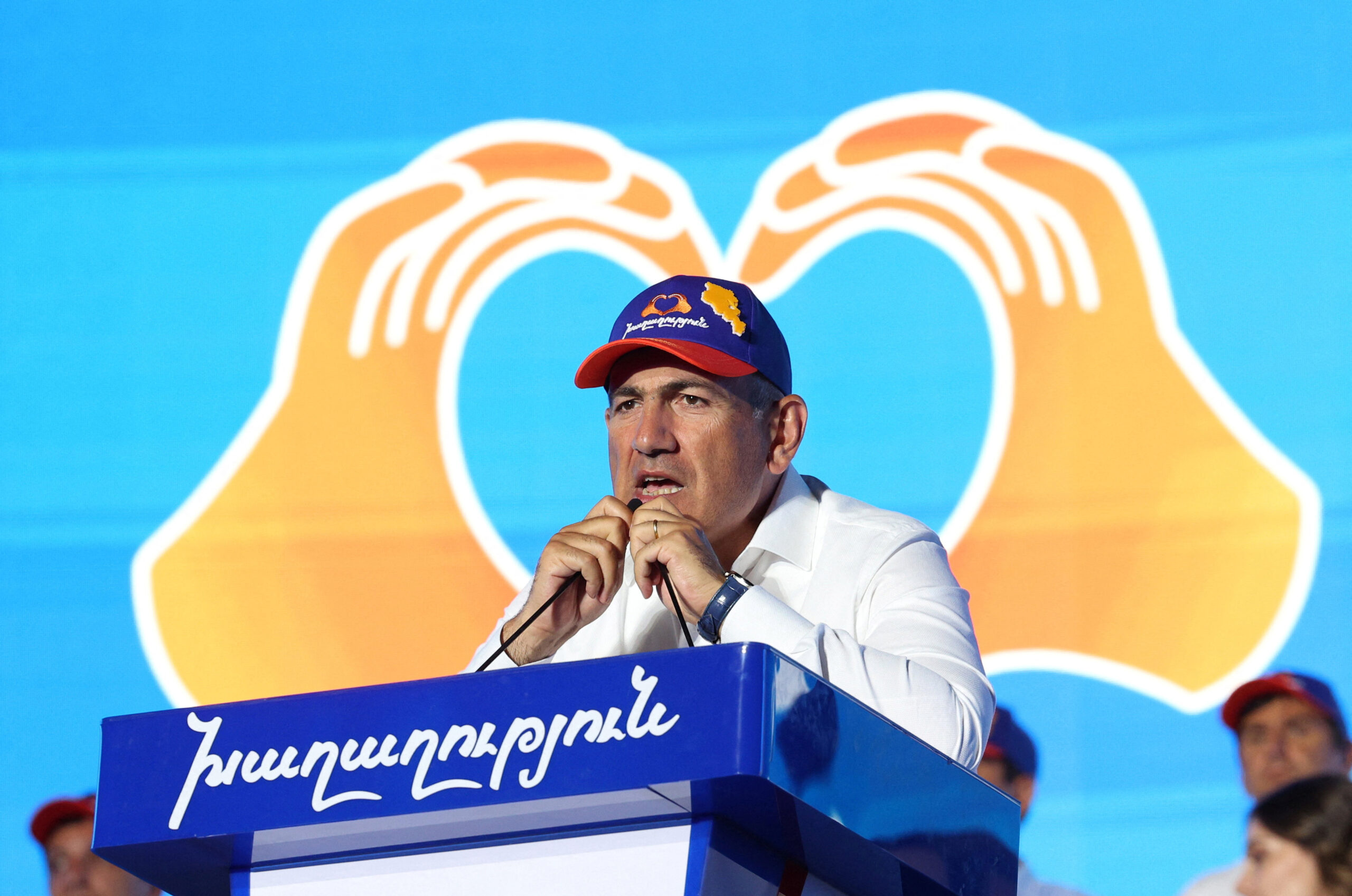
In the end, Armenians went with the heart. Early on Monday morning, Armenian Prime Minister Nikol Pashinyan declared victory in his country’s elections while wearing a hat and shirt depicting two hands forming a heart, his and his party’s unofficial symbol.
Throughout the campaign, Pashinyan reaffirmed his support for continuing peace negotiations with Azerbaijan and normalization with Turkey, as well as his goal of further strengthening ties with the United States and the European Union. Not feeling the love, however, is Russian President Vladimir Putin, as the results are widely seen as a rebuke to the Kremlin for its attempts to intensify its influence over the South Caucasus region. Below, Atlantic Council experts answer four pressing questions about Armenia’s election and what to expect next in the region and beyond.
1. What kind of political mandate does Pashinyan have?
Pashinyan has a clear mandate to govern, but not a decisive one. His Civil Contract party took just under 50 percent of the vote, more than double its nearest rival, and it is assured a governing majority in the National Assembly. Running against a fragmented opposition with no credible alternative to his Western pivot, this is an endorsement of his course: distancing Armenia from Russia, deepening ties with Europe, and pursuing peace with Azerbaijan and normalization with Turkey.