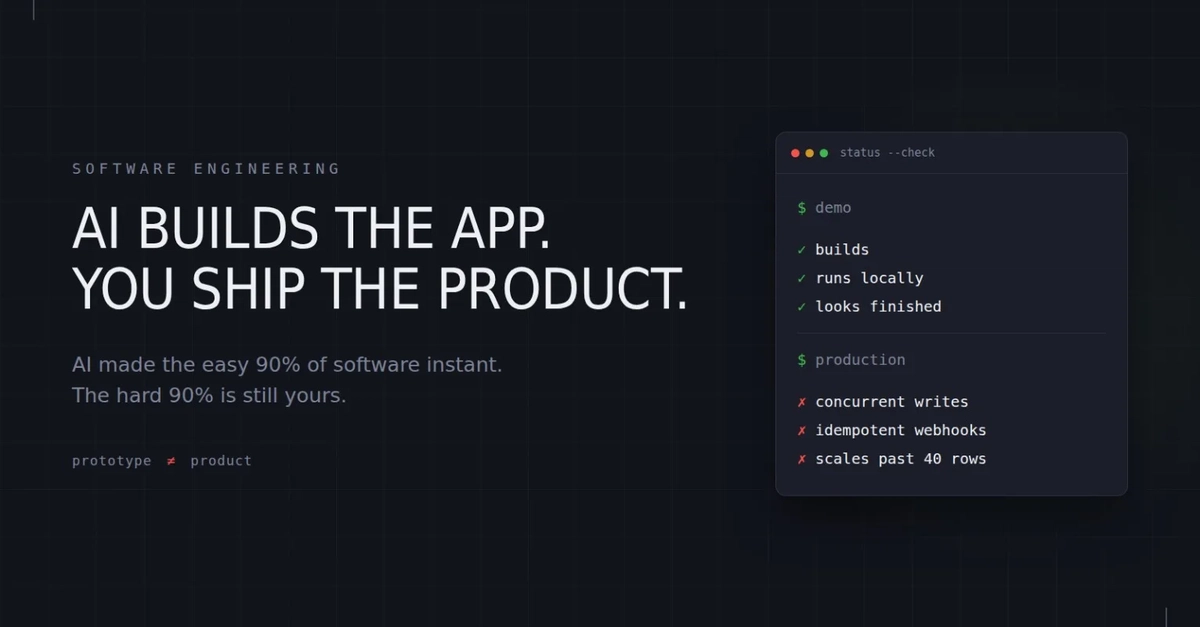
You can type a prompt into an AI tool and get a beautiful, functioning user interface in ten minutes. It feels like magic. But what happens when 1,000 concurrent users try to process a payment, book a time slot, or query complex data?
Founders are increasingly hitting the "80% wall." AI gets you a working prototype rapidly, but skipping the backend architecture inevitably leads to trouble. You find yourself trapped in infinite debugging loops, facing silent data corruption, and managing a codebase you can neither read nor fix.
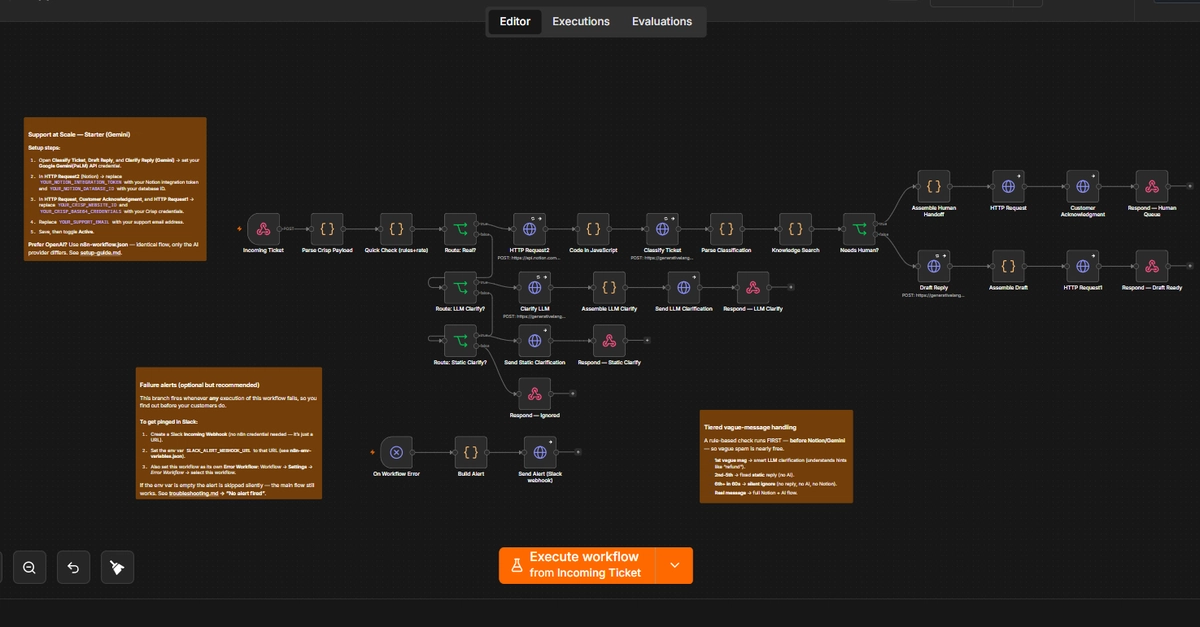
The idea of "no backend" is an illusion in software development. To turn an AI-generated prototype into a scalable business, you don't need to write code, but you do need strict backend architecture. This article explains why relying solely on text-to-app code generation creates technical debt, and how structured visual builders provide the foundation necessary to scale.
The Trap of "Vibe Coding" and Comprehension Debt
The current wave of AI code generation relies heavily on probabilistic systems. Large language models are fundamentally world-class guessing machines, predicting the most likely next line of code based on patterns.