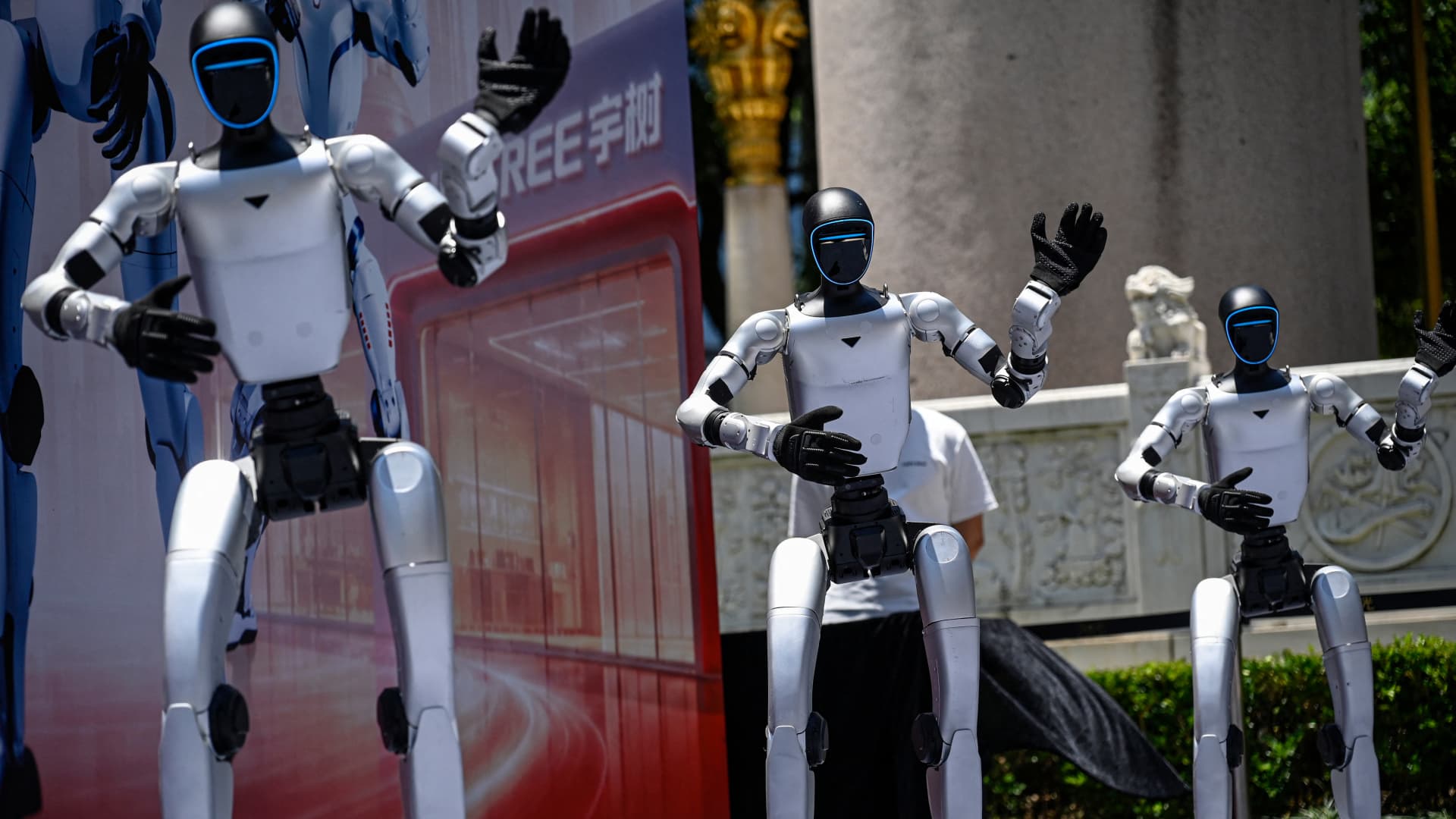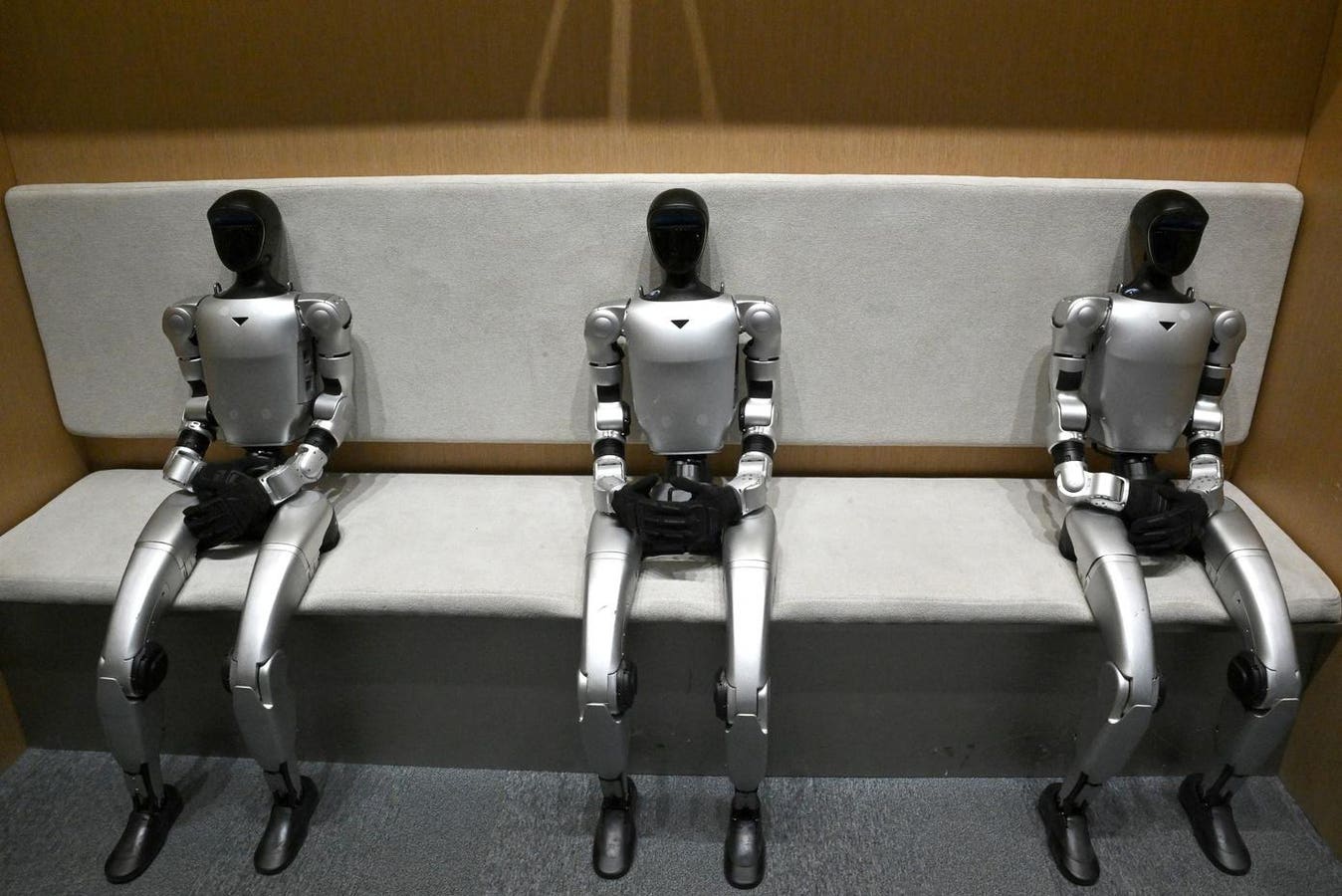
TOPSHOT - Three Unitree G1 humanoid robots are pictured at robotics company Unitree's first retail store in Beijing in January 9, 2026. (Photo by Adek BERRY / AFP via Getty Images)
On June 1, Nvidia unveiled its first commercial humanoid robot — built on a Chinese body and powered by an American brain — and Beijing approved the robot maker’s IPO the very next day. The sequence wasn’t subtle. It signaled how physical AI has become the next front in the U.S.–China technology race, and why Nvidia and Tesla are now pursuing two radically different paths to dominate it.
Jensen Huang took the stage in Taipei ahead of Computex to announce that the Isaac GR00T Reference Humanoid — a nearly six‑foot machine built around Nvidia’s Blackwell GPU — would use a robot body from China’s Unitree Robotics and hands from Singapore‑based Sharpa. Researchers at Stanford, ETH Zurich, and UC San Diego will be among the first to work with it. The following day, Unitree received IPO approval from the Shanghai Stock Exchange in a record 73 days, a pace China’s state media framed as a signal of strategic intent rather than routine capital markets activity.
China Daily called the Nvidia-Unitree deal “a compelling example of how the respective industries of China and the US can leverage their unique strengths.”