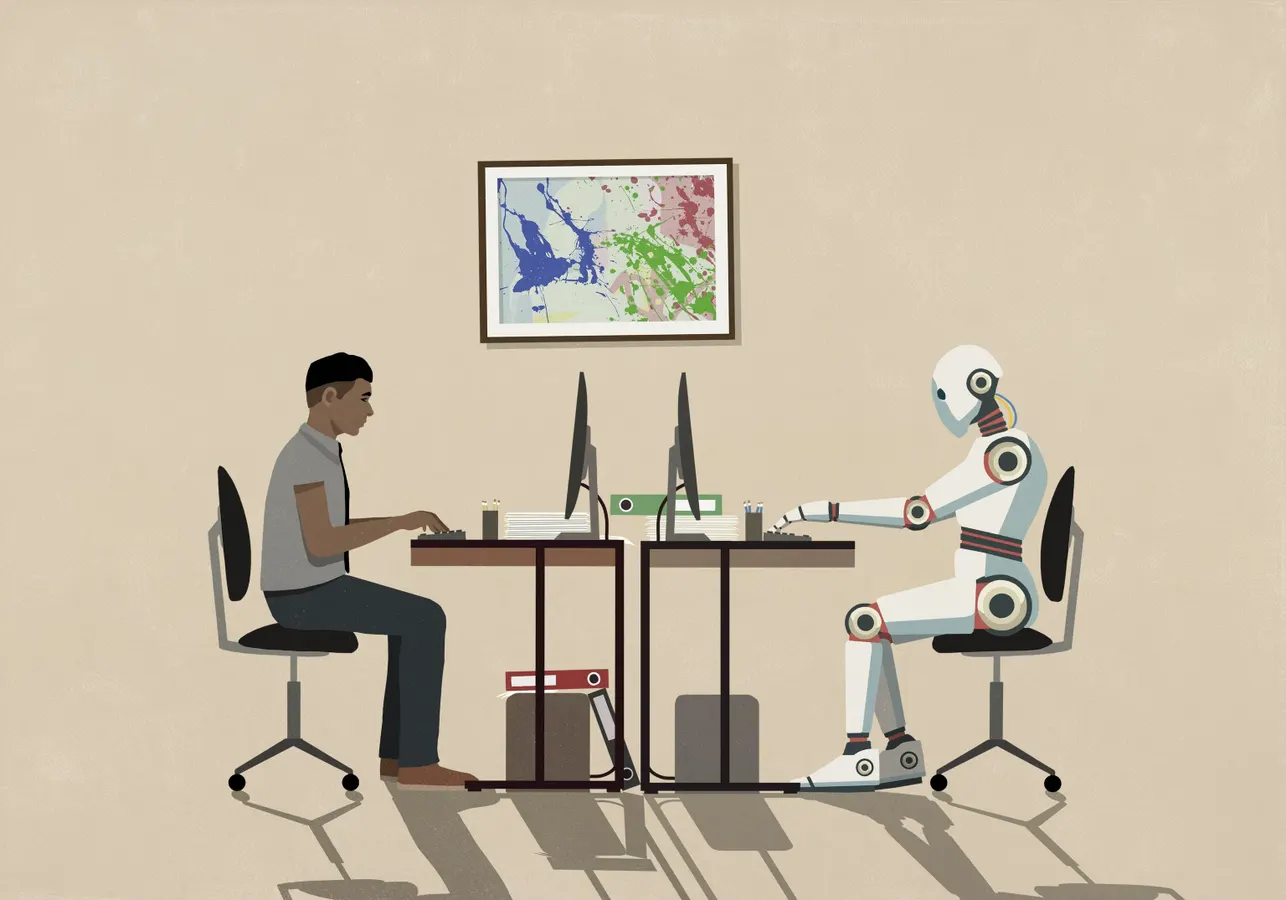
Jim Barnett is the CEO and Co-Founder of Wisq, an Agentic AI platform for HR.gettyThere's an undercurrent of anxiety running through the HR profession right now. On social media and in private HR forums, the question keeps surfacing: Am I going to be left behind?It's an understandable anxiety. On LinkedIn, some posts make it sound like survival in the AI era means becoming something you're not, maybe a software engineer. That's not quite right, but HR does need to get more technical than it has been. The good news is that technical looks very different than what most people fear.It doesn't necessarily mean learning to code. It means getting comfortable managing AI systems, designing workflows and maintaining the knowledge bases that power them. These learnable skills build directly on what HR professionals already know how to do.The tools are changing. The work isn't.Nvidia CEO Jensen Huang said something on the Lex Fridman Podcast that stuck with me: "The purpose of your job, and the tasks and tools that you use to do your job, are related, not the same." That's exactly right for HR, and it's a distinction the profession needs to hold on to right now.Ask any HR leader what their job fundamentally is, and the best answers aren't about running payroll or processing paperwork. To borrow from my friend Joan Burke, former CPO of Docusign, it's about helping people do the best work of their lives. That's been true for decades and will still be true when AI is handling every routine inquiry, policy question and first-pass workflow.The skills you already have are the ones that matter most.Think about what actually makes someone great at HR. Technical skills are the baseline—specialists need them, and everyone needs more of them in the AI era. However, they're rarely what defines the best people in this profession. The human skills do.The best HR professionals can hold a hard conversation without letting it become a damaging one. They can read an organization and know where trust is fraying before it breaks. They can translate something abstract (whether that's a new strategy, a culture shift or a difficult change) into something people can actually understand and move toward. They know when a policy should bend and when it shouldn't.None of that is going away. As AI takes on more of the transactional layer of HR work, those skills become more important, not less. The work that remains—the cases that escalate, the decisions that require context, the moments that need a human—will disproportionately demand exactly that kind of judgment.Thriving in the next five years will mean combining the human skills HR has always relied on with a genuine willingness to get comfortable with AI tools. Neither one is enough on its own.Organizations are about to make a mistake.I worry that a lot of companies will make AI for HR a priority and instinctively hand it to IT, let engineering own the transformation and bring in consultants to redesign the function. HR will play a secondary role in a transformation that is fundamentally about people.The AI transformation of work is fundamentally a human problem. How do employees build trust in a system they can't see? How do managers lead teams that include digital colleagues? How do organizations change fast enough to capture value without losing the culture that made them worth working at?Those are HR questions, and they've always been HR questions. The fact that AI is the catalyst doesn't change who is best equipped to answer them. Yes, a close partnership with IT is critical for success, but HR leaders should lead the AI transformation in HR.What do HR professionals actually need to do?HR professionals who lean into learning how AI agents work, what they can and can't do and how to manage them well will be better positioned than those who don't. That's the reality.That learning should start from a place of confidence. The instinct that made an HR leader good at navigating organizational complexity, earning the trust of skeptical managers or designing a process that people would actually use is the foundation everything else gets built on.Technology is changing in ways that will reshape every job, every team and every organization, but HR's mission is the same. HR has the power to build exceptional organizations and lives, and this moment—more than any before it—is the one to step into that.Forbes Technology Council is an invitation-only community for world-class CIOs, CTOs and technology executives. Do I qualify?
The Skills That Make You Great At HR Will Help You Lead In The AI Era
Technology is changing in ways that will reshape every job, every team and every organization, but HR's mission is the same.
744 words~3 min read